
Other collars
Last updated: April 2, 2026
Collars for working and assistance dogs: Professional safety and functionality
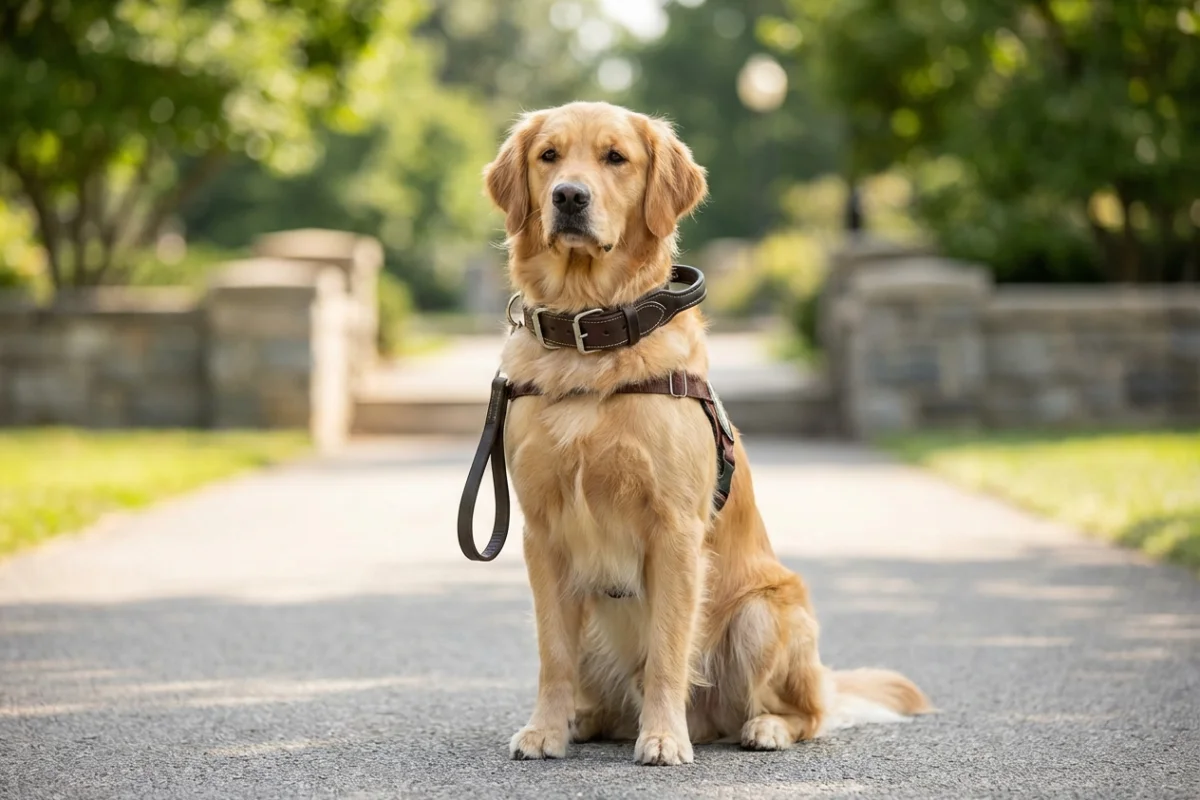
Working dogs, whether for assistance, search and rescue, or therapy, perform critical functions that require equipment up to the standard of their responsibilities. Unlike a conventional pet, a service dog needs a collar that is not only comfortable but also guarantees extreme durability and specific functionalities for its daily work.
In this article, we analyze the technical requirements of collars for working and assistance dogs, from the importance of industrial-grade materials to the incorporation of control elements such as integrated handles. The correct choice of equipment is fundamental for the handler-dog team to operate with total safety and efficiency.
If your dog performs a support or work function, here you will discover what characteristics its collar must have to withstand long days, facilitate identification, and offer maximum comfort without compromising operational safety in demanding environments.
Working and assistance dog collars: Professional safety and functionality
Working and assistance dogs, such as guide dogs, search and rescue dogs, or police dogs, require equipment that goes beyond the conventional. A collar for these animals is not just an aesthetic accessory, but a fundamental work tool that must guarantee safety, control, and durability in high-demand situations.
Unlike collars for domestic pets, professional models are designed to withstand extreme tension and offer specific functionalities, such as quick-control handles or reinforced anchor points. These collars allow the handler or assistance user to maintain clear and direct communication with the animal, ensuring that the dog can fulfill its mission efficiently and safely.
In this article, we will explore the technical characteristics that define a good work collar, the materials most recommended by experts, and how to choose the option that best suits the specific needs of each professional discipline.
Extreme resistance: Military-grade materials
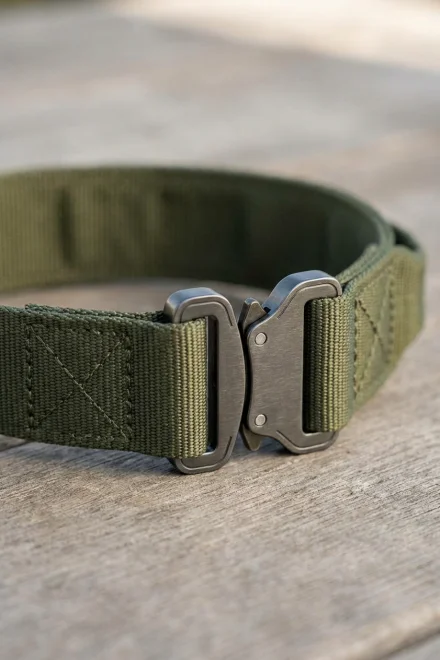
Durability is the fundamental pillar of working dog collars. These accessories are usually made of double or triple-layer nylon, often military-grade (Mil-Spec type), which resists abrasion, tearing, and the most adverse weather conditions without losing its structural integrity.
One of the critical components is the buckle. In the professional field, quick-release metal buckles are preferred, such as the Cobra type, which are capable of withstanding hundreds of kilos of traction force. This prevents accidental openings during critical interventions or rescue work.
In addition, the seams are usually reinforced with high-resistance threads and 'X' or 'W' stitching patterns to ensure that tension points, such as the D-ring for the leash, remain immovable even under sudden pulls from dogs with great physical power.
- High-density ballistic nylon.
- Metal safety buckles with double-point closure.
- Stainless steel or aeronautical aluminum D-rings.
- Reinforced stitching for maximum traction.
- Moisture and mildew resistance.
Advanced functionality: Control handles and identification panels
A distinctive feature of professional collars is the inclusion of an integrated control handle. This allows the handler to hold the dog immediately and firmly without the need for a leash, which is vital in heavy traffic situations, crowds, or when precise tactical intervention is required.
Identification is also key. Many of these collars feature velcro panels for attaching informative patches. In the case of assistance dogs, these patches indicate that the animal is working and should not be distracted, while in service dogs, they can show the rank or unit to which they belong.
- Padded handles for a secure and comfortable grip.
- Velcro panels for 'Guide Dog' or 'Do Not Pet' patches.
- Ergonomic design that does not restrict neck movement.
- Compatibility with chemical or LED lighting systems.
- Ease of putting on and taking off in emergency situations.
These functions not only improve the operation of the handler-dog team but also project a professional and clear image to the environment, facilitating the animal's work in public spaces.
Comfort for long shifts
Despite their robustness, a work collar must be comfortable. Assistance and service dogs often wear their equipment for many hours a day, so internal padding is essential to prevent skin irritation or damage to the coat.
Breathable materials, such as 3D mesh or neoprene, help manage heat and moisture, preventing the dog from suffering discomfort from constant rubbing. A well-designed collar distributes pressure evenly around the neck, protecting the animal's trachea during pulling or guiding work.
- Soft and breathable inner lining.
- Rounded edges to prevent friction cuts.
- Above-average width to better distribute pressure.
- Hypoallergenic materials.
- Precise fit to avoid accidental snags.
Visibility and safety in critical environments
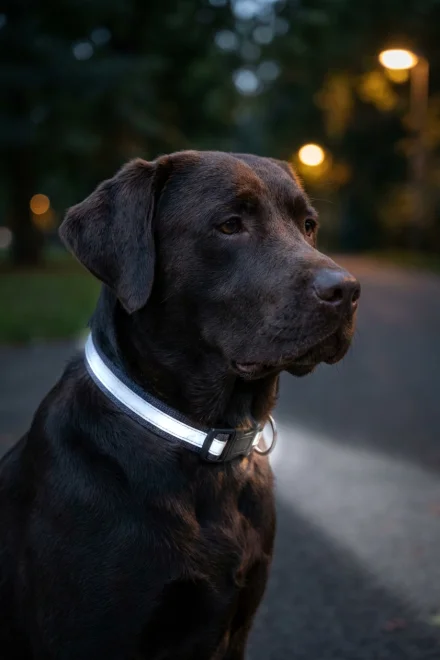
For dogs working outdoors, such as search and rescue dogs or those assisting visually impaired people in the city, night visibility is a matter of life or death. Professional collars usually incorporate high-intensity reflective elements or fluorescent threads woven directly into the structure.
In addition, safety extends to the integrity of the collar itself. Closure systems often include additional safety locks to ensure that, under no circumstances, the collar comes loose, which could leave the assistance user without their primary support or jeopardize the mission of the working dog.
- 360-degree reflective bands.
- High-visibility colors (orange, neon yellow).
- Anchor points for position lights.
- Closure systems with manual locking.
- Certified break resistance.
The importance of choosing according to the discipline
Not all working dogs need the same type of collar. A guide dog requires a collar that is lightweight but extremely reliable, which does not interfere with the guiding harness. Conversely, a police intervention dog needs a wide and very robust collar that allows for total physical control in high-tension situations.
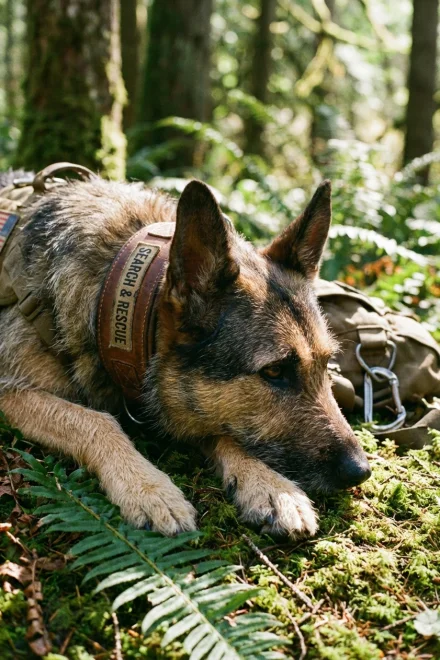
For search and rescue dogs, the priority is resistance to the elements and that the collar does not easily snag on brush or debris. In these cases, more aerodynamic designs are usually preferred, with buckles that, although secure, allow for quick release if the animal becomes trapped.
It is fundamental that the professional or assistance user evaluates the environment where the activity will take place to choose the perfect balance between weight, resistance, and additional functionalities.
Comparison of materials for professional collars
The choice of material determines the lifespan of the collar and the level of control it offers. Here we compare the three most used materials in the field of work and assistance.
Tactical Nylon (Mil-Spec)
It is the standard for police and military dogs. It offers the best weight-to-strength ratio, is easy to wash, and allows for the addition of multiple accessories such as handles and velcro. Its durability is exceptional against traction.
Reinforced Biothane
Ideal for search and rescue or assistance dogs working in humid environments. It is 100% waterproof, does not absorb odors, and cleans with a cloth. It is very resistant but less versatile for adding velcro panels.
High-Quality Leather
Traditionally used in working dogs for its nobility and resistance. With proper maintenance, it can last for decades. It is very comfortable as it adapts to the shape of the neck, although it requires constant care to avoid cracking.
Metal (Safety links)
Mainly used in advanced training or specific correction under professional supervision. It is not recommended for continuous use in assistance dogs due to its weight and lack of identification panels.
For most modern assistance and work applications, tactical nylon remains the most balanced option due to its versatility and lightness.
Fit and maintenance: Keys to professional success
A poorly fitted professional collar can be dangerous. If it is too loose, the dog could escape at a critical moment; if it is too tight, it will cause fatigue and discomfort, affecting the animal's performance. The general rule is that two fingers should fit between the collar and the dog's neck, ensuring it cannot slide over the ears.
Maintenance is equally vital. Work collars are exposed to sweat, mud, and dust. It is recommended to check the condition of the buckles and seams weekly. A small tear in the nylon can turn into a total break under tension, so preventive inspection is a mandatory routine for any professional handler.
Tips for using professional collars
🛡️
Check the locking mechanism before each workday to ensure there is no sand or dirt obstructing it.
🏷️
Keep identification patches clean and visible; they are your dog's voice to the public.
🧼
Wash the collar regularly with neutral soap to remove salt residue or sweat that can degrade the fibers.
🔄
Replace the collar at any sign of fraying in critical seams or deformation in the attachment ring.
📏
Readjust the size periodically, especially if the dog changes coat or weight due to its physical activity.
Conclusion: The tool that guarantees the service
Choosing a collar for a working or assistance dog is not a decision to be taken lightly. It is the primary physical connection between the animal and its handler, and the safety of both depends on its quality. A model that combines high-resistance materials, ergonomics, and tactical functionalities will make the difference in the professional day-to-day.
Whether for a guide dog navigating the city or a rescue dog in the high mountains, the equipment must live up to their courage and dedication. Investing in a professional-quality collar is, ultimately, investing in the effectiveness of the service and the well-being of the animal that provides it.
Frequently asked questions about collars for working and assistance dogs
What differentiates a work collar from a standard one?
Work collars are manufactured with military or industrial grade materials, have reinforced stitching, and usually include additional components such as quick-control handles, velcro panels for identification patches, and quick-release buckles with safety locks.
Why is the handle useful on service dog collars?
The handle allows the handler to have immediate and firm control over the dog in emergency situations, crowds, or during rescue maneuvers, avoiding having to pull on the leash and improving handling precision.
What materials are most recommended for rescue dogs?
For search and rescue dogs, materials such as ballistic nylon or high-resistance Biothane are recommended, as they must withstand abrasion, moisture, and strong pulls without breaking or retaining excessive dirt.
Is it mandatory for an assistance dog's collar to be identifying?
Although regulations vary by country, it is highly recommended that the collar includes identification panels (such as 'Assistance Dog' or 'Do Not Pet') to inform the public and facilitate access to restricted areas.
What type of closure is safest for working dogs?
Cobra-style closures or double-anchor metal buckles are preferred, as they are designed not to open under extreme pressure, ensuring the dog does not accidentally get loose during its work.
How wide should the collar be for a large working dog?
Widths between 4 and 5 centimeters are recommended. A wide collar better distributes pressure on the neck, protecting the dog's trachea and cervical vertebrae during interventions that require strength or restraint.
Can work collars cause chafing during long days?
To avoid this, professional collars usually include neoprene padding or breathable mesh on the inside. It is vital to check the fit daily to ensure there is no excessive friction after many hours of use.
How important is the D-ring on these collars?
The D-ring must be made of stainless steel or aircraft-grade aluminum and be welded. It is the critical connection point for the leash or work harness, so its strength must be certified.
How does the color of the collar influence search dogs?
For outdoor search dogs, high-visibility colors (neon orange or yellow) and reflective elements are usually used so that the handler and emergency teams can easily locate the dog in low-light conditions.
Is a collar or a vest better for a therapy dog?
They are generally combined. The collar serves for identification and basic control, while the therapy vest or harness is used so that the patient interacts with the dog safely and comfortably.