Other collars
Last updated: May 15, 2026
Collar and harness at the same time: How to manage double equipment without compromising comfort
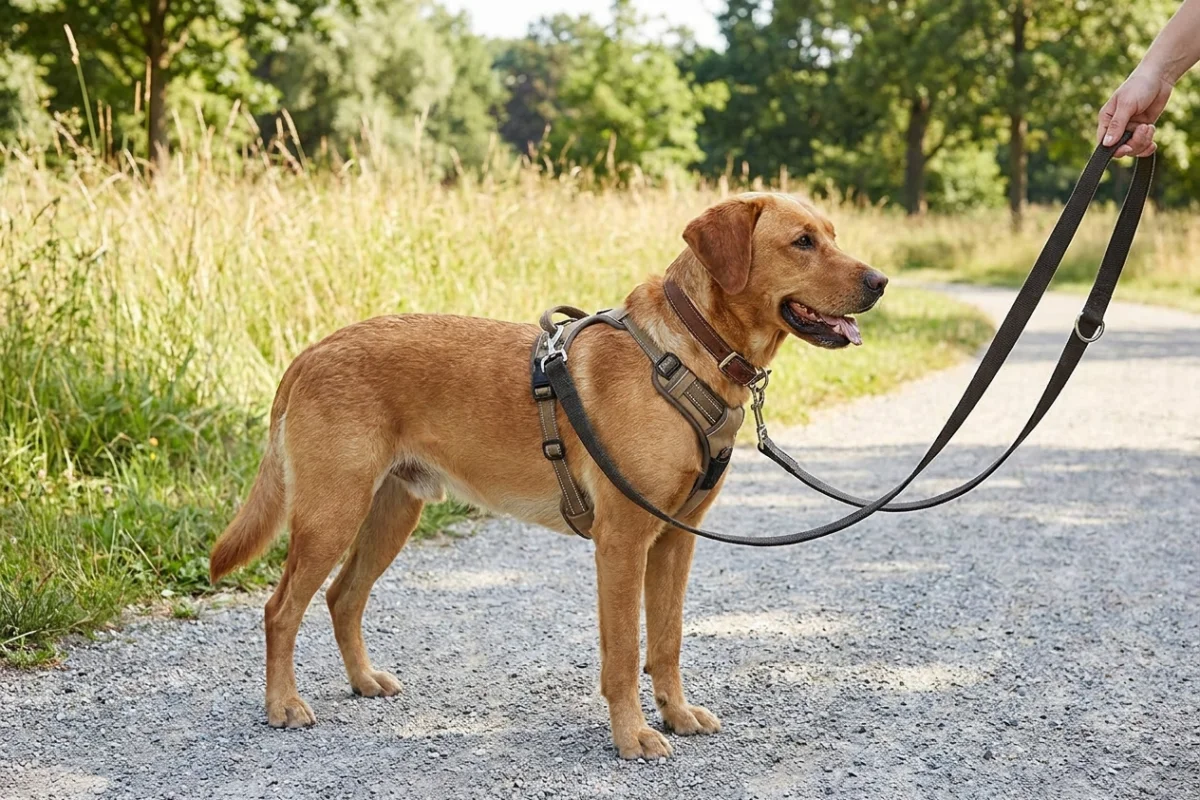
In the world of cynology, safety is an absolute priority, especially when dealing with escape artists, fearful dogs, or those in the middle of a behavior modification process. Using a collar and harness at the same time is not an aesthetic redundancy, but an advanced safety technique that allows for a double control point in the face of any unforeseen event.
This configuration, commonly known as a double-anchor system, is essential to ensure that if one of the elements fails or the dog manages to slip out of one of them, there is always a safety backup connected to the leash. However, wearing both accessories requires proper planning to avoid chafing, neck strain, or unnecessary discomfort for the animal.
In this article, we will analyze when it is recommended to use this system, which materials are most suitable to avoid friction, and how to correctly adjust both the collar and the harness so they work in harmony. If you are looking for maximum peace of mind on your walks, learning to combine these two elements technically will mark a before and after in your daily routine.
Collar and harness at the same time: Why use double equipment?
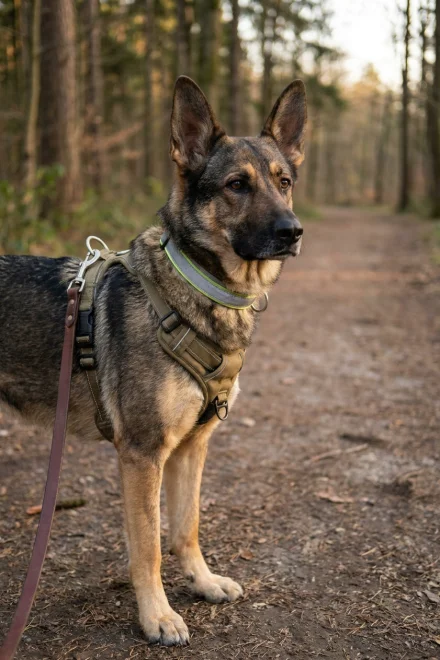
Using a collar and a harness simultaneously is a safety technique highly valued by trainers and owners of escape-artist or reactive dogs. This system, known as double restraint, offers an extra layer of protection, ensuring that if one of the elements fails or the dog manages to slip out, the other maintains control.
It is not a punitive measure, but a strategy to guarantee safety in complex environments or during the initial phases of training. By distributing the anchor points, the handler has greater maneuverability without exerting excessive pressure on a single area of the animal's body.
This combination is ideal for adopted dogs that still feel fear, dogs with thin necks that slip out of their collars easily, or specimens with great strength that require more balanced control during the walk.
When and how to implement double restraint
The decision to use a collar and harness at the same time usually responds to specific safety needs. Not all dogs need it, but in certain cases, it is the difference between a quiet walk and a possible accident. The key lies in knowing how to choose the right equipment so that the dog does not feel uncomfortable or see its mobility limited.
Escape-artist and fearful dogs
Many dogs, especially greyhounds or dogs with a phobia of loud noises, develop a surprising ability to back up and slip out of their collar or harness. By wearing both, connected by a double-ended leash or a safety coupler, the risk of escape is reduced practically to zero.
Control in reactive dogs
For dogs that react to other stimuli (other dogs, cars, or people), double equipment allows for more precise handling. The harness helps manage body strength, while the collar allows for gentle head guidance to redirect the animal's attention toward the handler without causing cervical damage.
Use of the double-ended leash
For this system to be effective, the ideal is to use a leash with two snap hooks. One clips to the collar and the other to the harness (preferably on the front or back attachment). This allows for balancing tension and preventing the dog from suffering sudden jerks on the neck, distributing the impact more uniformly across its anatomy.
Comparison of restraint systems
Below is a comparative table to understand what each element provides and why the combination of both is the safest option in critical cases:
| System | Control | Safety (Anti-escape) | Comfort | Recommended use |
|---|---|---|---|---|
| Collar Only | High (direction) | Low | High (if no pulling) | Calm and trained dogs |
| Harness Only | Medium (body) | Medium | Very high | Relaxed walks, small dogs |
| Double Equipment | Maximum | Very high | Medium (requires adjustment) | Fearful, reactive, or in-training dogs |
Tips for not compromising the dog's comfort
Wearing two accessories can be overwhelming for the dog if not done correctly. The goal is for the animal to hardly notice the difference compared to wearing a single element, keeping its freedom of movement intact.
Keys for a perfect fit
- Lightweight and padded materials: choose a flat collar and a Y-shaped harness that does not block the shoulders or joints.
- The two-finger rule: make sure both the collar and the harness allow for two fingers to be inserted between the accessory and the dog's skin to avoid oppression.
- Avoid overlaps: place the collar high enough and the harness well-fitted to the chest so that the metal parts do not rub against each other.
- Leashes of appropriate length: a leash that is too short will generate constant tension at both points, which is stressful for the animal.
Remember that double restraint is a specific transition or safety tool. If the dog appears very uncomfortable, check the sizes or consult with a professional to ensure the equipment is suitable for its morphology.
Common mistakes when managing double equipment
Even with the best intention, it is easy to make mistakes that can negate the benefits of this system or cause discomfort to the dog. Identifying them in time is essential for a safe walk.
- Tightening the collar too much: out of fear of escape, many owners over-tighten the collar, making breathing and swallowing difficult.
- Using retractable leashes: Flexi-type leashes are not compatible with double restraint, as they do not allow real control over the two anchor points.
- Not checking for wear: by trusting that there are two elements, wear on seams or closures is sometimes ignored until it is too late.
- Clipping both points to the same snap hook: this negates the independence of the systems and can force unnatural postures on the dog's neck.
The key is balance. Double equipment should be a silent safety net, not armor that limits the dog's joy during its exploration and sniffing time.
Conclusion: Safety and well-being on every walk
Managing the use of a collar and harness at the same time is a sign of responsibility on the part of the owner, especially when dealing with dogs with special needs. By providing this double layer of safety, we not only protect the animal from possible escapes or accidents, but we also gain confidence as handlers.
The key to success lies in the choice of ergonomic materials, a precise fit, and the use of appropriate leashes that allow for fair distribution of force. With patience and the right equipment, the dog will adapt quickly, enjoying safe walks where control and comfort go hand in hand.
Frequently asked questions about the combined use of collar and harness
Why should I use a collar and harness simultaneously?
It is mainly recommended for redundant safety. If the dog gets scared and manages to pull its head out of the collar, the harness keeps it secured, and vice versa. It is vital for recently adopted dogs, greyhounds, or dogs with a phobia of loud noises.
How is the leash attached if the dog is wearing both?
Ideally, use a double-clip leash (multi-position leash) with one carabiner on the collar and another on the harness. A 'safety connector' can also be used to join both elements to a single standard leash.
Can using both cause skin chafing?
Yes, if the right materials are not chosen. To avoid this, the collar should be made of a soft material like neoprene or biothane, and the harness should allow free movement of the shoulder blades so it doesn't clash with the collar when walking.
What type of collar is best to combine with a harness?
A flat, wide collar or a fixed safety collar is recommended. Avoid very thin collars or those made of rough materials that could get tangled with the harness straps in the neck area.
Is it uncomfortable for the dog to wear so much equipment?
If they are properly adjusted, it shouldn't be. The key is that the collar is not excessively tight and that the harness is Y-shaped so as not to interfere with the anatomy of the neck where the collar rests.
Is this system recommended for puppies?
It can be useful during the first outings to prevent panic-induced escapes, but it must be constantly supervised so the puppy doesn't get caught in the excess of leashes and hardware.
What is a safety connector or 'safety coupler'?
It is a small piece of nylon with two carabiners that joins the collar to the harness. It allows the dog to remain attached to the collar even if you use a normal leash clipped to the harness, in case the harness buckle breaks.
Does the weight of the hardware affect the dog's health?
Yes. When using two accessories, the weight of the carabiners and rings is doubled. It is essential to choose high-quality lightweight aluminum or stainless steel hardware to avoid overloading the dog's cervical vertebrae.
When is the use of a double anchor mandatory?
It is not mandatory by law, but it is the standard protocol in animal shelters for walking fearful or recently rescued dogs that do not yet have a bond with the handler.
How does this affect freedom of movement?
If the double-clip leash is too short, it can limit neck rotation. Make sure the length of the leash allows the dog to sniff the ground without the collar pulling its head upward.