Other collars
Last updated: April 6, 2026
Collars for reactive dogs: Safety and visual signaling during the walk
Walking a reactive dog can be an emotional and physical challenge for any handler. Reactivity, whether due to fear, frustration, or lack of socialization, requires not only patience and training but also specific tools that guarantee safety and communication with the environment.
In this article, we explore the world of collars for reactive dogs, focusing on how visual signaling (such as color coding) and high-resistance hardware can make a difference. You will learn how to choose a model that not only withstands unexpected lunges but also informs other owners about your pet's need for space.
If you are looking to improve the quality of your walks and reduce your dog's stress, understanding what features their collar should have is the first step. From the use of the color yellow to double security systems, here you will find the ultimate guide to managing reactivity responsibly.
What is a collar for reactive dogs and why is it necessary?
Walking a reactive dog can be a challenge for both the animal and its handler. Reactivity is not necessarily aggression; it is an exaggerated response to stimuli such as other dogs, people, bicycles, or noises. In this context, collars for reactive dogs serve a vital dual function: ensuring physical safety through resistant materials and serving as a visual communication tool for the environment.
The main objective of these accessories is to manage the dog's personal space. By using specific colors or clear messages, we inform other owners that our dog needs distance, avoiding unexpected encounters that could trigger a stress episode or conflict. It is not just about control, but about providing the animal with a more predictable and safe walking environment.
There are different types of collars and accessories designed for this purpose, from those that incorporate international color codes to reinforced models with safety closures. Choosing the right one allows the handler to feel safer and the dog to work on its behavior modification without unnecessary external interruptions.
Advantages of visual signaling during walks
Visual signaling is one of the most effective tools for owners of reactive dogs. The use of accessories with bright colors allows people to identify from a distance that they should not allow their dogs to approach without control. This drastically reduces tense situations during the walk.
Among its main benefits, the prevention of incidents stands out. By visually marking the dog, a psychological barrier is established that encourages respect for others' space. This is especially useful in parks or urban areas where the density of pets is high and face-to-face encounters are frequent.
Additionally, these collars help to educate the community. The use of the color yellow, for example, is linked to global initiatives that promote empathy towards dogs in training, dogs with health problems, or animals with deep fears.
- Prevents unwanted approaches from other dogs.
- Reduces the handler's stress level by having greater visual control.
- Communicates a clear message without the need for constant verbal explanations.
- Promotes more respectful coexistence in public spaces.
- Allows working on reactivity in a more controlled environment.
Safety features in reinforced collars
For a reactive dog, physical safety is non-negotiable. A sudden pull at a stimulus can break a conventional collar, risking the integrity of the animal and those around it. Therefore, collars designed for these cases are usually made of high-resistance materials such as double-layer nylon or Biothane.
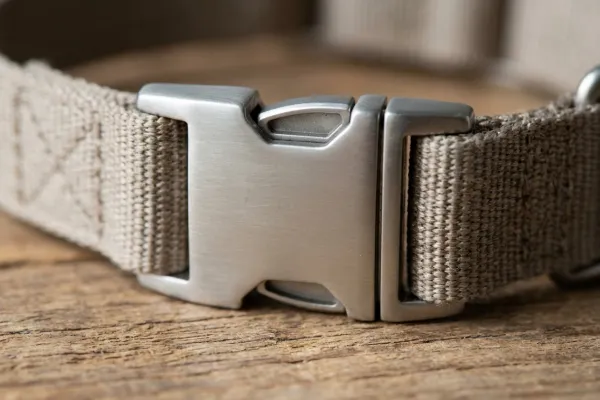
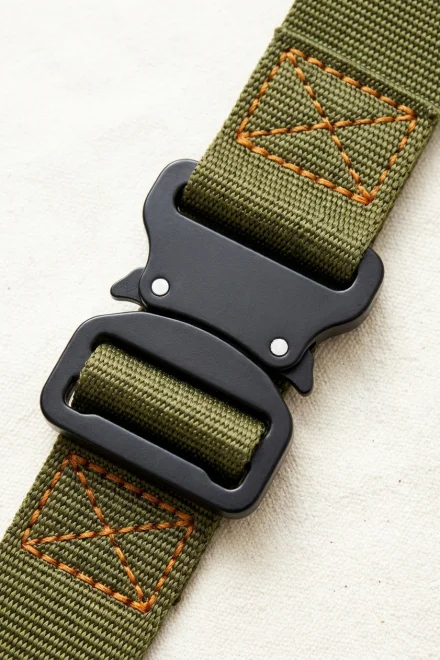
Safety closures are another key element. Many models include buckles with additional locking to prevent accidental openings. Likewise, D-rings are usually made of stainless steel or heavy alloys, welded to resist high pressure without deforming.
- Reinforced stitching with high-tenacity threads.
- Special widths to better distribute pressure on the neck.
- Padded neoprene linings to prevent chafing during pulls.
- Corrosion and impact-resistant metal components.
- Double ring systems for greater security in the attachment.
Investing in a high-quality collar is not just a matter of durability, but a measure for preventing escapes and serious accidents during moments of maximum reactivity.
The color code: The Yellow Dog Project
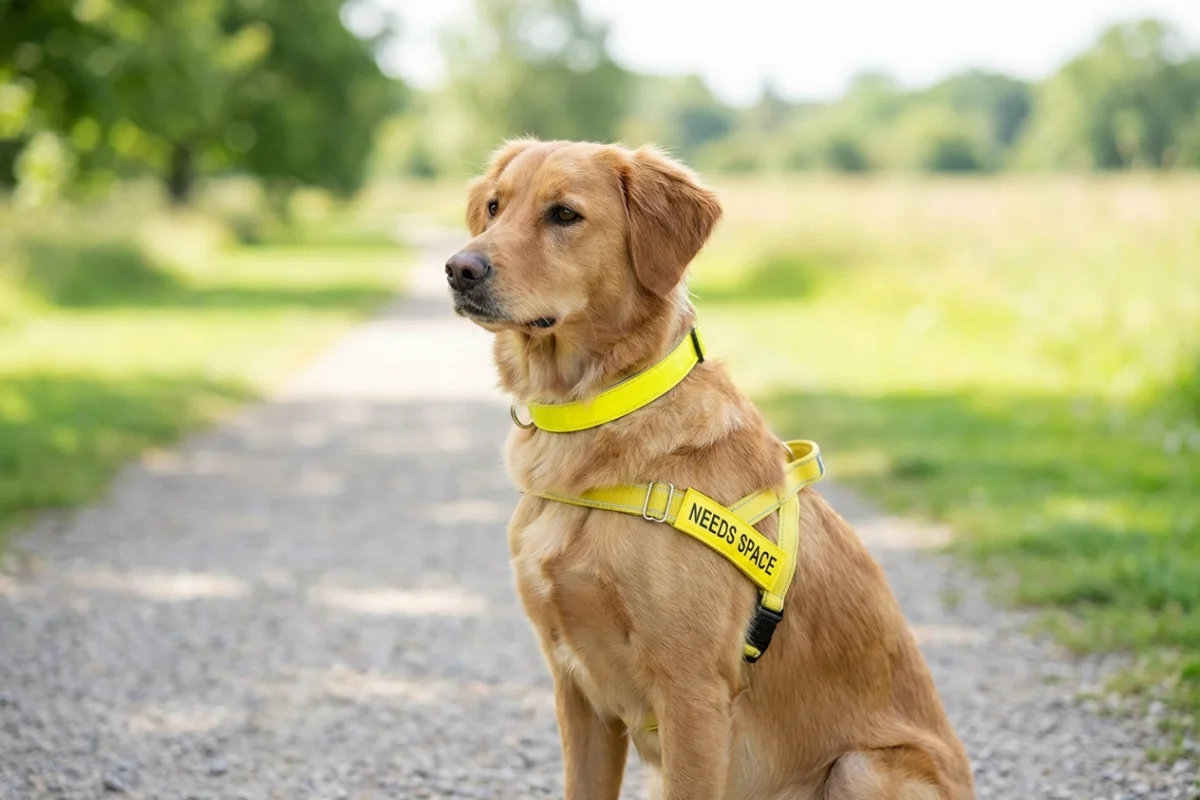
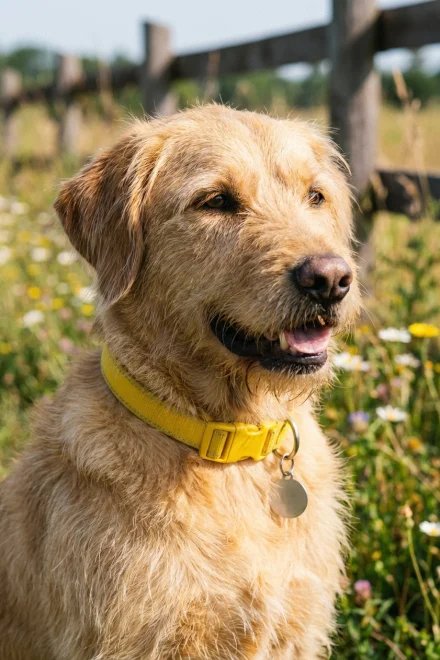
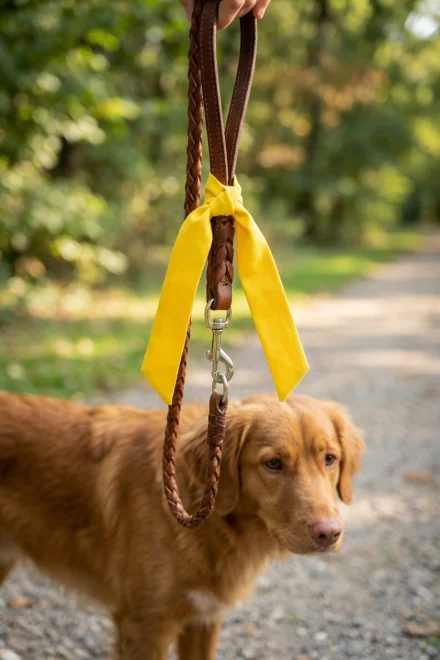
The Yellow Dog Project is an international movement that seeks to raise awareness about dogs that need distance. The use of a ribbon, bandana, or yellow collar indicates that this dog should not be approached by strangers or other animals for various reasons.
Not all dogs wearing yellow are aggressive. They can be dogs in a post-operative period, females in heat, service dogs working, animals with trauma, or simply dogs that are in the middle of a training process. The color yellow is a universal message of caution.
Respecting this code is fundamental for coexistence. If you see a dog with this badge, the correct thing to do is to maintain distance, not call it, and, if you have your dog on a leash, prevent it from approaching to 'say hello'.
Common mistakes when choosing a collar for reactive dogs
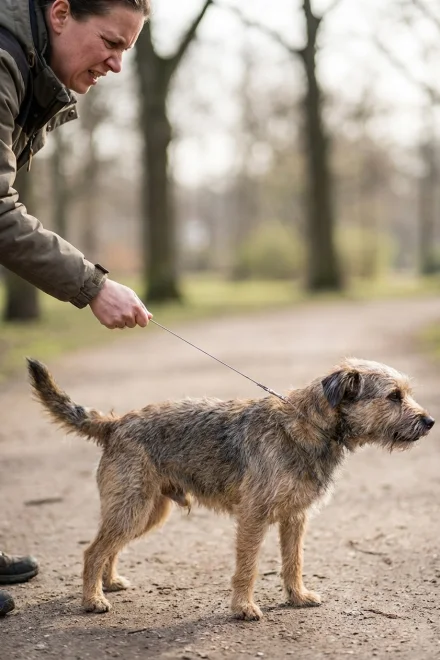
One of the most frequent mistakes is using collars that are too thin. In a reactive dog, a narrow collar concentrates all the force of the impact on a small area of the trachea, which can cause physical injuries and increase the animal's state of panic or irritability.
Another common failure is relying on low-quality collars with simple plastic closures. In the face of an explosive reaction, these components can give way. It is also a mistake not to complement the collar with clear signaling; a very secure collar is of no use if the environment does not know it should maintain distance.
- Using punishment or prong collars (they increase reactivity through pain).
- Not checking the wear and tear of materials periodically.
- Choosing a color that camouflages with the dog's fur.
- Adjusting the collar too loosely, allowing the dog to slip out.
The right choice must balance visibility, resistance, and physical well-being of the dog, always avoiding any tool that bases its operation on pain or discomfort.
Conclusion: Safety and communication for a peaceful walk
Managing a reactive dog requires patience, training, and the right tools. Safety and signaling collars are not a magic solution to reactivity, but they are indispensable facilitators to make the improvement process safe for everyone.
When choosing a collar, always prioritize the quality of the materials and the clarity of the visual message. A dog that feels safe and whose space is respected by others will be much more likely to reduce its stress levels and improve its behavior in the long term.
Remember that the collar is only one part of the equipment. Combining it with a resistant leash, proper handling, and, above all, advice from a canine behavior professional, will make the difference between a walk full of tension and a positive learning experience for your pet.
Signaling options for reactive dogs
There are different ways to communicate that your dog needs space. Depending on the situation and the level of reactivity, you can opt for one or several of these options combined.
🟡 Yellow Collar
The most classic and internationally recognized option. It is ideal for constant and durable signaling throughout the walk.
🏷️ Leash sleeves with text
They are placed over the leash and usually carry embroidered messages like 'DO NOT APPROACH' or 'IN TRAINING'. They are very visible at eye level.
🎗️ Ribbons or bandanas
An economical and quick solution. They can be tied to the collar or the leash, although they can move or get dirty more easily.
🛡️ Harnesses with patches
They allow for interchangeable Velcro patches. They offer a large signaling surface and are ideal for dogs that pull a lot.
📢 Informative vests
The maximum visibility option. They cover the dog's back with neon colors and large messages, impossible to ignore from a long distance.
The best choice will depend on the environment where you usually walk. In very crowded areas, the combination of a yellow collar with an informative leash sleeve is usually the most effective strategy.
Practical tips for walking a reactive dog
📏
Verify the collar's fit: two fingers should fit between the neck and the material for it to be safe and comfortable.
🛡️
Always use high-resistance materials and check the stitching and closures at least once a month.
🚶♂️
Anticipate stimuli: stay calm and use positive reinforcement when your dog ignores a trigger.
🗣️
Do not be afraid to verbally ask for space, even if your dog is already wearing clear visual signals.
⚕️
Consult with a canine educator to work on the root of the problem while using these management tools.
The importance of empathy in the canine community
Finally, it is fundamental to remember that reactivity is a stage or a condition, not a definitive sentence. Owners of reactive dogs often feel judged or isolated. The use of specific collars not only protects the dog but also helps to make visible a reality that affects thousands of multi-species families.
If you are the owner of a non-reactive dog, learning to identify these signals (like the color yellow) makes you an ally. Respecting the space of a dog that needs it is the greatest act of respect you can have towards another animal lover.
With the right tools, such as a good safety collar and clear signaling, the path to calm is much easier to travel. Safety and communication are, without a doubt, the best allies to enjoy walks with your best friend again.
Frequently asked questions about collars for reactive dogs and signaling
What is a collar for reactive dogs?
It is a collar designed with high-resistance materials and often with visual elements (colors or patches) that indicate the dog needs space or has special handling needs during the walk.
What does the color yellow mean on a dog's collar?
The color yellow is part of the 'Yellow Dog Project' and indicates that the dog needs space. It could be because it is reactive, in training, in pain, fearful, or in heat.
Why is width important in these collars?
A wide collar (4 to 5 cm) is essential for reactive dogs because it better distributes pressure on the neck during a sudden pull, protecting the trachea and cervical vertebrae from potential injuries.
Is it recommended for the collar to have a control handle?
Yes, many collars for reactive dogs include an integrated handle. This allows the handler to hold the dog short and securely in critical situations, such as crossing paths with another dog or a stressful stimulus.
What materials are safest for dogs that pull hard?
Materials such as double-layer nylon or reinforced biothane are recommended, always accompanied by metal buckles or security closures with locks to prevent accidental openings.
How does visual signaling help other owners?
Collars with messages like 'Do not touch' or 'I need space' act as a preventive barrier, preventing unknown people or dogs from getting too close and triggering a negative reaction.
Should I use a double-closure collar for extra security?
It is highly recommended. Systems that combine velcro and a metal buckle, or double D-rings, offer security redundancy that prevents the dog from escaping if one of the closures fails.
Does a collar for reactive dogs replace training?
No. The collar is a management and safety tool. It should always be complemented by a behavior modification plan supervised by a canine behavior professional.
How important is padding in these collars?
Neoprene padding or soft materials reduce friction and impact. A reactive dog is already under stress; avoiding additional physical discomfort helps keep their reactivity threshold as low as possible.
How to choose the size if my dog tries to slip out of the collar?
For dogs that try to 'escape' backwards, it is vital to measure the neck just behind the ears. The collar should be adjusted so it doesn't pass over the head, or opt for specific anti-escape models for reactive dogs.