
Other collars
Last updated: April 2, 2026
Martingale collars for dogs: The ultimate guide to the anti-escape system
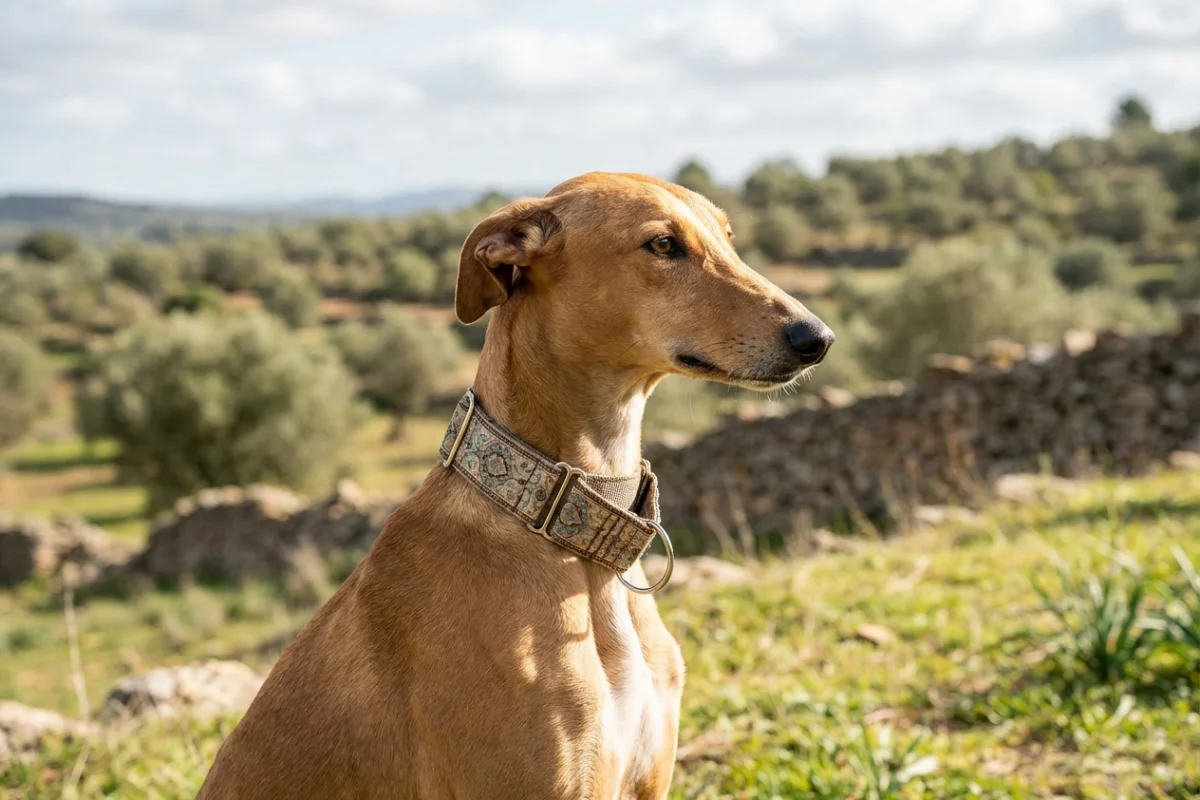
For many dog owners, especially of breeds like greyhounds, podencos, or dogs with a great ability to escape, the traditional collar is not always the safest option. This is where the Martingale collar comes into play, an ingenious design that combines safety and comfort without the risks of conventional punishment collars.
In this article, we will explore in depth what a Martingale collar is, how its limited-adjustment mechanism works, and why it has become the gold standard for dogs with wide necks and narrow heads. If you have ever feared your dog slipping out of their collar during a walk, this guide is for you.
You will learn to differentiate it from other systems, how to adjust it correctly to avoid injuries, and how to choose the best materials so your pet enjoys a safe and stress-free walk. Discover why the anti-escape system is the ultimate solution for the most escapist dogs.
What is a Martingale collar and why it is the ultimate escape-proof system
The Martingale collar, also known as a limited-slip collar or greyhound collar, is one of the most valued accessories by trainers and owners of dogs with thin necks. Unlike traditional collars, this system is specifically designed to prevent the dog from being able to slip out of the collar when pulling backwards, a common problem in breeds with narrow heads.
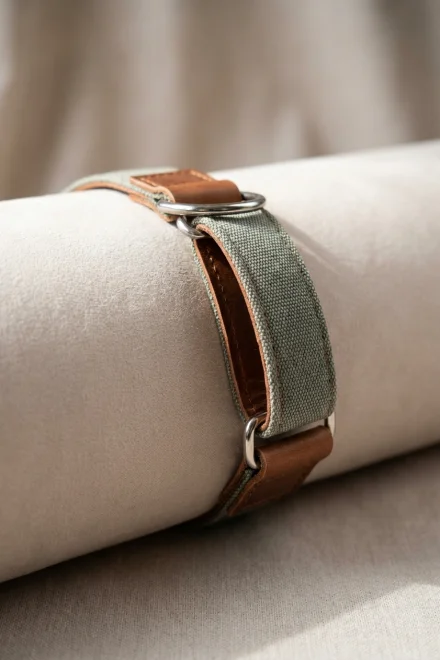
Its design is based on a two-loop mechanism: one that adjusts to the dog's neck and another where the leash is clipped. When the dog pulls, the main loop closes in a limited way, just enough so that the collar does not slip over the ears, but without choking the animal like a traditional training collar would.
In this guide, we will analyze in depth why this accessory has become the preferred choice for ensuring safety during walks, especially for escape-artist or skittish dogs.
How the double-loop mechanism works
The secret to the Martingale collar's effectiveness lies in its dynamic adjustment system. While the dog walks relaxed, the collar remains loose and comfortable around its neck, avoiding the constant rubbing and unnecessary pressure that fixed collars usually cause.
However, the moment the dog tries to back up or pull hard, the second loop tightens. This causes the collar to close up to a previously adjusted maximum safety point. This stop prevents the collar from sliding over the head, keeping the dog secured at all times.
It is a fundamental tool for dogs with sighthound morphology (such as greyhounds, podencos, or whippets), where the neck diameter is similar to or greater than that of the head. Without this system, a simple backward movement would allow a conventional collar to slip off easily.
Safety and well-being: Is it a punishment collar?
There is a common confusion when classifying the Martingale as a punishment collar, but the reality is very different. Its goal is not to inflict pain to correct, but to provide passive safety. By having a physical stop, the collar never closes beyond the width of the dog's neck.
For skittish dogs that tend to panic at loud noises or new situations, this collar is a life insurance. It prevents accidental escapes that could end in accidents or loss, allowing the owner to regain control without damaging the animal's trachea.
Additionally, being generally wider than standard collars, they distribute pressure better over a larger surface area of the neck, which is much more comfortable and less harmful to the skin and cervical muscles.
Martingale vs. other restraint systems
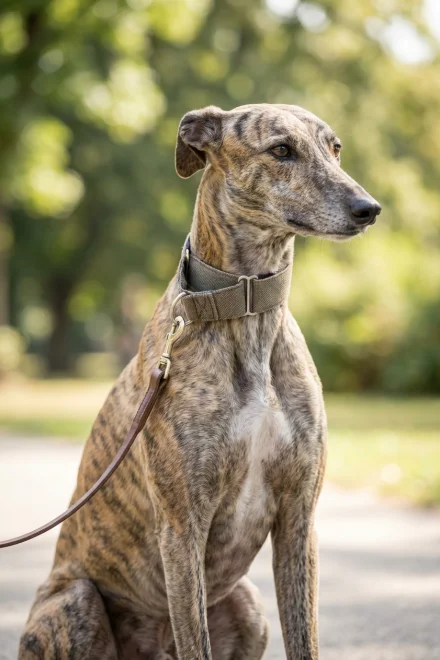
Choosing between a Martingale collar, a standard one, or a harness depends on your dog's physical characteristics and behavior. Here we compare how the Martingale system performs against other popular options.
🐕 Standard Collar (Buckle)
Easy to put on, but dangerous for dogs with narrow heads or escape artists, as they can easily remove it by pulling back.
⛓️ Choke Collar
Unlike the Martingale, it has no stop. It can cause serious tracheal injuries and unnecessary stress. The Martingale is the ethical alternative.
🦺 Escape-Proof Harness (3-point)
Excellent for maximum safety, although more cumbersome. The Martingale collar offers similar safety with the lightness of a traditional collar.
🎨 Designer Collars
Many Martingales are made of wide decorative fabrics. They combine aesthetics with escape-proof functionality, something hard to find in other models.
In conclusion, the Martingale collar wins in safety for specific breeds and dogs prone to escaping, offering firm but respectful control of the dog's anatomy.
Tips for correct use of the Martingale collar
📏
Adjust the collar so that, at rest, it is loose but without hanging too much to prevent the dog from getting a paw caught.
🏠
It is recommended to remove the collar inside the house, as the loose loop could accidentally snag on furniture.
🧼
Wash the collar regularly; being made of fabric or nylon, they accumulate dirt that can irritate the skin of the neck.
🐕
Do not use it to leave the dog tied to a post; the system is designed exclusively for active and controlled walking.
🔄
Check the wear and tear of the rings and the fabric every few months to ensure the escape-proof system remains reliable.
Materials and types of Martingale collars
Nylon Martingale
It is the most common and economical option. Nylon is a highly resistant and durable material, ideal for daily use. These collars are usually adjustable and come in an infinite variety of colors. They are easy to wash and dry quickly, making them perfect for dogs that enjoy walks in the countryside or parks.
Its main advantage is its lightness, although for dogs with very sensitive skin, it is advisable to look for models that include an inner lining to avoid direct rubbing of the nylon.
Fabric Martingale (Greyhound style)
These are the quintessential Martingale collars for greyhounds and podencos. They are usually much wider (up to 5 or 6 cm) and are made with decorative fabrics over a polypropylene base. Their width protects the delicate neck of sighthounds, distributing pressure optimally.
In addition to their functionality, they stand out for their aesthetics, with ethnic or geometric designs. They are accessories that combine maximum safety with a unique style.
Biothane Martingale
For the most adventurous dogs, there are Biothane versions. This material mimics leather but is completely waterproof and antibacterial. It does not absorb odors or moisture, making it ideal for dogs that swim or live in rainy climates. They are cleaned simply with a damp cloth.
Ultimately, the Martingale collar is the definitive tool for those seeking absolute peace of mind during the walk. Its intelligent design protects the dog from accidental escapes without compromising its comfort or physical health.
Comparison of materials in Martingale collars
| Material | Strength | Comfort | Cleaning | Ideal for | Durability |
|---|---|---|---|---|---|
| Nylon | High | Medium | Easy | General daily use | High |
| Fabric/Cotton | Medium | Very High | Medium | Greyhounds and sensitive skin | Medium |
| Biothane | Very High | High | Very Easy | Water/field dogs | Excellent |
Frequently asked questions about Martingale collars for dogs
What exactly is a Martingale collar?
It is a type of limited-adjustment collar that consists of two loops. The main loop is placed around the neck and the second loop is where the leash is attached. When the dog pulls, the collar tightens just enough to prevent it from slipping over the head, but without choking them.
Why are they ideal for greyhounds and podencos?
These breeds have heads narrower than their necks, which makes it easy for them to slip out of traditional collars. The Martingale collar closes proportionally to the pull, preventing the dog from accidentally freeing themselves during the walk.
Is the Martingale collar a punishment collar?
No. Unlike prong or full-choke collars, the Martingale has a physical stop that prevents it from closing indefinitely. Its function is purely for safety (anti-escape), not for correction through pain.
How should a Martingale be correctly adjusted?
When the collar is tight (with the dog pulling), the two metal hardware pieces of the small loop should never touch. There should be a space of about two fingers. If they touch, the collar is too loose and the dog could escape.
Can my dog wear the Martingale collar all day?
It is not recommended to leave it on unsupervised at home. Due to its loose loop design, the collar could get caught on furniture or other objects, posing a snagging risk. It is a collar designed primarily for walks and outdoor safety.
What materials are best for this type of collar?
The most common ones are made of reinforced nylon or cotton fabric with stainless steel hardware. Since these collars are usually wider to distribute pressure, it is important that the material is soft so as not to damage the neck fur.
Does it work for dogs that are not greyhounds?
Yes, it is excellent for any dog that has a tendency to pull their head back to escape or for those with very muscular necks where a normal collar slips off easily.
How do I know what collar width to choose?
For small or medium dogs, a width of 2.5 cm is sufficient. For greyhounds or large dogs, widths of 4 cm or 5 cm are recommended to better distribute pressure on the trachea and avoid cervical injuries.
Can a Martingale collar be used with a retractable leash?
It is not ideal. Retractable leashes maintain a constant tension that can cause the Martingale system to always be partially closed, which is uncomfortable for the dog. It is better to use it with fixed or training leashes.
What is the difference between a Martingale with a buckle and a fixed one?
The fixed Martingale is put on over the head, while the one with a quick-release buckle allows it to be put on and taken off without going over the ears, which is ideal for dogs that have sensitive ears or are scared of things being passed over their head.