Other collars
Last updated: April 17, 2026
Dog collars in daycares and dog parks: Safety in socialization
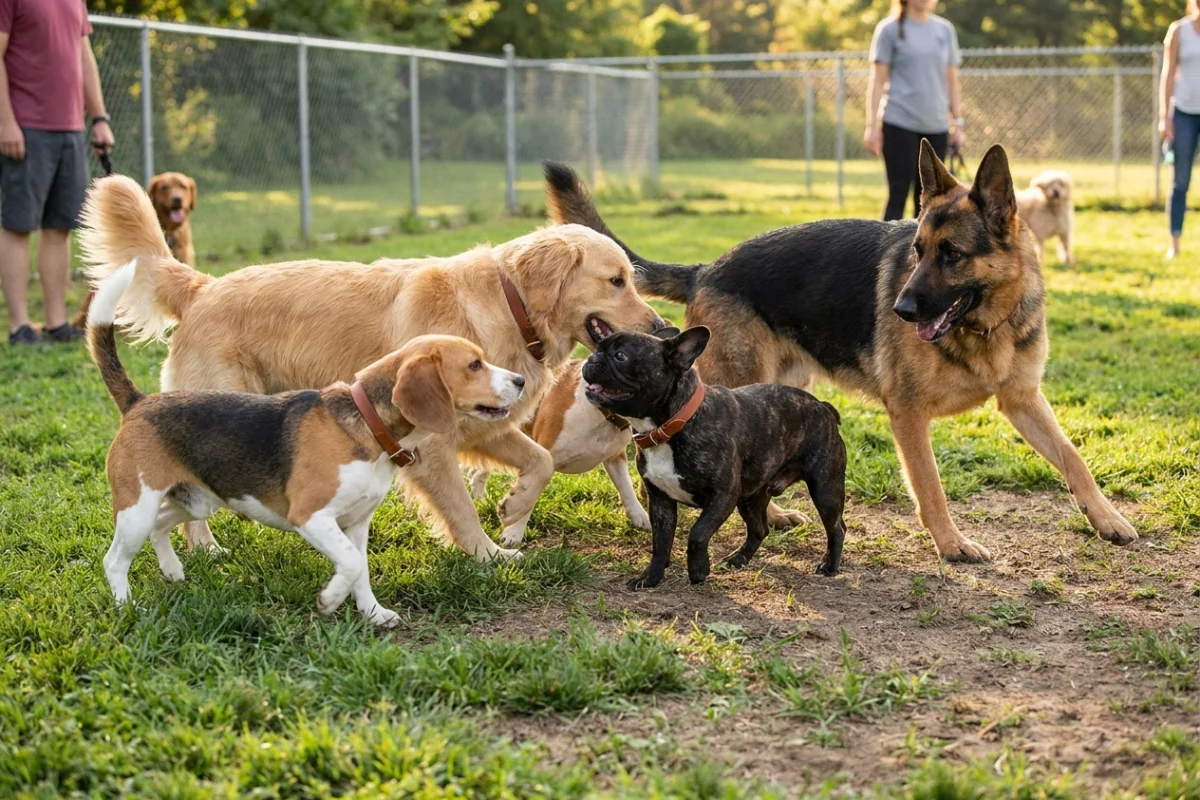
When we take our dog to a dog daycare or a park to socialize, safety must be the absolute priority. In these environments of high interaction and intense play, the collar your pet wears can make the difference between an afternoon of fun and an unexpected accident.
Many owners do not consider the risks of accidental snagging when dogs play by biting each other's necks or chasing one another. Therefore, choosing a suitable collar for group socialization is essential to prevent tracheal injuries or panic situations during play.
In this article, we will analyze what characteristics a collar should have for collective play environments, which materials are the most hygienic for sharing space with other dogs, and how to ensure your dog is identified and safe without compromising their physical integrity or that of their playmates.
Why is choosing the right collar for daycare and parks key?
Socialization in dog daycares and parks is fundamental for the emotional well-being of our pets. However, these intense play environments present specific safety challenges, especially regarding the use of collars. An unsuitable accessory can become a snagging or injury risk during interactions with other dogs.
The main goal when choosing a collar for these spaces is to balance animal identification with physical safety. In an environment where dogs run, jump, and play by gently biting each other's necks, the collar must be designed not to cause damage or get caught in the jaw or paws of another playmate.
Many training centers and dog daycares have strict regulations on what type of material is allowed in their facilities. Knowing these guidelines not only facilitates your dog's admission but also ensures a much calmer socialization experience free from avoidable accidents.
Types of collars and their impact on socialization
Not all collars are suitable for free play. Choosing the right model depends directly on the activity level and the environment where the dog is located. Here we analyze the most common options and their safety level.
1. Quick-release collars (Breakaway)
These are, without a doubt, the safest for parks and daycares. They are designed with a special buckle that opens automatically if the collar receives a strong pull or gets caught on a fence or in another dog's mouth. This prevents the risk of accidental strangulation, allowing the dog to be released immediately in a dangerous situation.
2. Flat nylon collars
This is the standard in most homes. They are lightweight and comfortable, but it is vital that the buckle is made of high-quality plastic so it can be manipulated quickly if necessary. It is recommended to avoid collars with belt-style metal buckles in play environments, as they are much slower to remove in case of a snagging emergency.
3. Martingale or limited-slip collars
Although they are excellent for preventing the dog from escaping during a walk, they are not recommended for free play. The additional loop that tightens can easily get caught in another dog's jaw during a friendly scuffle, which can lead to panic and serious injuries for both animals.
4. Prong or punishment collars
These types of collars are totally prohibited in dog parks and daycares. In addition to being coercive training tools, they represent a real physical danger. The prongs can injure the mouth, eyes, or skin of other dogs trying to interact, generating unnecessary conflict and defensive aggression.
5. Harnesses during play
Many experts recommend removing the harness when entering a dog park. Harnesses have more straps and attachment points than a simple collar, which exponentially increases the chances of a paw or tooth getting caught while dogs wrestle or run together.
The risk of snagging during rough play
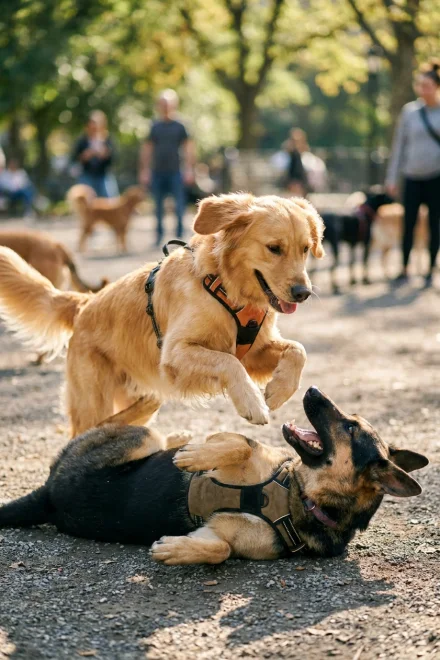
The greatest danger in a dog daycare is jaw entrapment. This occurs when a dog, while playing, puts its mouth under its companion's collar. If the collar does not release or cannot be removed quickly, the trapped dog panics and the dog wearing the collar can suffer asphyxiation.
For this reason, many professional centers require the use of specific safety collars or even prefer that dogs play 'naked' (without a collar) in closed and controlled enclosures. If you decide to leave the collar on, make sure it is tight enough so that only two fingers fit between the neck and the strap.
A collar that is too loose is an invitation to accidents. Prevention through the use of appropriate materials and constant supervision is the only way to ensure that socialization is a benefit and not a risk for your pet.
Tips for safe socialization with a collar
Before letting your dog loose in a common area, take a minute to check their equipment. A small adjustment can make the difference in their safety and that of their canine friends.
- Check the condition of the buckle: Make sure the click closure is not worn out and that it fits firmly but opens easily when pressed.
- Use silent identification tags: Hanging tags can get caught in park netting or in other dogs' fur. Tags that are riveted to the collar are much safer.
- Remove unnecessary accessories: Take off bandanas, hanging LED lights, or bells before intense play begins.
- Observe the play style: If your dog usually plays very physically or 'at the neck', seriously consider using a breakaway collar.
Remember that safety in socialization starts with the owner. Being attentive to how your dog interacts and wearing the correct equipment is a fundamental part of responsible ownership.
Common mistakes when taking a dog to the park with a collar
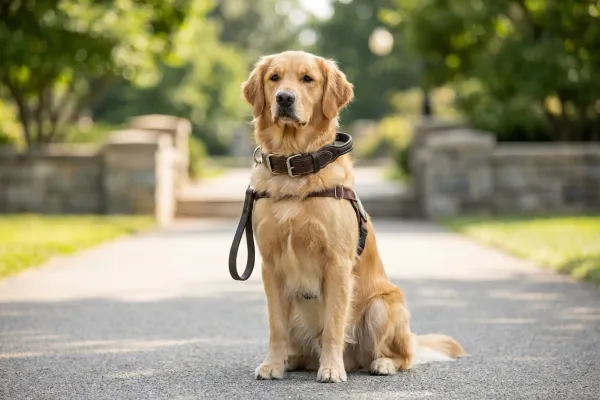
One of the most frequent mistakes is leaving the usual walking collar on without considering if it is suitable for play. Many owners use thick leather collars with traditional metal buckles that, in an emergency, are almost impossible to cut or release quickly under tension.
Another common failure is allowing the use of collars with metal decorations or studs. Although they may be aesthetically pleasing, these elements can cause cuts to the gums or face of other dogs during normal play contact. Likewise, the use of collars that are too loose increases the risk of the dog getting caught on objects in the environment, such as branches or perimeter fences.
Finally, blindly trusting that the dog will not get snagged is a lack of foresight. Not actively supervising while the dogs play prevents reacting in time if a snag occurs. The combination of an unsuitable collar and a lack of attention is the main cause of most incidents in dog parks.
Conclusion
Choosing the right collar for dog daycares and parks is a vital safety decision. Opting for quick-release models, soft materials, and a correct fit minimizes risks and allows your dog to enjoy the company of others without unnecessary dangers.
Socialization should always be a positive experience. By equipping your pet with accessories designed for safe play, you are protecting their physical integrity and fostering a harmonious coexistence environment for the entire canine community.
Before your next visit to the park, check your dog's collar and make sure it is the safest option for their fun.
Frequently asked questions about dog collars in group environments
Why is a conventional collar dangerous in a dog daycare?
The main risk is entrapment. During play, a dog can get its jaw or a paw caught in another's collar, which can lead to choking, dental injuries, or aggressive reactions due to panic from being unable to break free.
What type of closure is safest for playing with other dogs?
Quick-release (click) closures are preferable in these environments, as they allow the collar to be removed instantly in case of an emergency. Some centers even require safety collars that open automatically under strong pressure.
Is it better to take the collar off my dog at the dog park?
It depends on the park's regulations and the control you have over your dog. If the environment is enclosed and safe, removing it eliminates the risk of snagging, but makes immediate physical control difficult if a conflict arises between dogs.
Which materials are more hygienic for dogs that socialize a lot?
Biothane or high-density nylon are ideal. When playing, dogs often drool on each other; these materials do not absorb odors, dry quickly, and are easy to disinfect to prevent the spread of bacteria or parasites.
Are hanging ID tags recommended in group play?
They are not ideal, as they can get caught in another dog's fur or teeth. It is better to opt for plates riveted to the collar or direct embroidery on the strap to maintain identification without additional risks.
What is 'collar-grabbing' and how does it affect the choice of equipment?
It is a play behavior where one dog grabs another's collar. To avoid damage, the collar should be flat and properly fitted (two-finger rule), avoiding loose loops where other dogs could get trapped.
Can I use a prong or choke collar in a dog park?
Absolutely not. These collars are extremely dangerous in social environments, as they can seriously injure other dogs during play and are prohibited in most daycares and parks for safety and welfare reasons.
How should I clean the collar after a day at daycare?
Wash it with warm water and mild soap to remove traces of saliva, dirt, and sweat. If the dog has been in contact with many others, a light disinfection with pet-friendly products will help maintain optimal hygiene.
What should I do if my dog gets caught on another's collar?
Stay calm so as not to increase the animals' stress. Look for the quick-release of the collar. If it is a buckle closure and there is tension, it can be very difficult to release, so it is always recommended to carry cutting tools or use safety collars.
Are there specific collars to prevent contact fights?
There are no collars that prevent fights, but a collar with bright colors or signaling can help daycare staff quickly identify your dog and their temperament in large groups.