Other collars
Last updated: April 2, 2026
Collars for long-haired dogs: Guide to avoiding knots and protecting the coat
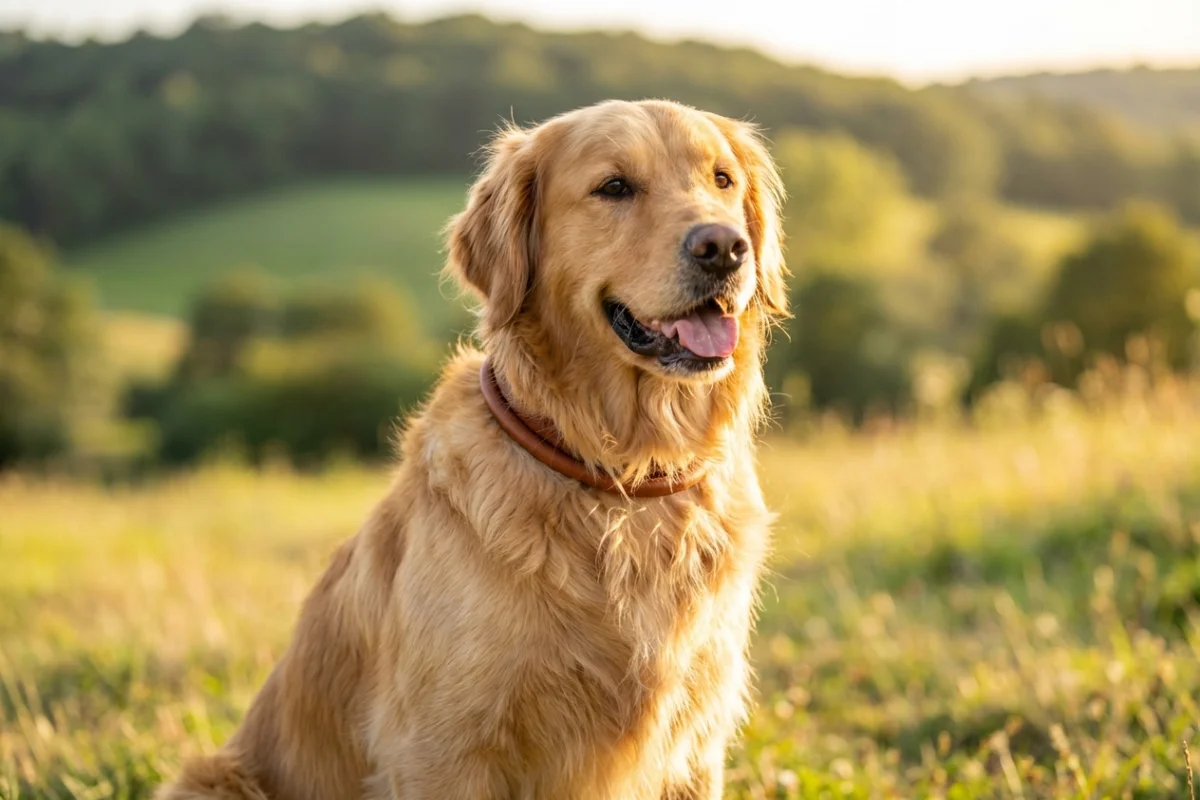
Maintaining the coat of a long-haired dog in perfect condition is a constant challenge for any owner. One of the most frequent problems is the appearance of knots and tangles right in the neck area, caused by the constant friction of conventional accessories.
Choosing an unsuitable collar not only ruins the aesthetics of the coat but can also cause hair breakage, skin irritations, and unnecessary discomfort for the animal. Not all materials or shapes interact the same way with the long, dense hair fibers of breeds like the Golden Retriever, Samoyed, or Afghan Hound.
In this article, we will analyze which are the best collars for long-haired dogs, why round models are the preferred choice of experts, and what maintenance habits you should adopt so that your dog's neck always looks impeccable and knot-free.
Collars for long-haired dogs: Guide to avoiding knots and protecting the coat
Maintaining the coat of a long-haired dog in perfect condition is a constant challenge for any owner. One of the factors that most influences the appearance of knots and hair breakage is, precisely, the type of collar used daily. An unsuitable accessory can ruin months of aesthetic care in a matter of hours.
The constant friction of rough materials or overly wide designs tends to mat the hair fibers, creating tangles that are difficult to undo without resorting to scissors. Therefore, choosing a collar specifically designed to respect the hair structure is fundamental for breeds such as the Golden Retriever, Afghan Hound, or Maltese.
In this guide, we will analyze the best options to avoid excessive friction and how to protect the dermal and aesthetic health of your pet during walks.
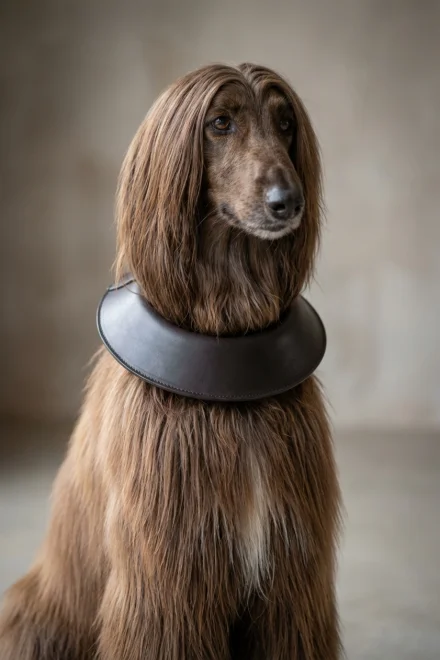
The effectiveness of round or tubular collars
The most recommended solution by dog groomers and breeders is the round design collar. Unlike traditional flat collars, tubular models minimize the contact surface with the hair, allowing it to slide around the accessory instead of getting trapped under it.
The main benefit is the drastic reduction of friction. By having no sharp edges or exposed seams, the hair does not snag or break. This is vital in critical areas such as the neck, where the dog's constant movement during the walk usually generates the most stubborn knots.
Additionally, these collars are usually made of soft leather or high-quality synthetic materials that do not generate static electricity. The absence of static helps the coat maintain its natural fall and prevents frizz, greatly facilitating brushing after the walk.
In summary, the round format is the most ergonomic option for the coat, combining elegant aesthetics with technical functionality that saves hours of aesthetic maintenance.
Risks of using unsuitable materials on long coats
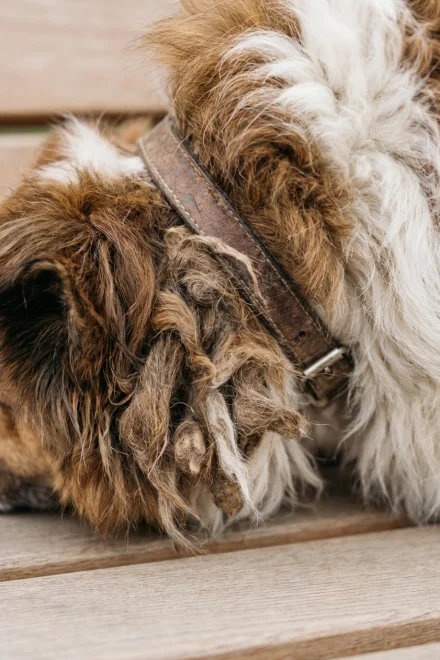
Using a standard collar on a dog with a lot of hair volume carries risks that go beyond simple aesthetics. The main problem is the 'felting' effect, where the hair compacts due to pressure and movement.
Rough nylon collars act like sandpaper on the hair cuticle, causing it to become brittle and lose its natural shine. Over time, this generates friction bald spots or areas where the hair grows with less strength.
Another important risk is moisture accumulation. Wide fabric collars retain water after rain or bathing, keeping the skin damp under the long hair. This is the ideal breeding ground for dermatitis, fungi, and bad odors that are difficult to detect with the naked eye under a dense coat.
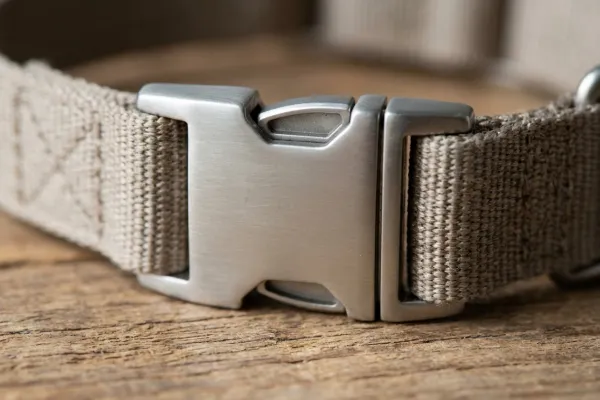
Finally, low-quality plastic closures or very complex buckles can trap entire strands, causing pain to the dog when trying to take it off or put it on.
Recommended materials according to hair type
Not all long hairs are the same: some are silky, others woolly, and others coarser. Choosing the right material is the first step to ensuring that the collar is an ally and not an enemy of the coat.
🧶 Rolled Leather
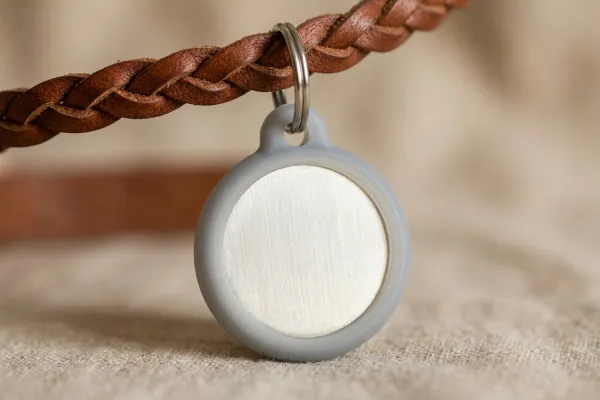
It is the gold standard for show dogs. Natural leather is breathable, softens with use, and its circular shape prevents hair from tangling or being cut.
✨ Silk or Satin
Ideal for dogs with very fine and silky hair (like the Yorkshire). They are usually collars with a nylon core but lined with soft fabric that slides perfectly.
🌊 Rounded Biothane
The best option for active dogs that love water. It is waterproof, does not trap odors, and its smooth finish prevents hair from sticking to the material.
🛡️ High-density nylon
If nylon is chosen, it must be of a very tight and soft weave. It is preferable for it to be narrow to reduce the friction surface on long-haired dogs.
🔗 Long link chains
In training, large links (fur savers) are preferred as they do not 'pinch' the hair, unlike short link chains that pull it out.
The choice of material should be based on the hair texture and activity level. A long-haired dog that frequents the countryside will need biothane, while a city dog will benefit more from round leather.
Maintenance of the coat and the accessory
🧼
Wash the collar with neutral soap to prevent chemical residues from irritating the skin and damaging the hair structure.
💨
If the collar gets wet, air dry it away from direct heat sources so the material does not crack and become rough.
🖌️
Use a metal-toothed comb to check the collar area; it is more effective than a brush for detecting deep knots.
🧴
Apply a little coconut or argan oil to the ends of the neck hair to create a protective barrier against friction.
🔄
Alternate between collar and harness on different days to change the pressure and friction points on the coat.
Technical summary of options for long hair
Why does design matter so much?
The physics behind a knot is simple: pressure plus movement. In a long-haired dog, a flat collar exerts pressure over a wide surface, trapping hundreds of hairs. When walking, the collar moves millimetrically, rubbing those hairs together until the cuticles snag. The round collar reduces that pressure surface to a single linear contact point, allowing the hair to move freely.
Considerations according to breed
For breeds with a dense undercoat (like the Samoyed), breathability is key. A collar that is too wide can cause hot spots due to lack of aeration. In contrast, for breeds with silky and fine hair (like the Maltese), the most important thing is the softness of the material to prevent the hair from becoming 'electric' and tangling due to static.
Suitability comparison by coat type
| Material | Hair Type | Knot Prevention | Water Resistance | Recommended Use | Price |
|---|---|---|---|---|---|
| Rolled Leather | Silky / Long | Excellent | Medium | Daily walk / Show | 25 € – 55 € |
| Tubular Biothane | Dense / Woolly | Very High | Total | Field / Beach / Rain | 20 € – 40 € |
| Silk / Satin | Very Fine / Puppies | High | Low | Indoor / Gentle walk | 15 € – 30 € |
| Soft Nylon | Short-Medium | Low | High | General use | 8 € – 20 € |
In conclusion, investing in a specific collar for long hair is not just a matter of aesthetics, but a well-being measure that avoids skin discomfort and facilitates your pet's daily hygiene.
Frequently asked questions about collars for long-haired dogs
Why do normal collars cause knots in long-haired dogs?
The constant friction of a flat collar against long fur generates static electricity and intertwines the fibers. This, combined with the dog's natural movement, ends up creating tight knots that often have to be cut, damaging the aesthetics of the coat.
What is the best type of collar to avoid tangles?
The round leather collar (or rolled leather) is the most recommended. Its cylindrical shape minimizes the contact surface and allows the hair to slide around the accessory instead of getting trapped under a flat band.
Are chain collars recommended for long-haired dogs?
They are not recommended. Chain links tend to snag and pull out hair, as well as cause dark or gray stains on light coats due to metal friction or oxidation.
Which material is less aggressive on a long coat?
High-quality leather and tubular nylon are excellent options. Leather, being a natural material, generates less static than cheap synthetic materials, better protecting the hair's keratin structure.
Is a wide or narrow collar better for avoiding knots?
To avoid tangles, a round and thin collar is usually superior to a flat and wide one. Wide collars cover more surface area and trap more hair under their structure, increasing the risk of matting.
How can I prevent hair breakage in the neck area?
Make sure the collar is not excessively tight and choose models with smooth finishes and no exposed seams. Removing the collar when the dog is indoors helps the skin and hair follicle rest.
Is using a harness better than a collar for long hair?
Not necessarily. Harnesses have more contact points and straps that pass through critical areas like the armpits and back, which often generates more knots and breakage than a well-selected round collar.
How should I brush the neck area if my dog wears a collar daily?
It is vital to remove the collar at least once a day and thoroughly brush the neck area with a metal-toothed comb. This allows you to undo any beginning of a tangle before it becomes a persistent knot.
Are there specific collars for show dogs?
Yes, there are silk or satin-lined collars designed specifically to maintain competition hair, as these materials reduce friction to an absolute minimum and do not cut the hair.
What to do if a knot has already formed under the collar?
Do not pull on it with the comb. Apply a conditioning or detangling spray, let it act for a few minutes, and try to open the knot with your fingers from the base before attempting to pass a wide-toothed comb.