
Other collars
Last updated: May 25, 2026
Dog collars for metal allergies: Guide to choosing hypoallergenic materials and safe buckles
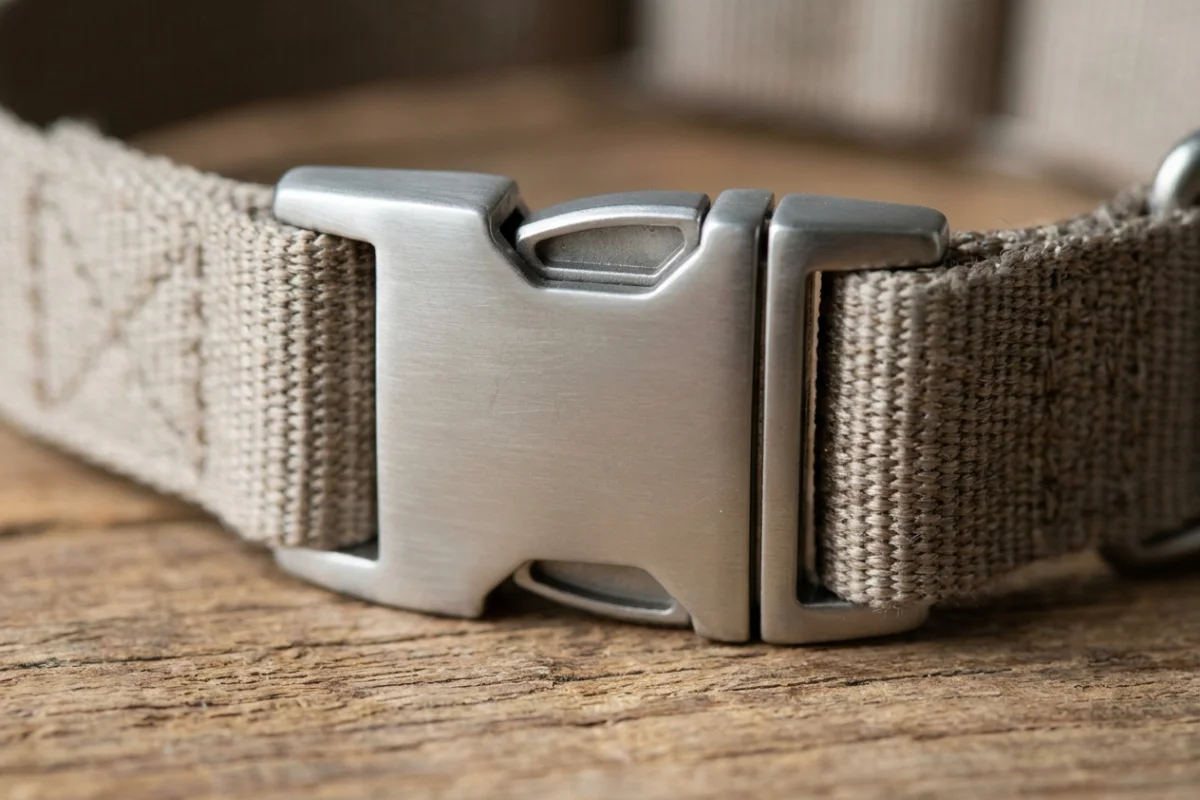
Contact dermatitis is a more common problem than it seems in the canine world, and often the culprit is the material of the collar hardware. Just like humans, some dogs develop an allergy to specific metals, such as nickel or certain low-quality alloys present in buckles and rings.
In this specialized guide, we will analyze how to detect if your pet suffers from this condition and what alternatives exist on the market to guarantee their well-being. From the use of surgical-grade stainless steel to innovative technical polymer closures, you will learn to identify the materials that keep your dog's skin healthy and free of irritation.
If you have noticed redness, hair loss, or constant itching just below the collar closure, you likely need a change to hypoallergenic materials. Here we show you how to choose the safest option without compromising strength or aesthetics.
Dog collars for metal allergies: a necessary solution
Metal allergy, especially to nickel, is not a problem exclusive to humans. Many dogs suffer from chronic skin irritations simply from direct contact of their collar's buckle or ring with their skin. Identifying this sensitivity is the first step to improving your pet's quality of life and avoiding recurring visits to the veterinarian for dermatological problems.
Choosing a hypoallergenic collar involves paying attention not only to the strap or fabric, but fundamentally to the hardware. Synthetic materials, high-resistance buckles, and designs that minimize metal contact are the best alternatives for dogs with sensitive skin. In this guide, we will explore how to select the perfect accessory to avoid allergic reactions.
Below, we analyze the safest materials and key tips to ensure that the walk is a comfortable and itch-free experience for your companion.
Benefits of hypoallergenic materials on the neck
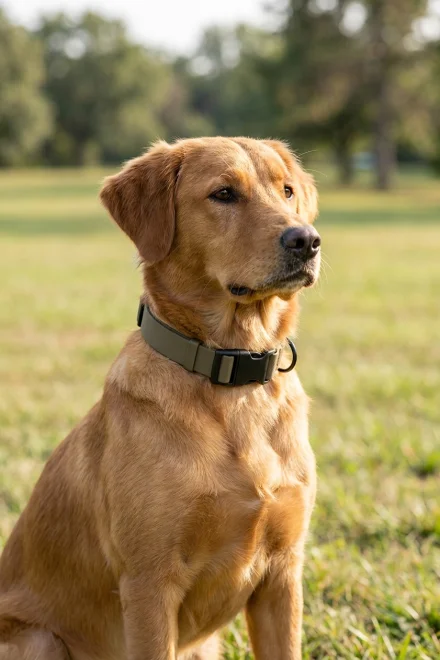
Opting for materials specifically designed to avoid allergies provides immediate benefits for the dog's dermal health. By eliminating nickel and other heavy metals, the possibility of developing contact dermatitis—a condition that can become painful and difficult to treat if the source of the problem is not removed—is drastically reduced.
The main benefit is the absence of irritation. Collars with polymer or technical plastic buckles do not react with skin moisture or sweat, keeping the neck area dry and healthy. This is vital for dogs that spend a lot of time wearing the collar or live in humid climates.
Another point in favor is lightness. Hypoallergenic materials like biothane or nylon with acetal closures are usually much lighter than collars with large iron or steel hardware. This improves the dog's mobility and reduces the load on the cervical vertebrae, especially in small breeds.
Finally, the ease of cleaning of these materials prevents the accumulation of bacteria or fungi that could aggravate any small scrape. A clean collar is synonymous with healthy skin, and synthetic materials allow for quick and effective maintenance.
Risks of ignoring metal sensitivity
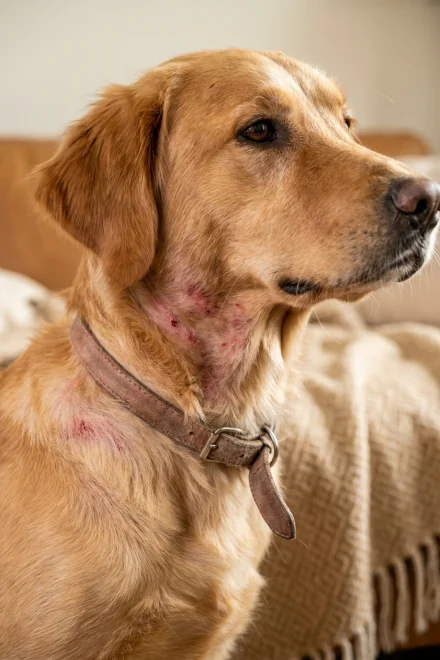
Ignoring the signs of a metal allergy can lead to serious complications. Prolonged contact with reactive materials generates a cycle of itching and scratching that damages the skin barrier.
Redness and hair loss in the exact area where the buckle rests are the first warning signs. If the collar is not changed, the skin can darken and thicken (lichenification).
Open wounds from scratching are a gateway for secondary bacterial infections, which will require antibiotic treatment and more complex daily care.
In severe cases, the dog may develop systemic sensitivity, where inflammation spreads beyond the neck area, causing generalized discomfort and changes in behavior.
Recommendation: at any sign of bald spots or small bumps under the buckle, remove the collar immediately, clean the area with physiological saline, and replace the accessory with one 100% free of reactive metals.
Recommended materials for allergic dogs
Not all synthetic materials are equal. Depending on your dog's activity and the severity of their allergy, there are different options that guarantee safety and durability without compromising their skin.
🧪 Biothane with polymer buckle
It is the star material. Waterproof, antibacterial, and extremely resistant. By combining it with technical plastic closures, any trace of metal in contact with the dog is eliminated.
🧶 Nylon with Acetal closures
An economical and very lightweight option. Acetal is a high-resistance plastic that withstands heavy pulling without breaking, ideal for replacing traditional metal buckles.
🛡️ Medical silicone
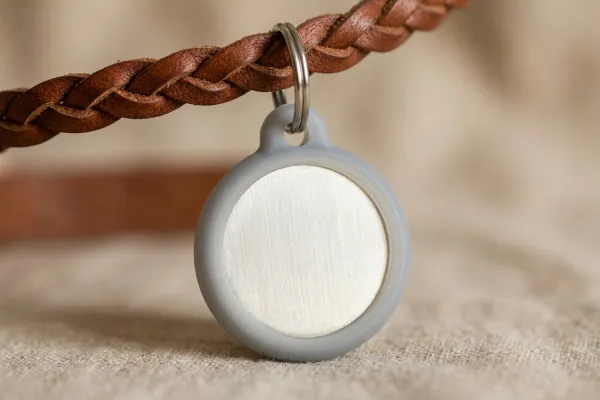
Mainly used in identification collars. It is completely inert and soft, making it perfect for dogs with extremely reactive skin or puppies.
🪵 Cork or natural fibers
For those looking for ecological options. They are soft and breathable materials, although they require more maintenance and usually have metal rings that must be made of surgical stainless steel.
⚓ Surgical Stainless Steel
If the dog needs metal hardware for strength, 316L steel is the only one that minimizes the risk of allergy, although plastic is always preferable if sensitivity is high.
🧵 Padded neoprene
Ideal for avoiding direct friction. Neoprene acts as a barrier between the nylon strap and the skin, providing an extra layer of comfort and protection against moisture.
The choice of hypoallergenic material must be based on the total elimination of nickel. Always prioritize high-quality plastic closures and materials that do not absorb moisture to keep your dog's skin in perfect condition.
Maintenance of the hypoallergenic collar
🧼
Wash the collar weekly with neutral soap to remove sweat salts that can irritate sensitive skin.
💨
Ensure the collar is completely dry before putting it on the dog after a walk in the rain or a bath.
🔍
Inspect your dog's neck every two days for hot spots, redness, or hair loss.
🔄
Alternate the use of the collar with a hypoallergenic harness to let the neck area rest during long walks.
🚫
Do not use strong chemicals or perfumes on the collar, as they can get trapped in the fibers and cause reactions.
Detailed analysis of safe materials
Biothane: The king of hygiene
Biothane is a polyester strap with a synthetic coating that mimics the appearance of leather but improves all its features. It is the preferred material for dogs with allergies because it is 100% waterproof and non-porous. This means it does not absorb pollen, dirt, or bacteria—elements that often aggravate dermatitis. Additionally, being a synthetic material, it allows for the use of reinforced plastic buckles, creating a set completely free of metals.
Its durability is exceptional and requires no maintenance beyond a damp cloth. For dogs that frequent the beach or the countryside, it is the safest option to prevent moisture retained in the collar from generating fungi or irritation under the buckle.
High-density nylon with safety closures
Nylon is the most versatile option. For allergic dogs, the ideal is to look for close-knit nylon that is soft to the touch. The key here is the safety closure. Click closures made of acetal or injected nylon offer surprising tensile strength, often exceeding 150kg of force in quality models. It is essential that the collar does not include nickel-plated iron rings; always look for hardened plastic or high-quality stainless steel rings if the dog does not have an extreme reaction.
Silicone and soft polymers
These materials are used mainly in soft training or identification collars. Their main advantage is flexibility and softness. Being rubbery materials, they have no sharp edges or rough textures that could erode the dog's skin. They are excellent for breeds with very little hair on the neck, such as greyhounds or Chinese cresteds, where any metal friction is critical.
In conclusion, protecting a dog with a metal allergy is simple if the right components are chosen. The combination of non-porous materials with engineered plastic closures guarantees a safe walk and healthy skin in the long term.
Comparison of resistance and dermal safety
| Material | Allergy Risk | Resistance | Waterproofing | Closure Type | Lifespan |
|---|---|---|---|---|---|
| Biothane | None | Very High | 100% | Plastic / Stainless Steel | 5-10 years |
| Standard Nylon | Low | High | Low | Plastic (Click) | 2-3 years |
| Natural Leather | Medium | High | Medium | Metal (Buckle) | 4-6 years |
| Silicone | None | Low | 100% | Friction / Plastic | 1-2 years |
Frequently asked questions about hypoallergenic dog collars
How do I know if my dog is allergic to the metal in its collar?
The most common symptoms include localized redness, hair loss in the area of contact with the buckle, small pustules or scabs, and persistent scratching. If the irritation disappears when the collar is removed, it is very likely a metal allergy.
Which metals usually cause the most allergic reactions?
Nickel is the main allergen in low-quality hardware. Also, zinc alloys or cheap chrome plating can flake off with friction and moisture, causing allergic reactions in dogs with reactive skin.
Is stainless steel really hypoallergenic for dogs?
Yes, high-quality stainless steel (such as 304 or 316) is one of the best options. It is extremely resistant to corrosion and does not release irritating metal particles, making it ideal for dogs with skin sensitivity.
Are there collars that do not use any metal parts?
Yes, there are models with quick-release closures made of acetal or reinforced nylon. These polymers are very resistant and completely eliminate the risk of metal allergy, although it must be ensured that the attachment ring is also made of a compatible material.
What advantages does solid brass offer in dog collars?
Solid brass is an excellent alternative because it does not rust and is usually better tolerated than nickel-plated alloys. Additionally, it provides a classic aesthetic and superior durability in humid environments.
Are plastic buckles safe for large dogs that pull?
Only if they are from recognized brands and technical materials like Duraflex. For large dogs with allergies, the ideal is to combine a resistant strap with a stainless steel buckle or a high-load polymer safety closure.
How to differentiate a metal allergy from friction chafing?
Chafing usually presents as inflamed skin but without rashes, while a metal allergy usually manifests as clear dermatitis (pimples, moisture, or scaling) exactly where the metal piece rests.
Is titanium used in dog collars?
Although it is less common due to its cost, titanium is the hypoallergenic material par excellence. It is used in high-end collars for dogs with severe allergies where other metals have failed.
What maintenance does a hypoallergenic collar require?
It is vital to clean the hardware regularly with fresh water and neutral soap to remove traces of sweat, salts, or dirt that can enhance skin reactivity, even with safe materials.
Can I use fabric protectors over metal buckles?
It is a useful temporary solution. There are neoprene or cotton covers that cover the buckle to avoid direct contact with the skin, although the definitive solution will always be to switch to a material that the dog tolerates naturally.