Other collars
Last updated: April 13, 2026
Collars for dogs with sensory disabilities: Identification and safety guide
Caring for a dog with a sensory disability, whether deafness or blindness, requires special attention and adapted tools that facilitate their daily life. The collar ceases to be a simple walking accessory to become a vital communication and safety tool, both for the animal and for the people who interact with them.
In this guide, we will explore the importance of visual identification collars for dogs with special needs. You will learn how to choose models that alert other owners to your pet's condition, avoiding stressful situations or unexpected encounters that the dog cannot manage correctly due to their sensory limitation.
If you share your life with a deaf or blind dog, choosing the right collar is the first step to ensuring calmer and safer walks. We will analyze everything from international color codes to the materials most respectful of their tactile sensitivity, ensuring that their well-being is always the priority.
Why are collars for dogs with sensory disabilities essential?
Dogs suffering from sensory disabilities, such as deafness or blindness, require special attention to ensure their safety and well-being in daily life. In these cases, the collar ceases to be a simple walking accessory and becomes a vital communication and identification tool that can prevent serious accidents.
An appropriate collar allows other people to quickly identify that the animal has a limitation, avoiding sudden approaches that could scare them. Furthermore, in the case of deaf dogs, certain devices allow for the establishment of a tactile communication channel that replaces verbal commands, greatly facilitating their education and control.
The implementation of these accessories not only improves the animal's safety in public environments but also provides peace of mind to the owner, knowing that their pet is correctly signaled and protected against possible unforeseen events.
Types of collars according to the dog's disability
Depending on whether the dog has total or partial loss of vision or hearing, there are different solutions designed to cover their specific needs.
1. Color-coded collars
The use of standardized colors is one of the most effective forms of signaling. For example, white is usually used to identify blind dogs or those with limited vision, while orange or yellow with clear inscriptions is usually used for deaf dogs. These collars often have words like 'Blind Dog' or 'Deaf Dog' embroidered so they are legible from a distance.
2. Vibration collars for deaf dogs
Unlike conventional training collars, specific vibration collars for deaf dogs do not emit shocks. Their function is to emit a gentle vibration that serves as a call signal. With proper training, the dog learns to look at its owner every time it feels the vibration, allowing for fluid communication without the need for sounds.
3. Harnesses and collars with support (Halo)
For dogs with total blindness, there are 'halo' type devices that attach to the collar or harness. This lightweight ring surrounds the dog's face and acts as a preventive bumper, warning them through touch that there is an obstacle ahead before they hit their head. It is a fundamental tool for them to regain confidence when moving around the house or on the street.
4. Engraved identification tags
Even if the collar is specific, an identification tag clearly indicating the disability should never be missing. In case the dog escapes, whoever finds it will immediately know that it does not respond to voice calls or cannot see traffic hazards, which will speed up a safe rescue.
Safety tips for walking
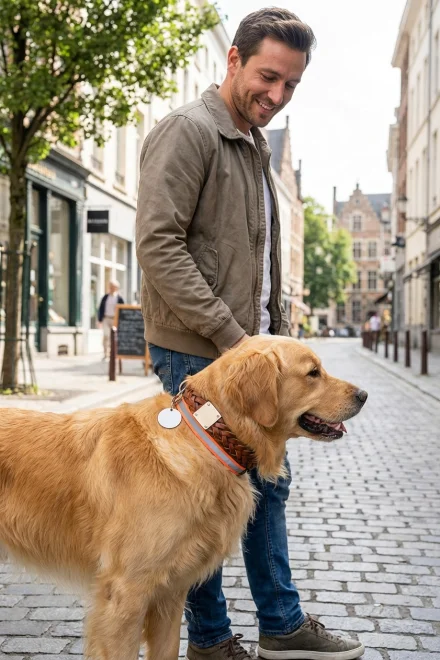
Walking a dog with a sensory disability requires active vigilance. It is essential to always use a sturdy leash and avoid retractable leashes, as they reduce control over the animal in critical situations. The collar must be adjusted correctly to prevent the dog from slipping out if it is startled by an unexpected tactile or visual stimulus.
In addition to visual identification, it is recommended to walk along known routes so that the dog feels safe thanks to its sense of smell. If the dog is deaf, maintaining constant eye contact is key; if it is blind, talking to it continuously will help it orient itself and feel accompanied by your voice.
Remember that the collar is an aid, but your guidance and anticipation are what truly guarantee their safety. Avoid areas with heavy traffic or excessive noise that could further disorient the animal.
How to choose the right material and fit
When selecting a collar for a dog with special needs, comfort is as important as functionality. Dogs with disabilities are often more alert and can be more sensitive to physical contact, so an uncomfortable collar could cause unnecessary stress.
- Soft and padded materials: Opt for neoprene or padded nylon to avoid skin chafing.
- Reflective elements: It is vital that the collar is visible at night, especially if the dog has reduced mobility or blindness.
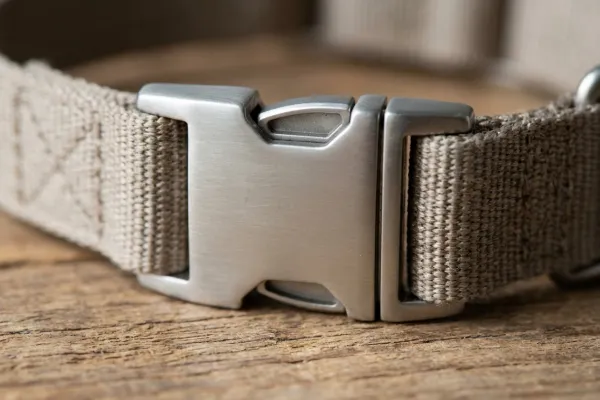
- Safety closures: Ensure the closure is robust and has a locking system to prevent accidental opening.
- Collar width: A slightly wider collar distributes pressure better on the neck, which is fundamental if the dog tends to become disoriented and pull sharply.
Common mistakes in identifying dogs with disabilities
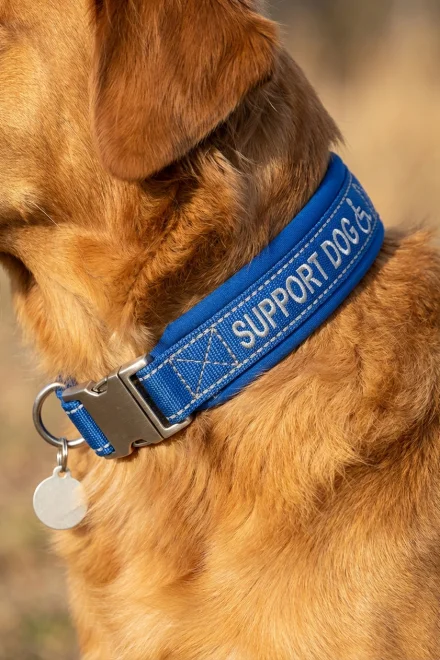
One of the most frequent mistakes is using lettering that is too small on collars or tags. Identification must be legible from several meters away so that anyone approaching can react in time.
Another common failure is not updating contact information on the tag or microchip. In dogs with disabilities, response time is critical, and outdated information can make their return home extremely difficult.
Finally, many owners forget to signal the disability on both sides of the collar or harness. It is important that, regardless of the angle from which the dog is viewed, the 'deaf' or 'blind' condition is evident to ensure their comprehensive protection.
Conclusion
Collars for dogs with sensory disabilities are much more than an aesthetic accessory; they are an essential safety measure that improves the quality of life for the animal and its family. By facilitating identification and communication, these elements allow the dog to enjoy an active and social life in a protected way.
Investing in a good identification system and adapted communication tools is the first step toward successful training and a life without surprises. With the right tools, a dog with sensory loss can lead a full, safe, and happy life.
Make sure your dog is visible and well-identified so that their only concern is enjoying the walk by your side.
Frequently asked questions about collars for dogs with sensory disabilities
Why is a specific collar important for a dog with a disability?
It is fundamental for visual signaling. A collar that clearly states 'I am deaf' or 'I am blind' alerts other owners and pedestrians not to approach abruptly, preventing the dog from getting scared or reacting defensively to a stimulus they do not perceive.
What colors are recommended to identify a deaf or blind dog?
Although there is no strict legal standard, white is usually used for blind dogs and orange or yellow for deaf dogs or those with special space needs. These colors are highly visible and help quickly identify that the dog requires extra consideration.
What information should the collar or tag include?
In addition to your contact information, it is vital that the collar has the dog's condition embroidered or engraved in large letters (e.g., 'BLIND DOG'). This is more effective than a small tag, as it allows people to read the warning from a safe distance before interacting.
Is a wide or narrow collar better for these dogs?
A wide collar is recommended. Dogs with sensory disabilities may rely more on physical guidance through the leash; a wide collar better distributes pressure on the neck and provides a clearer and more comfortable tactile signal when you need to guide them.
How does the collar help with safety in public environments?
It acts as a preventive shield. By informing others about the disability, you reduce the risk of accidents, such as a child trying to pet them from behind without the dog noticing or another dog running up, which could disorient a blind dog.
What materials are best to avoid sensory stress?
Dogs with the loss of one sense often sharpen their sense of touch. Soft and padded materials like neoprene or high-quality nylon are ideal for avoiding irritations that could distract or stress the dog while they try to process their environment.
Should I use the collar inside the house if my dog is blind?
At home, it is preferable for the dog to be comfortable without a collar, but if there are visitors or changes in furniture, a collar with small bells can help humans know where the dog is to avoid accidental trips that could scare them.
How to choose a collar that does not interfere with other senses?
Avoid collars that generate constant metallic noises (like clinking hanging tags) if your dog is blind, as they depend on their hearing to orient themselves. Opt for silent silicone tags or information embroidered directly onto the fabric.
Are there collars with universal color codes?
Yes, 'The Yellow Dog Project' popularized the use of the yellow ribbon or collar to indicate that a dog needs space, which is very useful for dogs with disabilities who get overwhelmed easily in crowds.
What accessories best complement the collar of a dog with a disability?
A leash that matches the collar's message (with printed text) reinforces visibility. For blind dogs, there are also harnesses with 'bumpers' or protective hoops that prevent them from hitting their face, complementing the collar's function.