Blog
Last updated: May 18, 2026
Urban Safety for Dogs: Preventing Collar Accidents in Elevators and Doors
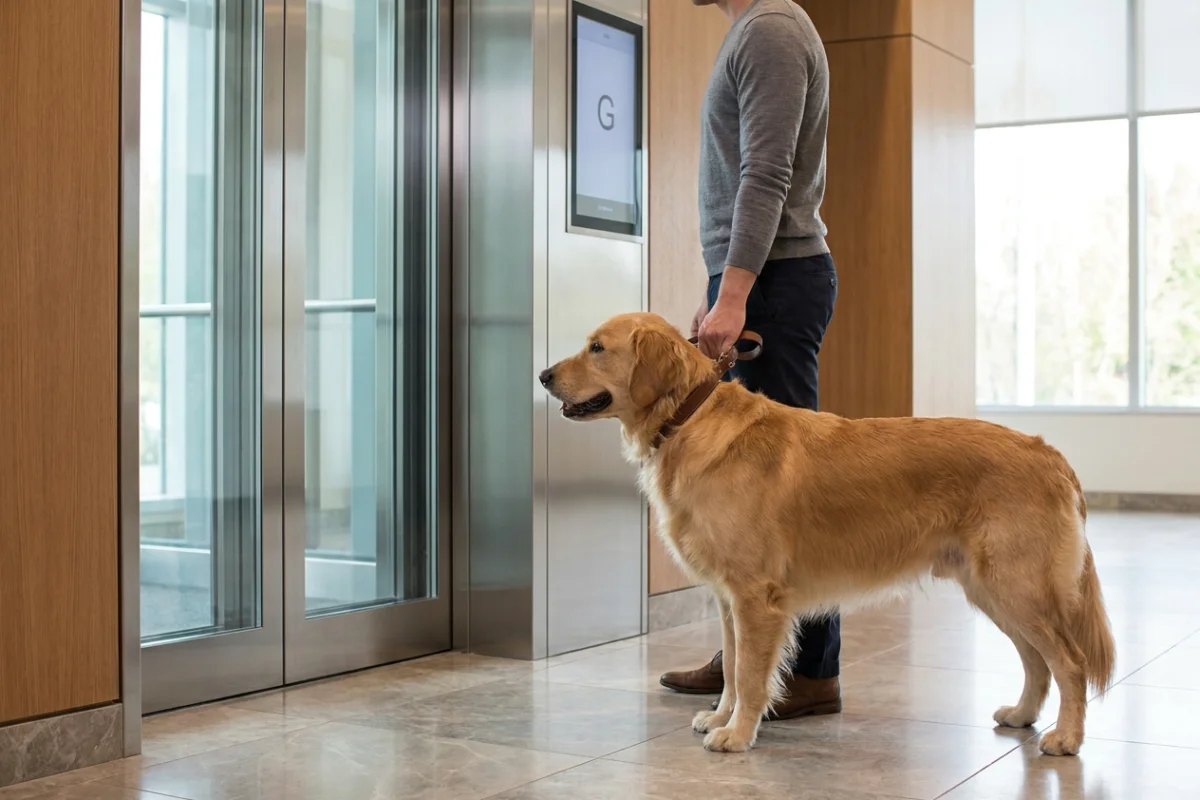
Living in the city with a dog involves facing technological challenges that we often overlook. One of the most critical and least discussed dangers is the risk of the collar or leash getting caught in elevators, escalators, and automatic doors. These elements of urban infrastructure can become death traps in a matter of seconds if not managed correctly.
In this article, we will analyze how the choice of collar and handling habits influence your pet's urban safety. It's not just about aesthetics or comfort, but about prevention protocols that every owner living in buildings or frequenting shopping centers must know perfectly.
You will learn to identify risk points in vertical and horizontal travel, which types of closures are safer for high-tech environments, and how to react to a snagging emergency. Proactive safety is the best tool for enjoying urban life without surprises.
Urban safety for dogs: The danger of elevators
City life presents unique challenges for our canine companions, and one of the most critical risks occurs in elevators and automatic doors. A second's oversight can cause the leash to get caught while the elevator is moving, putting the dog's life in grave danger if the collar does not release or if we do not react in time.
Prevention begins with choosing the right equipment and conscious leash management. Elevator accidents usually happen when the dog enters or exits late, or when the leash is too long and remains outside the cabin while the doors close. Understanding how these mechanisms work is vital to avoiding tragedies.
In addition to the human factor, the type of collar or harness your pet uses plays a determining role. Some models feature quick-release systems that can make the difference in an emergency situation, allowing the dog to break free if extreme pressure is applied.
In this article, we will analyze how to prevent these incidents, what safety measures to take when entering buildings, and how to act if you find yourself in a risky situation with elevator doors.
Remember: Urban safety depends not only on the dog's training but on our constant attention to the mechanical elements that surround us daily.
How elevator accidents happen
Most elevator accidents occur due to a lack of synchronization between the owner and the dog. The most common scenario is when the owner enters the cabin and the dog stays outside, or vice versa, just as the doors close. If the leash is thin or the door sensor does not detect the cord, the elevator will begin its journey.
When the elevator moves up or down with the leash trapped, the dog is dragged toward the door, causing extreme tension on the collar. This can cause severe cervical injuries, choking, or worse in a matter of seconds.
Extensible or 'flexi' type leashes are especially dangerous in these environments, as they allow the dog to move too far away, increasing the chances of the cord being in the path of the doors without the sensor noticing it.
To avoid this, it is fundamental to keep the dog close to your leg and hold the leash short and firm before the doors open. Never allow the dog to enter first if you do not have total control over the length of the leash.
In summary: Physical control and visual attention are your best tools to ensure that both you and your pet cross the elevator threshold at the same time.
Dangers in automatic and garage doors
Not only elevators represent a risk; automatic glass doors and garage doors can also be dangerous. The sensors on these doors sometimes have 'blind spots', especially for small animals or thin leashes that do not interrupt the light beam.
In residential communities, garage doors that close sideways or upwards can trap a tail or a paw if the dog tries to pass at the last moment. It is vital to wait until the door is completely open before starting to cross.
Additionally, the noise of the opening mechanisms can scare some dogs, causing them to jerk sharply backward or forward, right into the closing zone. Maintaining a 'stay' command is essential at these transition points.
If you live in a building with high traffic, get your dog used to sitting and waiting for your signal before crossing any automatic door. This discipline drastically reduces the chances of an accident due to impulsivity.
Key tip: Always position yourself between the door and your dog. This way, if the door starts to close, your body will trigger the safety sensor before your pet's does.
Safety tips for elevators and entryways
🚠
Keep your dog always on the opposite side of the elevator door while waiting.
📏
Shorten the leash as much as possible before entering or exiting; do not let it hang or touch the floor.
🛑
Teach your dog to sit and wait before entering the elevator cabin.
👁️
Visually ensure that the dog has completely crossed the threshold before letting go of the door.
🔕
Avoid distractions like your mobile phone while entering or exiting areas with automatic doors.
🐕
If your dog is small, consider carrying it in your arms when entering and exiting the elevator.
⚠️
If the leash gets caught and the elevator moves, release the leash immediately from your hand.
🔓
Use collars with quick-release buckles that open under extreme pressure.
🧱
Do not allow the dog to get close to the elevator floor slots, where nails can get trapped.
🚦
Wait until the elevator is empty or ask neighbors before entering if your dog is reactive.
🔄
If the elevator has double doors, ensure both have closed without obstacles.
🆘
Locate the emergency stop button as soon as you enter the cabin in case it needs to be used.
🔦
Use bright-colored or reflective leashes so they are more visible to other users and sensors.
🤝
Stay calm; if you are nervous, your dog may act erratically at the critical moment.
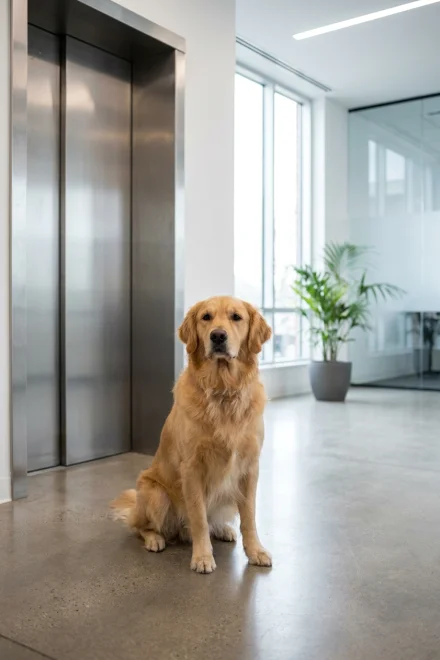
Training for a safe entry
Basic obedience training is the best investment for your dog's safety in urban environments. A dog that knows how to wait for a command before crossing a threshold is much less likely to suffer an accident in an elevator.
Practice the 'wait' command every time you reach the building door. The dog must remain seated until you take the first step and indicate that it can follow you. This prevents the animal from impulsively lunging into the elevator.
If your dog is anxious, use treats to create a positive association with the elevator space. A calm dog is easier to handle and will respond better to your instructions if something unexpected happens. Constant repetition will create an automatic safety habit.
Remember that puppies are more prone to distractions. During their first months, be extra cautious and positively reinforce every correct entry and exit, always keeping the leash short and maintaining eye contact.
What to do in an emergency?
If the worst happens and the leash gets caught while the elevator is moving, speed of action is vital. The first thing is to release the leash from your hand immediately. Trying to hold onto it will only cause injuries to your hands and will not stop the mechanism.
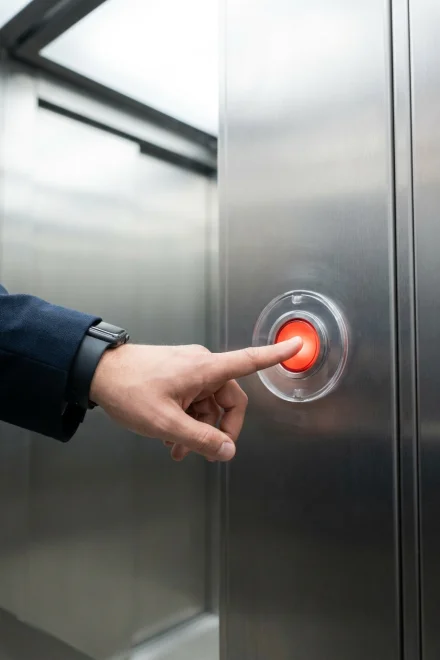
If you are inside the cabin, press the emergency stop button or the button for the nearest floor immediately. If the collar is quick-release, the pressure should open it, leaving the dog free even if the leash remains trapped.
If you are outside and the dog is inside, try to force the outer doors open if the model allows it, or call the building's emergency service immediately. Never try to put your fingers in the door slot while the elevator is in motion.
Having a cutting tool handy (like a small nail clipper or safety knife on your keychain) might seem extreme, but it has saved lives in situations where the leash wouldn't release and the collar wouldn't give way.
Maintenance of walking equipment
For safety systems to work, equipment must be in perfect condition. A quick-release collar that is dirty or has sand in the locking mechanism may not open when it is needed most.
Check the condition of the leash weekly. If it is nylon, look for frayed areas that could weaken the structure or, conversely, snag more easily in the door guides. If you use retractable leashes, check that the brake works smoothly and without locking up.
Carabiners are also critical points. A rusted carabiner or one with a loose spring can open at the worst moment or get stuck. Clean them regularly and ensure they close with a firm 'click'.
In conclusion: Well-maintained equipment and an attentive owner are the winning combination to enjoy city life with total peace of mind, minimizing the risks that urban technology imposes on our pets.
Conclusion: Prevention above all
The safety of our dogs in the urban environment depends directly on our ability to anticipate risks. Elevators and automatic doors are everyday tools, but they require a strict usage protocol when accompanied by pets.
Choosing a suitable collar, preferably with safety systems, and maintaining a firm walking discipline are the pillars to avoid accidents that can be fatal.
Do not lower your guard due to routine; every time you enter an elevator, make sure your best friend is by your side, safe and under control. Prevention is, without a doubt, the best show of affection toward them.
Frequently Asked Questions about collar safety in urban environments
Why are elevators so dangerous for a dog with a collar?
The danger lies in the elevator moving while the leash or collar is trapped between the doors. This can cause strangulation or a violent lifting of the animal. It is vital that the dog always enters close to your leg and on a short leash.
What should I do if my dog's collar gets caught in the elevator door?
If the elevator starts moving, you must try to release the quick-release buckle of the collar immediately. If that's not possible, try to cut the leash or press the elevator's emergency stop button instantly.
Is a quick-release (side-release) collar safer in the city?
Yes, in urban environments with elevators, collars with a plastic or metal quick-release buckle are preferable to pin buckles (belt style), as they allow the dog to be released with a single click in case of emergency.
How should I hold the dog when entering a building with automatic doors?
Hold the dog by the collar handle or with a very short leash. Sensor-based automatic doors sometimes do not detect thin objects like leashes, closing and leaving the dog on one side and the owner on the other.
Are escalators dangerous for long collars?
Very much so. If the dog wears a collar with hanging elements or a long leash that drags, these can be sucked into the escalator comb at the end of the journey. Always keep the dog away from the edges and with the equipment tucked in.
What leash length is ideal for avoiding snags in the city?
For moving through buildings and common areas, a control leash of 1 to 1.2 meters is ideal. Retractable leashes are extremely dangerous in elevators because the cord is almost invisible to door sensors.
How to act if the dog is on one side of the door and I am on the other?
Release the leash immediately. If the dog is wearing a well-fitted collar and the leash is strong, the door sensor might not detect the obstruction. Always prioritize breaking the connection between you and the dog to prevent the elevator's movement from pulling them.
Are there specific collars for building safety?
They do not exist as a unique commercial category, but experts recommend collars with double safety rings or panic-release systems for dogs living in skyscrapers or high-tech traffic areas.
What collar materials are more likely to get caught in infrastructure?
Collars with external decorations, prominent studs, or extra rings have a higher risk of getting caught in elevator door slots or floor ventilation grilles.
How to train the dog to enter an elevator safely?
Train the 'heel' and 'wait' commands before entering. The dog should enter after you or by your side, never in front, to ensure the door sensor detects a bulky body and not just a thin leash.