
Blog
Last updated: April 2, 2026
Collars for athletic dogs: How to choose the best one for Agility, Canicross, and Mushing
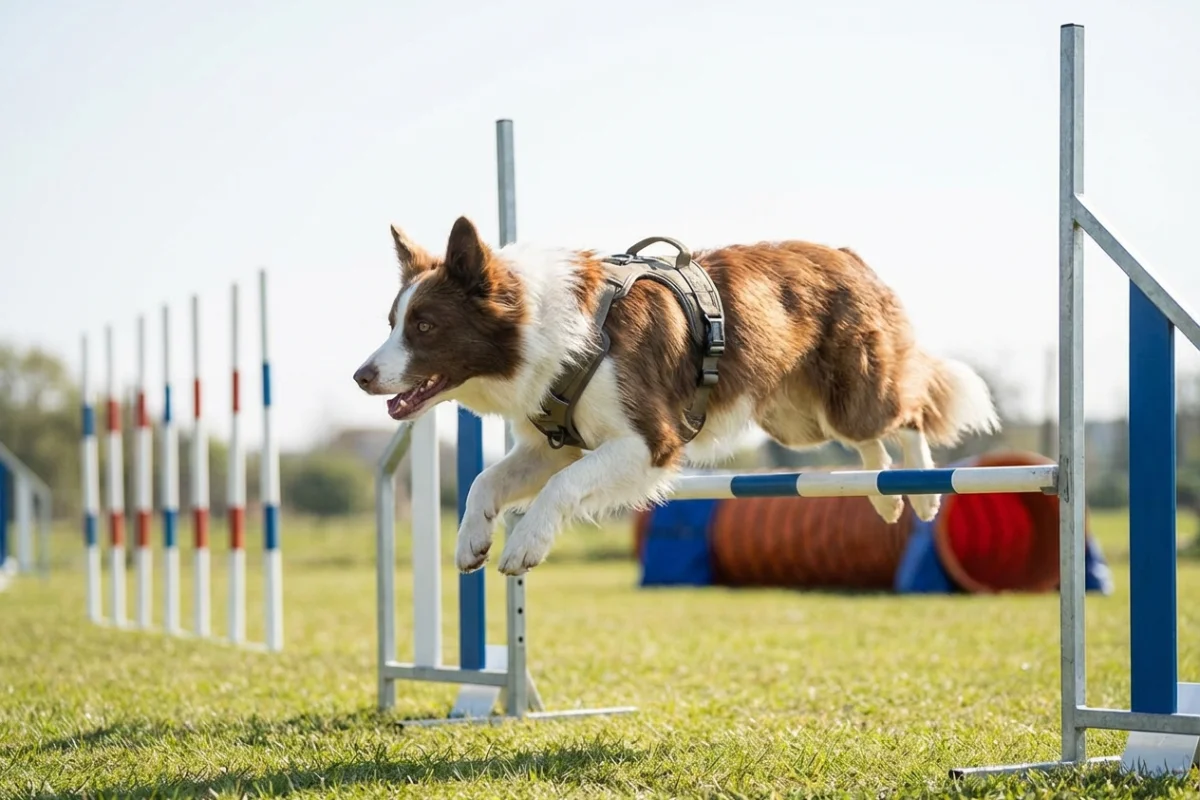
The practice of canine sports has gained incredible popularity, but not all accessories are suitable for the physical effort required by disciplines such as Agility, Canicross, or Mushing. An athletic dog needs equipment that is not only resistant but also guarantees total freedom of movement and optimal breathability.
In this article, we will explore the fundamental characteristics of collars for athletic dogs, focusing on ergonomics and high-performance technical materials. Choosing the right collar can make the difference between a successful training session and a potential injury or discomfort for your companion.
If you are a dog sport enthusiast, here you will learn to identify which models offer the best support, lightness, and safety. We will analyze everything from special padding to quick-release systems designed for competition and high-level training.
The importance of a good collar for athletic dogs
When we practice disciplines such as Agility, Canicross or Mushing, equipment stops being an aesthetic accessory to become a safety and performance tool. An athletic dog performs explosive movements, sudden changes of direction and, in many cases, exerts constant traction that requires a collar specifically designed to protect its neck and spine.
Unlike conventional walking collars, sports models are usually made of technical materials such as neoprene, high-resistance nylon or breathable fabrics that prevent chafing during intense exercise. The key lies in the distribution of pressure and the freedom of movement they allow the animal.
In addition to ergonomics, durability and visibility are critical factors. Dogs that practice outdoor sports often face conditions of humidity, mud and low light, so a waterproof collar with reflective elements becomes indispensable to guarantee their well-being in any environment.
Choosing the right collar not only improves the dog's experience, but also facilitates communication between the handler and the animal, allowing precise control without causing unnecessary discomfort. In the following sections, we will analyze what to look for according to the discipline you practice.
Specific collars for Agility
In Agility, the priority is safety and speed. During competition, the dog must run free of accessories by regulation, but in moments of waiting and warming up, collars that are easy to put on and take off are needed.
Martingale or semi-choke wide-strap collars are very popular in this discipline. They allow gentle control without choking and, having no plastic buckles that can get caught, offer a clean and functional aesthetic. It is vital that the collar is wide enough not to damage the neck if the dog gets excited before entering the ring.
Another highly valued option is collars with an integrated handle. This small handle allows the handler to hold the dog firmly at the starting line or during transitions between obstacles without the need to constantly hook the leash.
Remember that in Agility, any hanging element (such as long ID tags) can be dangerous if it gets caught on an obstacle. Opt for IDs engraved directly on the collar or silent plates that stay flat against the strap.
Canicross and Mushing: Collar or harness?
There is a golden rule in pulling sports like Canicross and Mushing: the dog must always pull from a specific pulling harness (X-Back type or similar). However, the collar remains a fundamental piece of equipment for safety and steering reasons.
In these disciplines, the collar is used for the neckline in multi-dog teams, keeping partners together and aligned. It also serves as a secondary safety anchor point. The ideal collar for these sports should be extremely light, flat and without elements that can cause friction under the harness.
Many Canicross runners prefer quick-release collars. In case of an accident or if the dog gets tangled in a branch, it is vital to be able to release the animal in seconds. Synthetic materials that do not absorb water are preferable, as mud and snow can increase the weight of the equipment considerably.
In summary: although the harness does the heavy lifting, the collar is the center of identification and directional control when the dog is not in active pulling mode.
Tips for choosing the perfect sports collar
📏
Measure your dog's neck and make sure two fingers fit between the collar and its skin to avoid choking.
🌊
If you practice water sports or in rainy areas, choose Biothane or neoprene; they do not absorb water or generate fungi.
🛡️
Look for collars with double D-rings to distribute the traction force and protect the plastic closure.
✨
Reflectivity is non-negotiable if you train at dawn or dusk near roads.
🧼
Wash the collar after every intense mud session to prevent dirt from degrading the nylon fibers.
⚖️
For competition dogs, the weight of the collar matters; every gram counts in the animal's agility and speed.
🐕
In Agility, use easy-opening collars to not waste time or stress the dog before entering the ring.
🚫
Avoid collars with heavy metal decorations or spikes that could hurt the dog or the handler during exercise.
🧵
Check the stitching periodically; the mechanical stress of the sport can weaken it over time.
🌡️
In summer, opt for breathable mesh collars to help with neck thermoregulation.
Technical materials: Which one to choose?
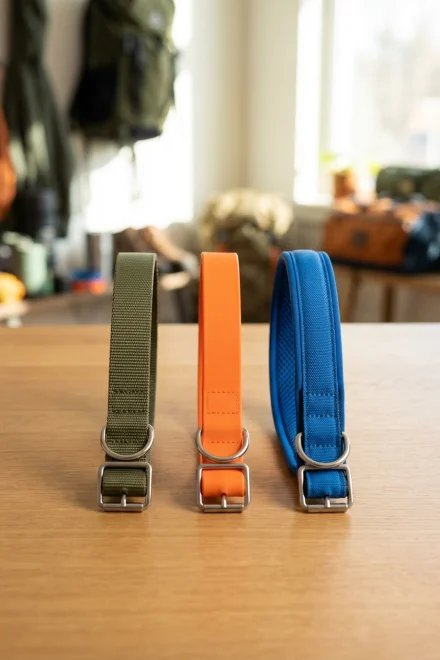
The choice of material determines the lifespan of the collar and your dog's comfort. Neoprene is king in impact sports for its cushioning capacity and softness, being ideal for dogs with sensitive skin or short hair.
On the other hand, Biothane has gained ground in Mushing and technical hiking. It is a synthetic material that mimics leather but is completely waterproof, antibacterial and practically indestructible. It is the best option if your dog usually ends up soaked or covered in mud.
High-density nylon remains the most versatile option for Agility due to its lightness and variety of closures. When choosing it, make sure the edges are rounded so as not to cut the hair through friction during runs.
Safety and regulations in competition
Before buying a collar to compete, check the regulations of your federation (RSCE, FCI, IFSS, etc.). In many disciplines, such as Agility, the dog is prohibited from wearing any type of collar during the course for safety.
In Canicross, regulations usually require the dog to wear a collar if it is not hooked to the tow line, and this must be fixed or a semi-choke with a stop, strictly prohibiting prong or full choke collars.
Ensuring that your equipment complies with the rules will not only avoid disqualifications but also guarantees that you are using tools designed for fair play and animal welfare.
Maintenance of sports equipment
A sports collar is exposed to much greater wear than a walking one. The dog's sweat, which contains salts, can corrode metal rings and harden nylon fibers if not properly cared for.
It is recommended to rinse the collar with fresh water after each training session in saline or very muddy environments. If the collar is made of neoprene, let it dry in the shade, as direct sun can crack the material over time.
Regularly check the condition of the release buckle. In high-intensity sports, a small grain of sand in the locking mechanism could cause the collar to open at the most inopportune moment. Preventive maintenance is the best guarantee of safety.
Conclusion: Invest in your companion's well-being
Choosing the best collar for Agility, Canicross or Mushing is not a whim, but a decision that directly affects your dog's physical health. Inadequate equipment can cause everything from minor irritations to long-term cervical injuries.
Always look for the balance between comfort, resistance and functionality. At the end of the day, the best collar is the one that allows your dog to enjoy the sport with total freedom, while you maintain the peace of mind of knowing they are safe.
Do not hesitate to try different models and observe how your dog moves with them. Their performance and joy in every training session will be the best indicator that you have made the right choice.
Frequently asked questions about collars for athletic dogs
Why is it important to use a sport-specific collar?
Sport collars are designed with technical materials that better manage moisture and heat. Additionally, their ergonomics prevent them from interfering with the neck musculature during explosive movements or prolonged runs.
What materials are best for dogs practicing Canicross?
Materials such as padded neoprene or breathable mesh are recommended. These materials dry quickly, do not accumulate sweat, and minimize friction, preventing chafing on the dog's skin during intense exercise.
Is it safe to use a collar in Agility competitions?
In many Agility competitions, dogs run 'naked' for safety. However, for training, quick-release collars are used, allowing the accessory to be put on and taken off in seconds without stressing the animal.
What distinguishes a technical collar from a conventional one?
A technical collar is usually lighter, has seams reinforced with high-resistance threads, and features aircraft-grade aluminum hardware or high-density plastics to reduce the total weight of the equipment.
How does the width of the collar influence sports performance?
A slightly wider collar distributes pressure better in case of occasional pulls, protecting the trachea. However, it should not be so wide that it limits the cervical flexion necessary for balance while running.
What type of closure is most reliable for impact sports?
Safety buckle closures or double-anchor clips are the most reliable. They must be resistant to tension and, preferably, have a system that prevents accidental opening due to impacts or vibrations.
How to prevent the collar from causing chafing during exercise?
It is vital to choose a collar with rounded and padded edges. Additionally, it must fit correctly: if it is too loose, constant rubbing with the fur will cause irritation; if it is too tight, it will make breathing difficult.
Are there specific collars for Mushing?
In Mushing, pulling harnesses are usually used, but the collar is essential for static control. These must be extremely cold-resistant and not absorb water to prevent them from freezing and damaging the dog's neck.
Does the weight of the collar really affect the athletic dog?
Yes, in high-speed sports like Disc Dog or Agility, every gram counts. A heavy collar can slightly alter the center of gravity or cause unnecessary fatigue in the neck's stabilizing muscles.
How should I clean the collar after an intense training session?
Due to sweat and mud, it is essential to wash them with warm water and neutral soap after each session. Make sure they dry completely outdoors (away from direct sunlight) to maintain the elasticity of the technical fibers.