Blog
Last updated: April 2, 2026
Senior dog collars: How to choose the most comfortable model for the old age stage
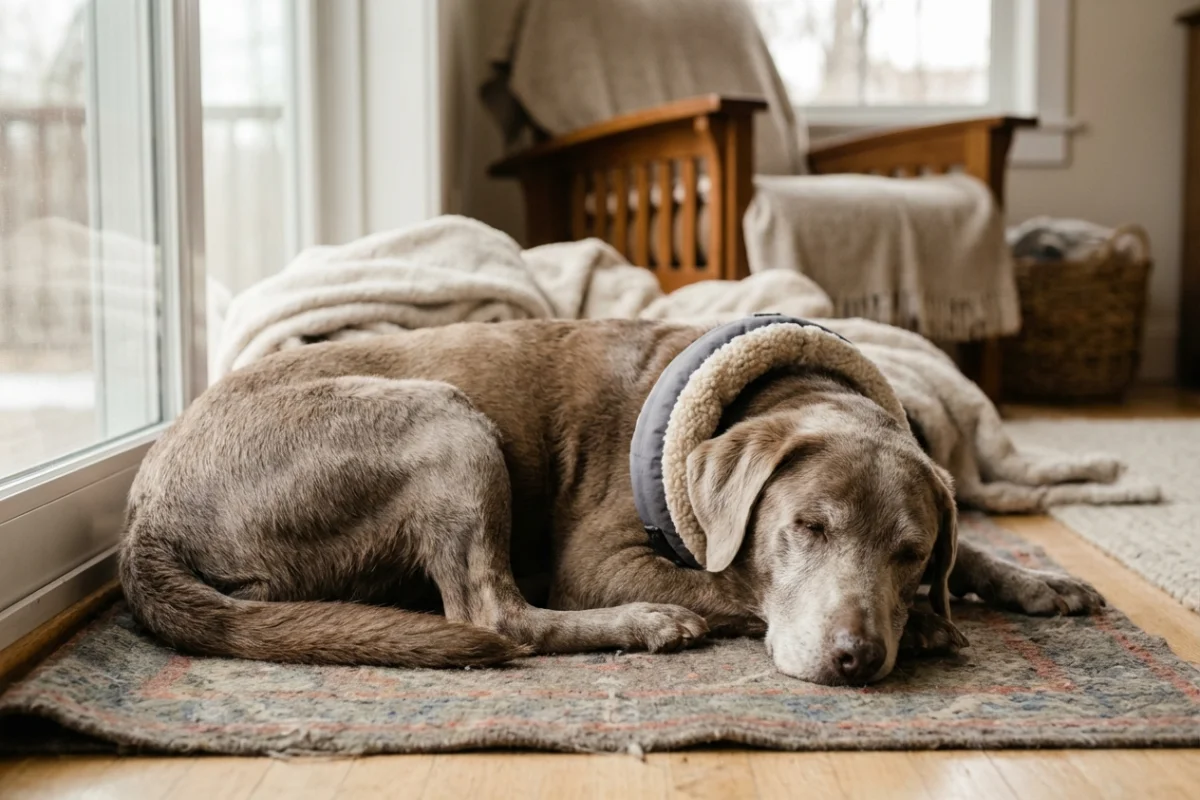
As our dogs age, their needs change drastically, and walking equipment is no exception. A senior dog often has thinner skin, loss of muscle mass in the neck, and, in many cases, joint or cervical problems that require special attention when choosing their collar.
In this article, we will explore the fundamental characteristics that a collar for elderly dogs should have, always prioritizing ergonomics and comfort. It's not just about aesthetics, but about preventing discomfort and ensuring that walks remain the favorite moment of the day for your most veteran companion.
From ultra-soft materials to designs that minimize pressure, you will learn to identify which models offer the support and lightness necessary for this vital stage. Discover how a small change in their equipment can significantly improve the quality of life for your senior dog.
The importance of choosing the right collar for a senior dog
As dogs age, their physical needs change drastically. The skin becomes thinner and more sensitive, muscle mass in the neck may decrease, and problems such as osteoarthritis or cervical ailments become common. Therefore, the collar they used as a youth may not be the most suitable for their old age stage.
Choosing a specific collar for senior dogs is not just a matter of aesthetics, but of health and well-being. An unsuitable model can cause chafing, pain, or even aggravate respiratory and joint problems. The main goal at this stage is to minimize pressure and maximize comfort during walks, adapting to their slower pace.
In this guide, we will explore how to identify the best model for your veteran companion, always prioritizing ergonomics and softness of materials to ensure that their golden years are as pleasant as possible.
Recommended types of collars for the old age stage
Not all collars are the same, and when we talk about elderly dogs, the choice must be much more selective. There are models specifically designed to reduce physical impact and improve the walking experience.
1. Padded neoprene collars
Neoprene is one of the best materials for senior dogs. It is soft, flexible, and quick-drying. Being padded, these collars cushion any accidental pulling, protecting the animal's trachea and vertebrae. In addition, its texture prevents the collar from sticking to the skin or causing irritation in areas where the fur may be thinner due to age.
2. Wide or ergonomic collars
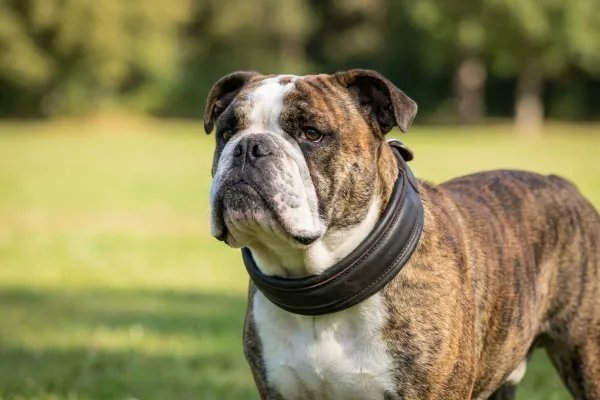
A narrow collar concentrates all the force on a very small point of the neck. Wide collars, on the other hand, distribute pressure over a larger surface area. This is vital for dogs with spinal problems or throat sensitivity, as it significantly reduces the risk of pressure injuries.
3. Collars with reflective strips
With age, many dogs lose visual and auditory acuity, which can make them more vulnerable in outdoor environments. A collar with high-visibility reflective elements ensures that the dog is easily seen by drivers and cyclists, providing an extra layer of safety during night walks or on cloudy days.
4. Soft leather collars
If you prefer a classic style, high-quality, vegetable-tanned leather is an excellent option, provided it is especially soft. Leather adapts over time to the shape of the dog's neck, but it is essential to ensure it doesn't have stiff edges that could cut or bother the senior dog's sensitive skin.
Regardless of the type chosen, the most important thing is that the collar acts as an accompanying accessory and never as a correction tool, respecting always the physical limitations of the older dog.
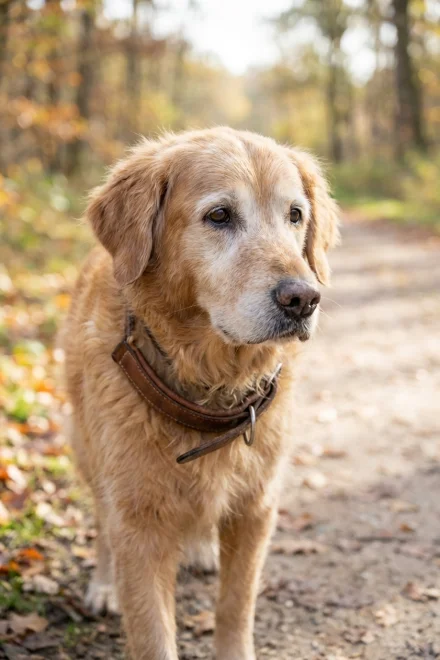
Collar or harness for a senior dog?
This is one of the most common questions among owners of veteran dogs. The answer depends largely on the animal's general health status. If the dog suffers from tracheal collapse, chronic respiratory problems, or cervical disc herniations, the use of a harness is usually the option most recommended by veterinarians.
However, for short walks and dogs that walk calmly without pulling on the leash, a padded and lightweight collar remains a perfectly valid and comfortable option. The collar allows for more direct communication and is less invasive for dogs that have mobility difficulties in their front legs or osteoarthritis in their shoulders, where some harnesses might limit the range of motion.
The key is to observe how your dog feels. If you notice them coughing while wearing a collar or showing discomfort when putting it on, it's time to consider transitioning to an ergonomic support harness.
Tips for a perfect and discomfort-free fit
An excellent collar can be harmful if not placed correctly. In senior dogs, the fit must be precise to prevent escaping, but loose enough not to oppress.
- The two-finger rule: You should be able to pass two fingers between the collar and the dog's neck without difficulty.
- Check the skin weekly: Look for signs of redness, hair loss, or lumps under the collar area.
- Remove the collar at home: Allow the skin on their neck to breathe and rest during sleeping hours and while at home.
- Clean the accessory frequently: The accumulation of dirt and bacteria can cause skin infections more easily in dogs with weakened immune systems.
Remember that your dog's comfort is the priority. A proper fit ensures that the walk is a moment of relaxation and not a source of physical stress.
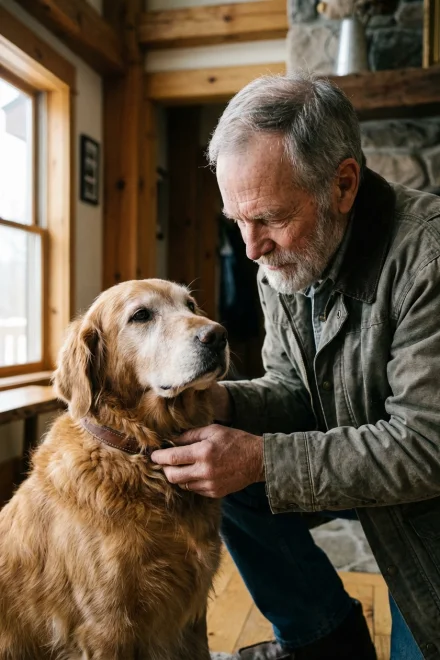
Common mistakes when choosing accessories for older dogs
Often, due to lack of knowledge, we make mistakes when buying accessories for elderly dogs that can compromise their quality of life. One of the most serious mistakes is continuing to use punishment, choke, or prong collars. These methods are totally inadvisable at any stage, but in old age, they can cause irreversible damage to the trachea and cervical spine.
Another frequent error is prioritizing aesthetics over functionality. A collar with many metal ornaments, studs, or heavy materials adds an unnecessary load to the dog's neck. Likewise, ignoring the animal's weight changes is a common mistake; a dog that loses muscle mass will need a different adjustment or even a smaller size to prevent the collar from slipping off.
Finally, not adapting the material to the climate can be a problem. Senior dogs regulate their body temperature less effectively; a collar made of a material that accumulates too much heat or stays wet for a long time can cause dermatitis and general discomfort.
Conclusion
Choosing the ideal collar for a senior dog requires sensitivity and attention to detail. By opting for padded, lightweight, and wide models, we are protecting their physical health and ensuring they continue to enjoy their daily walks in total comfort.
Old age is a stage where respect and care must intensify. A small change in their equipment can make a big difference in their mobility and mood. Observe your dog, consult with your veterinarian if you have doubts about their cervical health, and always choose the option that provides the greatest softness.
Your dog has faithfully accompanied you for years; now is the time to return that affection by taking care of every detail of their daily well-being.
Frequently asked questions about senior dog collars
Why is it important to choose a specific collar for senior dogs?
Older dogs have thinner and more sensitive skin, as well as a possible loss of bone and muscle density in the cervical area. An unsuitable collar can cause pain, chafing, or excessive pressure in an area already weakened by age.
What materials are most recommended for elderly dogs?
The most suitable materials are padded neoprene, soft cotton, or high-quality nylon with rounded edges. These materials minimize friction and are much lighter for the dog's neck.
How does the weight of the collar influence the health of an older dog?
A heavy collar can overload the cervical vertebrae of a dog with osteoarthritis. It is essential to choose ultra-lightweight models and avoid excessively large metal buckles or unnecessary decorations that add extra weight.
Is a wide or narrow collar better for a senior dog?
Generally, a slightly wider collar is better because it distributes pressure more evenly over the neck, avoiding localized pain points, as long as the material is flexible and not rigid.
What type of closure is easiest to use on senior dogs?
Side-click (quick release) closures are usually better than traditional buckles, as they allow the collar to be put on and taken off with minimal movement, avoiding too much manipulation of the dog's neck if they have joint pain.
When should I consider switching the collar for a harness in old age?
If the dog has respiratory problems, tracheal collapse, or severe mobility difficulties, an ergonomic harness is preferable. However, for dogs that walk calmly, a padded collar remains a comfortable option for carrying identification.
How can I prevent the collar from causing chafing on my older dog?
Make sure the collar has a soft inner lining and check the fit weekly. The weight loss common in senior dogs can cause the collar to become loose and move around, causing irritation from constant rubbing.
How important is identification on a senior dog's collar?
It is vital. Dogs with cognitive dysfunction or senile dementia can easily become disoriented. The collar should have a silent tag or embroidery with updated contact details to ensure their safety if they get lost.
Are there collars that help with the mobility of elderly dogs?
There are collars with integrated handles designed to occasionally help the dog get up or stabilize them on steps, although for constant mobility assistance, they are usually complemented with support harnesses.
Is it recommended to leave the collar on all the time for a senior dog?
In older dogs, it is advisable to remove their collar during night rest to allow the skin to breathe and the neck muscles to fully relax, provided the environment is safe and controlled.