
Blog
Last updated: April 24, 2026
Collars for newly adopted dogs: Safety and protocols to prevent escapes
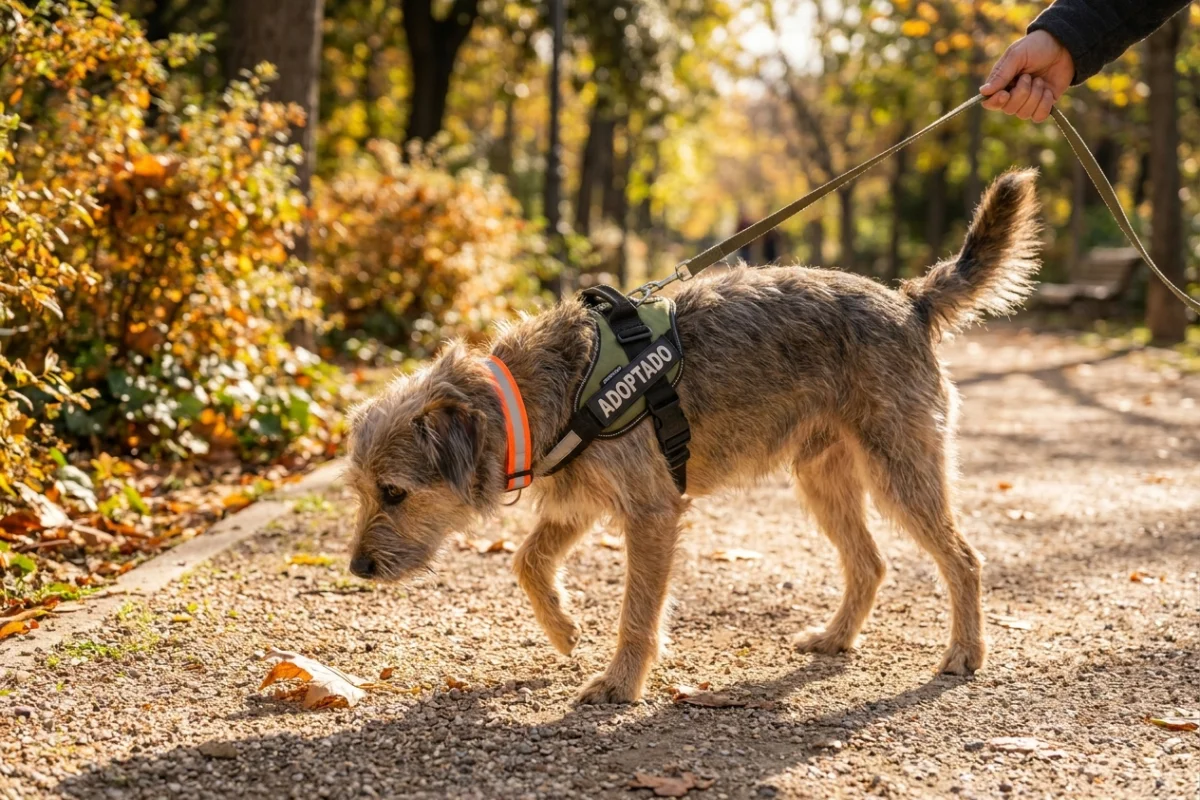
The arrival of an adopted dog at home is an exciting moment, but also one of great responsibility. During the first weeks, the animal is in an adaptation phase and any noise or unknown situation can trigger a flight response. Therefore, choosing the right collar for a newly adopted dog is not just an aesthetic matter, but a vital safety measure.
In this article, we will explore the importance of having escape-proof walking equipment. We will talk about the double-leash protocol, a technique recommended by shelters and ethologists to ensure that, in the event of a possible scare, the dog always remains attached to its handler.
If you have just expanded your family, here you will learn to identify the most resistant materials, how to perform a preventive adjustment, and which accessories are essential so that your new companion's first walks are safe, calm, and risk-free.
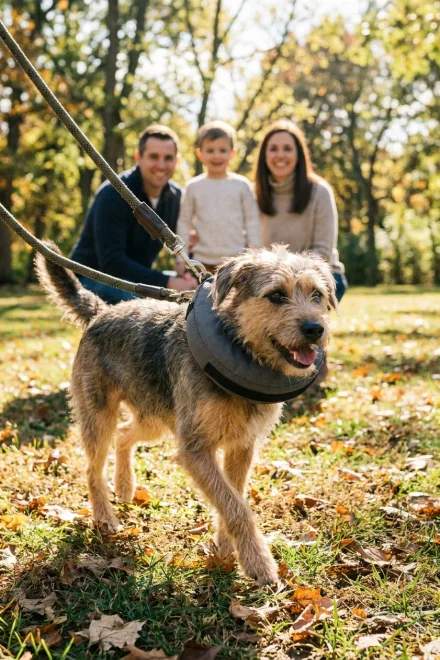
How to choose the right collar for a newly adopted dog?
The arrival of a newly adopted dog is a moment of joy, but also of great responsibility. During the first few weeks, the animal is in a state of alertness and disorientation, which drastically increases the risk of escape due to fear or unexpected noises. A conventional collar may not be enough to guarantee their safety.
The main objective of a collar for adopted dogs is to prevent the animal from slipping away during a sudden pull. Many rescued dogs have deep fears and, faced with a negative stimulus, their instinct is to flee. Therefore, choosing the right equipment is the first step for a safe and successful integration into their new home.
There are options designed specifically for these situations, such as Martingale collars or three-point harnesses. In this guide, we will explore the best tools to protect your new companion during their first walks and how to establish protocols that minimize any danger.
Restraint systems: Which is best for a fearful dog?
Not all dogs react the same to their environment. A dog that has lived in a shelter or on the street may be frightened by traffic, firecrackers, or even the wind. Therefore, the restraint system must be infallible and adapted to their morphology.
Martingale Collars (Escape-proof)
Martingale collars are the preferred choice for dogs with thin necks, such as greyhounds, but they are useful for any breed. Their design consists of two loops: one that adjusts to the neck and another where the leash is attached. When the dog pulls, the collar closes in a controlled manner, preventing the head from slipping out, but without choking the animal.
It is essential to adjust it correctly so that, in its most closed position, it does not tighten too much. They are lightweight, comfortable for daily use, and offer much higher security than traditional buckle collars.
Three-point or safety harnesses
For extremely skittish dogs, the three-point harness is the ultimate tool. Unlike common harnesses, this one has a third strap that adjusts in the waist area, behind the ribs. Due to the dog's anatomy, it is physically impossible for the animal to slip out of the harness backwards.
This type of harness distributes pressure evenly and prevents neck injuries. It is the most recommended option by shelters and canine behavior experts for the first months of adoption.
Double restraint: The maximum security protocol
The double restraint protocol consists of simultaneously using a Martingale collar and a three-point harness, joined by a double-clip leash or two independent leashes. This way, if one of the elements fails or breaks, the dog remains secured by the other.
Although it may seem excessive, it is the only way to 100% guarantee that a panicked dog does not end up lost. This system is especially recommended in urban areas with heavy traffic or during the first trips to the vet.
Comparison of safety systems for adopted dogs
The following table summarizes the characteristics of each system to help you choose the most suitable one according to your dog's profile:
| System type | Security level | Comfort | Ideal for | Escape risk |
|---|---|---|---|---|
| Martingale Collar | High | Very high | Dogs with thin necks or mild fears | Low (if properly adjusted) |
| 3-point harness | Very high | High | Very fearful or traumatized dogs | Almost zero |
| Double restraint | Maximum | Medium | First weeks of adoption | Non-existent |
| Standard collar | Low | High | Calm and already adapted dogs | High in case of panic |
Ultimately, the choice should be based on the dog's level of fear and reaction capacity. Do not skimp on safety during the adaptation stage; it is better to be safe than sorry.
Essential protocols to prevent escapes
The equipment is only part of the safety. Leash handling and the handler's attention are crucial to avoid accidents. A newly adopted dog does not know its name or have an established bond with you, so it will not return if it escapes.
Key tips for the first walks
- Never let the dog off the leash: No matter how good they seem; a loud noise can make them run for miles without looking back.
- Hold the leash firmly: Pass your hand through the leash handle and wrap it around your wrist to prevent a sudden pull from taking it out of your hands.
- Double identification: The dog must wear a tag with your phone number on both the collar and the harness.
- Avoid risk areas: During the first few weeks, walk in quiet places before venturing into busy parks.
- Careful when getting out of the car: Secure the dog with the leash before opening the trunk or passenger door.
Following these protocols not only guarantees the dog's physical integrity but also allows you to walk with greater peace of mind, something the animal will perceive and help them relax.
Critical errors that put your dog at risk
Many accidents occur due to an owner's overconfidence. Believing that the dog is already adapted because they behave well at home is a common mistake that can end in a dangerous situation.
- Using retractable leashes: If they fall to the ground, the noise of the plastic scares the dog and they flee from the casing that seems to be chasing them.
- Relying on a traditional buckle collar: A frightened dog can shrink its neck and slip its head out of the collar in seconds.
- Letting children walk the dog: A panicked dog has surprising strength and can easily break free from small hands.
- Not securing house doors: Many dogs escape when the front door is opened before their walking gear has been put on.
- Removing safety equipment too soon: It is recommended to maintain escape-proof systems for at least the first 6 months.
Avoiding these errors is fundamental to building a relationship based on trust and security. Prevention is the best tool to enjoy the company of your new best friend.
Is it worth investing in specific equipment?
Investing in a good escape-proof collar or harness is, in reality, investing in peace of mind. Although these systems may be slightly more expensive than a standard collar, the security they provide during the critical adaptation stage is priceless.
It is important to understand that these tools are temporary or preventive. Once the dog gains confidence and the bond is strong, you can transition to more conventional equipment, but always prioritizing the animal's well-being and safety.
Frequently asked questions about collars for newly adopted dogs
Why is the collar so important for a newly adopted dog?
A newly adopted dog does not have a consolidated bond with its owner and is usually in a state of alert. An inadequate collar can allow the dog to escape from a loud noise, which in an unknown environment drastically increases the risk of loss or accident.
What is the double-leash protocol?
It consists of simultaneously using a collar (preferably Martingale) and a three-point harness, both attached to the leash via a connector or using two leashes. This ensures that if the dog manages to slip out of one of the elements, it remains secured by the other.
Is it safe to use a traditional buckle collar at first?
It is not the most recommended for fearful dogs. Many dogs learn to back up and slip their heads out of a buckle collar with ease. For the first few months, an anti-escape collar that tightens around the neck if the dog pulls backward is preferable.
What materials are better for dogs that try to flee?
Reinforced nylon and Biothane are excellent for their tensile strength. It is essential that the rings are made of welded steel and not plastic materials that could break under a sharp, violent pull.
How to prevent the dog from 'slipping' out of the collar?
The key lies in the adjustment and the type of collar. The collar must be tight enough so that it does not pass over the ears, but allowing two fingers to pass through. Martingale collars are the best technical option to avoid this problem.
Should I put the ID tag on immediately?
Yes, from minute one. Even before leaving the shelter, the dog should wear a tag with your current phone number. It is recommended that both the collar and the harness carry their own separate identification.
What to do if the dog panics during the walk?
Stay calm, shorten the leash without sudden jerks, and do not try to hug it if it is very reactive, as it could bite out of fear. Thanks to the safety equipment, the dog will not be able to get loose, allowing you to guide it to a safe place or wait for it to relax.
How long should I maintain the extra safety measures?
It is recommended to maintain the safety protocol (double-leash) for at least the first 3 to 6 months, or until the dog shows total confidence in its environment and has a reliable recall.
Are semi-choke collars recommended for adopted dogs?
Only if they are Martingale type (fabric). Prong or chain collars are totally discouraged, as pain increases the dog's fear and stress, worsening its insecurity and damaging the bond with the owner.
How to adjust the collar without overwhelming the new dog?
Do it in a closed and quiet environment. Use high-value treats and let the dog smell the collar before putting it on. Avoid leaning over it in an intimidating way; it is better to stand to the side and perform the adjustment with gentle movements.