In the world of dog shows, every detail counts to highlight the morphology and elegance of a specimen. The show collar, unlike daily walking models, is designed to be almost invisible, allowing the judge to focus exclusively on the dog's lines and movement.
Choosing the right equipment for the ring is not just a matter of aesthetics, but of subtle handling and control. A collar that is too thick can visually shorten the neck, while an unsuitable one can ruin the presentation of a well-prepared dog. In this guide, we will explore the different types of collars for beauty pageants and how to select the best one according to the breed.
If you are preparing your dog for its debut in the ring or looking to improve your handling technique, here you will find the keys to choosing a collar that combines discretion, functionality and elegance, guaranteeing that your pet looks impeccable before the judges.
What are show collars and why are they different?
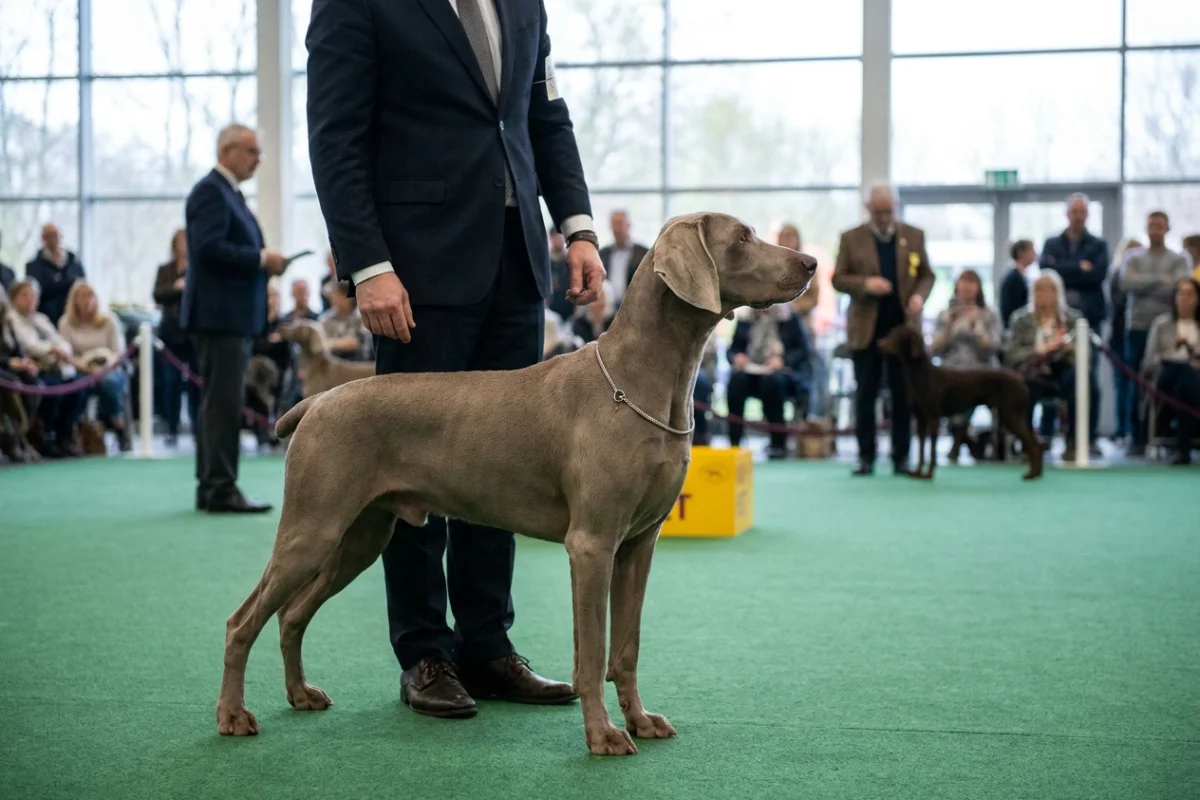
Show collars, also known as ring collars, are tools specifically designed to highlight the dog's morphology during a beauty or structure competition. Unlike daily walking collars, these are extremely thin and discreet, as their goal is to go unnoticed so as not to visually 'cut' the line of the animal's neck.
The main purpose of this accessory is not physical control through force, but to serve as a subtle communication channel between the handler and the dog. A good show collar allows the specimen's head to be positioned elegantly, allowing the judge to appreciate its expression, neck length, and general carriage without visual distractions.
There are various materials, from fine-link metal chains to nylon cords or rounded leather. The choice will strictly depend on the breed, the coat color, and the level of experience of both the dog and the person handling it.
Types of collars according to breed and style
Not all show dogs use the same equipment. Each breed's regulations and ring tradition determine which type of collar is most suitable to enhance the specimen's virtues.
1. Snake Chains
These are the most commonly used in medium and large breeds. They are characterized by having very tight links that do not cut the hair and offer an elegant shine. They are usually made of brass, chrome, or gold finishes. They are ideal because they stay firm on the upper part of the neck without slipping easily.
2. Loop collars or 'All-in-one'
They consist of a single piece that combines the collar and the lead. They are usually made of fine nylon or silk. They are very popular in small breeds (Toy) due to their lightness. Since they do not have heavy metal snap hooks, they do not add unnecessary weight to the dog's neck, allowing for more natural movement.
3. Show Martingales
This design features a small section that closes in a limited way, preventing the dog from slipping out of the collar if startled, but without choking. It is the preferred option for breeds with narrow heads, such as sighthounds, providing safety and elegance in equal measure.
4. Rounded leather collars
Leather is a classic material that offers an organic aesthetic. Being rounded, it prevents hair from tangling or breaking, which is crucial in long-haired or delicate breeds. It is a very durable and professional option that improves with use.
The choice of collar type should always be accompanied by a matching lead, maintaining the aesthetic consistency required by the presentation standard in the ring.
How to choose the correct color and placement
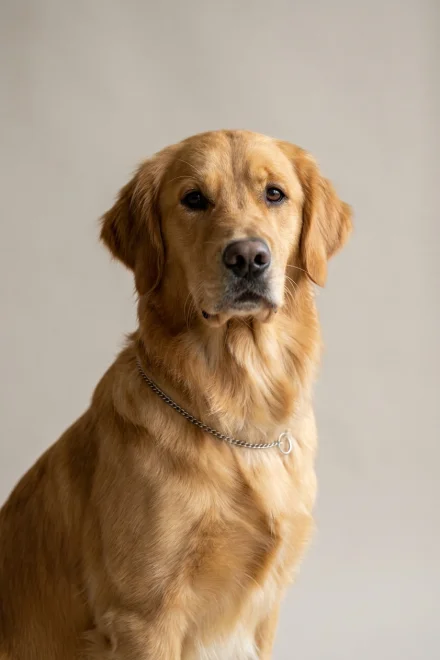
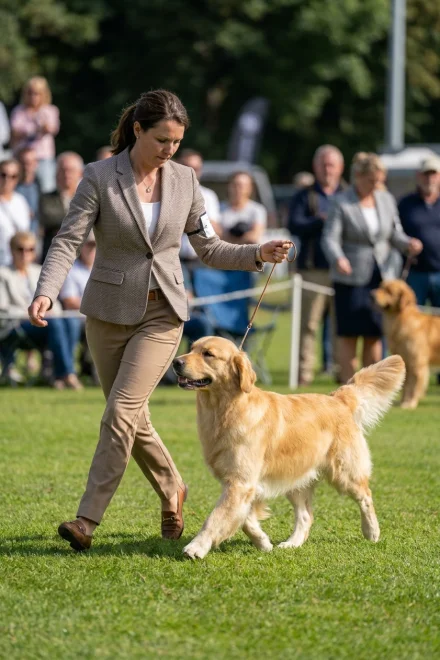
The most common mistake among beginners is choosing a collar that contrasts too much with the dog. In the ring, the collar must be invisible. If you have a black dog, use a black collar; if it is a Golden Retriever, look for gold or beige tones that blend in with its coat.
Placement is the factor that makes the difference between a dog that looks 'sunken' and one that looks majestic. The collar should be placed at the highest part of the neck, just behind the ears and under the jaw. This position allows the handler to guide the head up and forward, stretching the topline and improving the overall silhouette.
A collar placed too low, near the shoulders, makes the neck appear shorter and detracts from the elegance of the movement. Therefore, it is essential to practice at home so that the dog gets used to feeling pressure in that sensitive area without showing discomfort.
Handling techniques: The art of the loose lead
Handling in the ring is a dance of subtleties. A good judge will positively value the dog moving naturally. To achieve this, the use of the collar should follow these guidelines:
- Maintain just the right tension: The collar should guide, not drag. Excessive tension will cause the dog to lift its front legs artificially or cough.
- The loose lead technique: When the dog is posed (stacking), the lead should be slightly slack to demonstrate that the dog maintains the posture on its own.
- Smooth transitions: At starting to trot, the collar adjustment should be quick but delicate to position the head before the dog reaches its walking pace.
Remember that the show collar is a precision tool. Harsh handling not only penalizes the score but can also create a negative association in the dog toward the show environment.
Common mistakes when choosing show equipment
Even exhibitors with some experience can make mistakes that affect the presentation of their specimen. One of the most serious is using a collar that is too thick for a refined breed, which visually breaks the animal's harmony.
Another mistake is not checking the security of the closures. A show collar that opens in the middle of judging can ruin months of preparation. Likewise, using materials that stain the hair (such as some low-quality leathers or metals that leave gray residue) can be disastrous on light-coated dogs.
Finally, not adapting the lead length to the handler's height is a common logistical failure. A lead that is too long will force the handler to wrap it around their hand, creating an unsightly bulge that distracts the judge's attention.
Conclusion
The show collar is much more than a simple accessory; it is the tool that allows the dog to be presented as the best version of itself. Choosing the right model, in the correct color, and knowing how to position it masterfully are skills that separate amateurs from professionals.
Investing in quality equipment and spending time training subtle handling will ensure that, upon entering the ring, all the judge's attention is focused on the beauty and structure of your dog, and not on the accessories it is wearing.
Frequently asked questions about show dog collars
What is the difference between a show collar and a walking collar?
The show collar is much thinner and more discreet. Its goal is not to interrupt the visual line of the dog's neck. Unlike walking collars, they are not designed to withstand strong pulling, but to transmit very subtle signals from the handler to the dog during the presentation.
What is a snake chain collar?
It is the most popular model in the ring. It is a chain of highly polished hexagonal or round links that do not cut or tangle the hair. Its design allows it to slide smoothly and remain hidden within the coat, offering a very professional look.
How to choose the color of the collar for a competition?
The golden rule is that the collar should blend in with the color of the coat of the dog. If the dog is black, use a dark or black chain; if it is white or gray, opt for silver or chrome. The goal is for the collar to 'disappear' from the judge's view.
How thick should the show collar be?
It depends on the size and power of the breed. For small breeds (Toy), threads or chains of 1mm to 2mm are used. For large breeds, thicknesses of 3mm to 5mm are chosen. A collar too wide can make the neck appear shorter than it actually is.
Is it safe to use these collars outside the show ring?
It is not recommended. Show collars are precision tools and are usually fragile or very thin. They do not offer the necessary security for urban traffic or for dogs that might get scared and pull hard on the street.
What is a 'Resco' type show collar?
It is an 'all-in-one' collar that combines the leash and the collar into a single piece of nylon or waxed cotton. It is very common in small and medium breeds because it is extremely lightweight and allows for quick adjustment under the jaw.
How is the collar correctly placed to present the dog?
It should be placed at the highest part of the neck, just behind the ears and under the jaw. This position allows the handler to control the direction of the head with minimal effort, keeping the dog attentive and in the correct posture.
What material is best for dogs with sensitive skin in competitions?
For dogs prone to irritation, silk or soft nylon collars with a reinforced core are ideal. They avoid metal friction and protect the skin without losing the fine aesthetics necessary for competition.
How to prevent the metal collar from staining white hair?
In dogs with white or very light coats, low-quality metal chains can leave gray stains. It is recommended to use high-quality stainless steel or gold/brass chains, which do not react with the skin's pH or oxidize the hair.
What size should a show collar be?
Unlike walking collars, it should be snug but not tight. There should be no excess chain hanging, as this is visually distracting. Many handlers prefer fixed collars or those with a stop so they do not slide down to the base of the neck.