Your dog's collar is an accessory that accompanies them on all their adventures, from walks in the rain to games in the park. Over time, it is inevitable that it accumulates dirt, bacteria, and bad odors that not only affect its appearance but also your pet's skin health and the product's durability.
Performing proper collar maintenance is essential to avoid skin irritation and ensure that buckles and materials remain safe. Not all materials are cared for in the same way: leather requires hydration, nylon needs deep washing, and biothane just needs a quick wipe.
In this article, we will teach you step-by-step how to clean your dog's collar according to its composition, which products to avoid, and how to detect when the time has come to replace it with a new one so as not to compromise your best friend's safety.
The importance of keeping your dog's collar clean
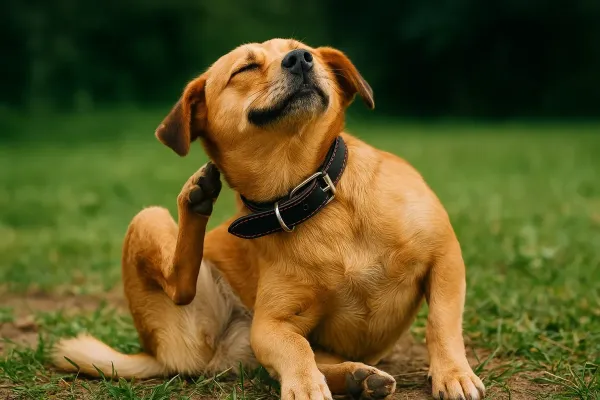
Collar maintenance is a fundamental aspect of canine hygiene that is often overlooked. A dirty collar not only gives off bad odors, but it also becomes a breeding ground for bacteria, fungi, and dead skin debris that can cause skin irritations or infections in your pet. Keeping it in optimal condition is vital for their health.
In addition to the hygiene factor, regular cleaning allows you to inspect the condition of the materials. Wear and tear from use, exposure to the sun, or humidity can weaken nylon fibers or crack leather, compromising safety during walks. A well-cared-for collar is synonymous with a safe and comfortable dog.
In this guide, you will learn the best methods for cleaning each type of material and how to extend the life of this essential accessory.
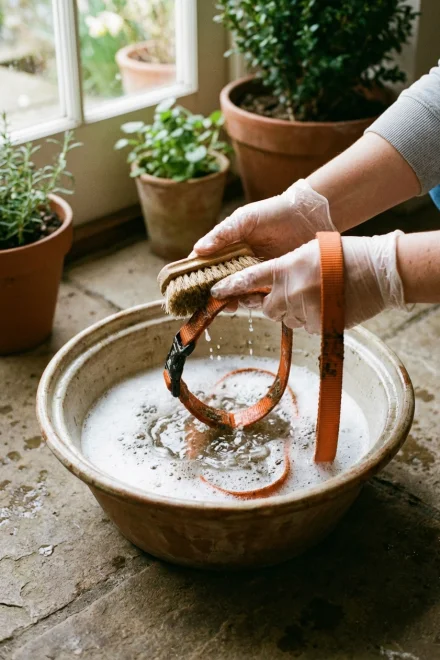
How to clean nylon and fabric collars
Nylon is one of the most popular materials due to its resistance, but its fibers tend to trap a lot of dirt and body grease. To clean it correctly, the ideal method is to submerge it in a container with lukewarm water and a bit of neutral soap or dog shampoo.
Let the collar soak for about 15 to 20 minutes so the dirt softens. If there are tough stains or dried mud residue, you can use an old toothbrush to gently scrub the fibers without damaging them. Pay special attention to the areas near the buckles, where grime usually accumulates.
Once clean, rinse with plenty of cold water to remove any soap residue that could irritate the dog's skin. It is essential to let it air dry, but always in the shade, as direct sunlight can harden the fibers and cause colors to fade.
Special care for leather collars
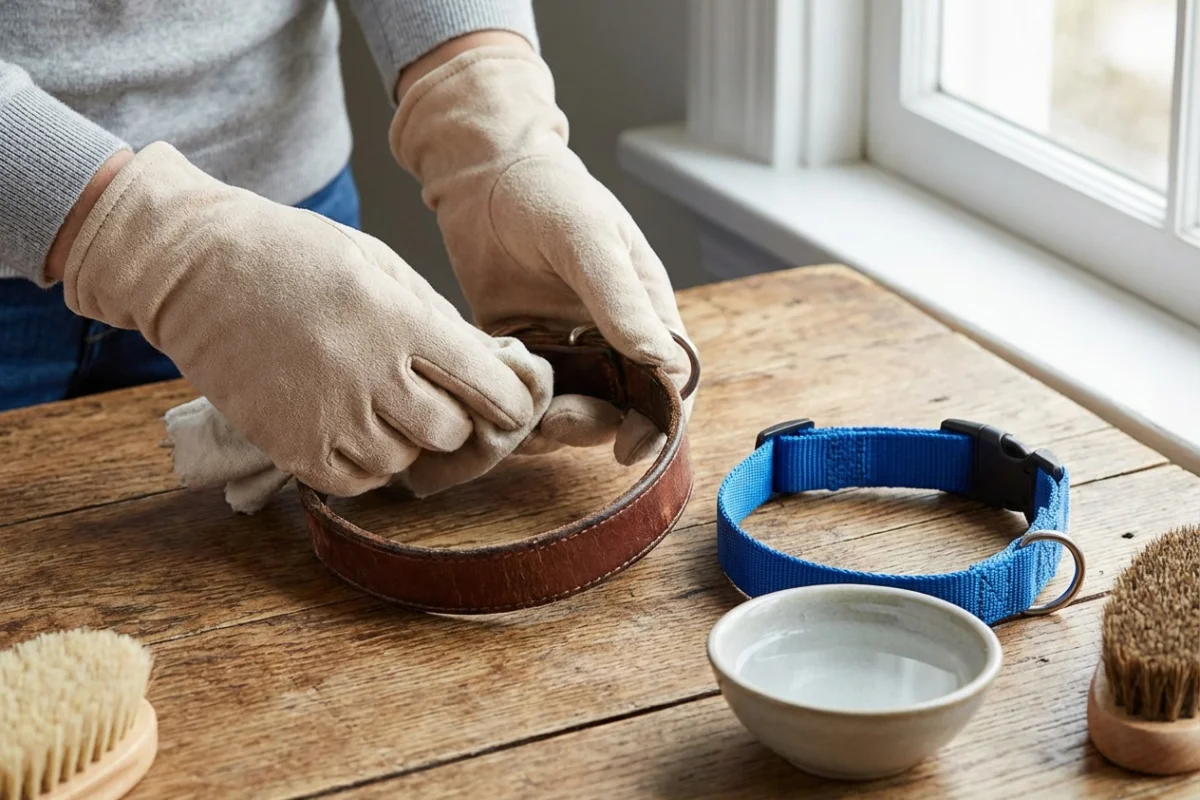
Leather is an organic material that requires delicate handling. You should never submerge a leather collar in water, as it will become stiff and could crack upon drying, losing its strength and aesthetics.
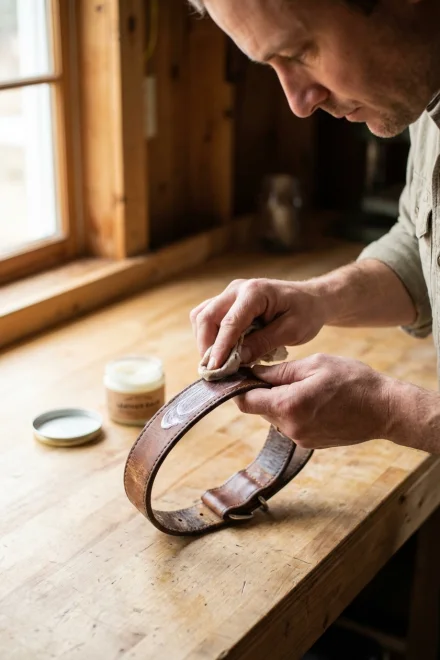
For routine cleaning, use a slightly dampened cloth with water and a specific leather soap or glycerin soap. Gently wipe the cloth over the entire surface and remove excess moisture with a dry towel immediately.
To maintain flexibility and shine, it is recommended to apply a leather conditioner or a bit of coconut oil once a month. This creates a protective barrier against moisture and prevents the material from drying out. Remember that good maintenance can make a leather collar last for the dog's entire life.
Cleaning frequency based on material and use
Not all collars need the same level of attention. The frequency of cleaning will depend directly on the material they are made of and the lifestyle your four-legged companion leads.
🌊 Biothane or rubber collars
These are the easiest to maintain. Simply wiping them with a damp cloth after each walk if they are stained is enough. They are ideal for dogs that swim or play in the mud frequently.
🧶 Nylon or fabric collars
They require a deep cleaning at least once a month, or sooner if the dog has been in very dirty environments or if it starts to smell like wet dog.
👞 Leather collars
They need a superficial cleaning every 15 days and a deep hydration treatment every one or two months to prevent the material from deteriorating.
⛓️ Metal collars
They should be checked weekly for signs of rust. They can be cleaned with soap and water, ensuring they are dried perfectly to avoid corrosion.
✨ Reflective collars
Accumulated dirt reduces their visibility. They should be cleaned with a soft cloth frequently to ensure the reflective strips fulfill their nighttime safety function.
🏔️ High mountain collars
After each excursion, it is vital to remove traces of sand, salt, or mud that may be trapped in the safety closures and adjustment mechanisms.
Establishing a review and cleaning routine not only improves aesthetics but also ensures that your dog's main accessory is always safe and comfortable. A small weekly gesture can prevent long-term dermatological problems.
Tips for extending the collar's life
☀️
Avoid leaving collars exposed to direct sunlight for long periods when not in use, as it weakens the materials.
🔄
If possible, alternate between two collars. This allows one to air out and regain its shape while you use the other.
🧼
Always use mild detergents. Harsh chemicals can damage fibers and cause skin allergies in dogs.
🧺
If using a washing machine for nylon, put the collar in a mesh bag to protect both the collar and the machine's drum.
💨
Never use a dryer or radiators. Natural drying is the only way to guarantee the collar won't shrink or deform.
Summary of care by material type
Preventive maintenance
The key to a collar lasting for years is not just an occasional deep cleaning, but daily preventive maintenance. After every walk in the rain or play session at the park, take a minute to remove surface dirt. This prevents sand or dust particles from penetrating the fibers and acting like sandpaper, wearing down the material from the inside.
Also remember that collar hygiene must go hand in hand with dog hygiene. A clean dog will get its collar less dirty, but a dirty collar will soil and contaminate a freshly bathed dog. Maintaining this balance is the best way to ensure your pet's overall well-being.
Quick cleaning and drying guide
| Material | Recommended Method | Frequency | Drying | Difficulty |
|---|---|---|---|---|
| Nylon / Polyester | Soaking and brushing | Monthly | Outdoors (shade) | Low |
| Natural leather | Damp cloth and cream | Every 15 days | Towel and air | Medium |
| Biothane / PVC | Quick wash under tap | Weekly | Immediate (cloth) | Very low |
| Metal / Chain | Soapy water and drying | Occasional | Immediate (avoid rust) | Low |
| Neoprene | Gentle hand wash | Monthly | Outdoors | Low |
Frequently Asked Questions about Dog Collar Maintenance
How often should I clean my dog's collar?
A surface cleaning is recommended once a month or immediately after the dog has rolled in mud or gone swimming. If the dog has sensitive skin, cleaning should be more frequent to prevent the buildup of allergens.
How can I remove bad odors from a nylon collar?
Soak the collar in a mixture of warm water with white vinegar or baking soda for 15 minutes. These natural ingredients neutralize organic odors without damaging the fabric fibers.
Can collars be put in the washing machine?
Nylon and fabric ones can, preferably inside a mesh bag to protect the drum from the metal buckles. However, leather collars or those with electronic components should never be machine washed.
What special care does a leather collar need?
Leather should never be fully submerged in water. Clean it with a damp cloth and, once dry, apply a leather conditioner or neutral moisturizing cream to prevent it from cracking and to maintain its flexibility.
How do you clean a biothane collar?
It is the simplest material: just wipe it with a damp cloth and mild soap and dry it with a towel. Being waterproof, it does not absorb odors or moisture, which greatly facilitates its maintenance.
What should I check to know if the collar is still safe?
Inspect the stitching, the condition of the buckles, and the rivets. If you notice the nylon is fraying or the buckle doesn't snap with a firm 'click', it's time to replace it to avoid accidental escapes.
How to dry the collar after washing?
It should always be dried outdoors, but away from direct sunlight or intense heat sources like radiators, as this can harden leather or weaken synthetic fibers.
Is it bad if the collar gets wet in the sea?
Saltwater is very corrosive to metal parts and dries out materials. If your dog swims in the sea, it is essential to rinse the collar with fresh water immediately afterward to remove the salt.
Can I use bleach to disinfect the collar?
It is not recommended, as bleach can weaken materials and cause severe skin irritation for the dog. Use mild soaps or specific disinfectants for pet accessories.
What should I do if the metal buckle has rusted?
If the oxidation is superficial, you can try cleaning it with a brush and vinegar. If the rust affects the opening or closing mechanism, you must discard the collar for safety, as it could break under a pull.