Blog
Last updated: April 27, 2026
Collars for brachycephalic dogs: How to protect their respiratory health and safety
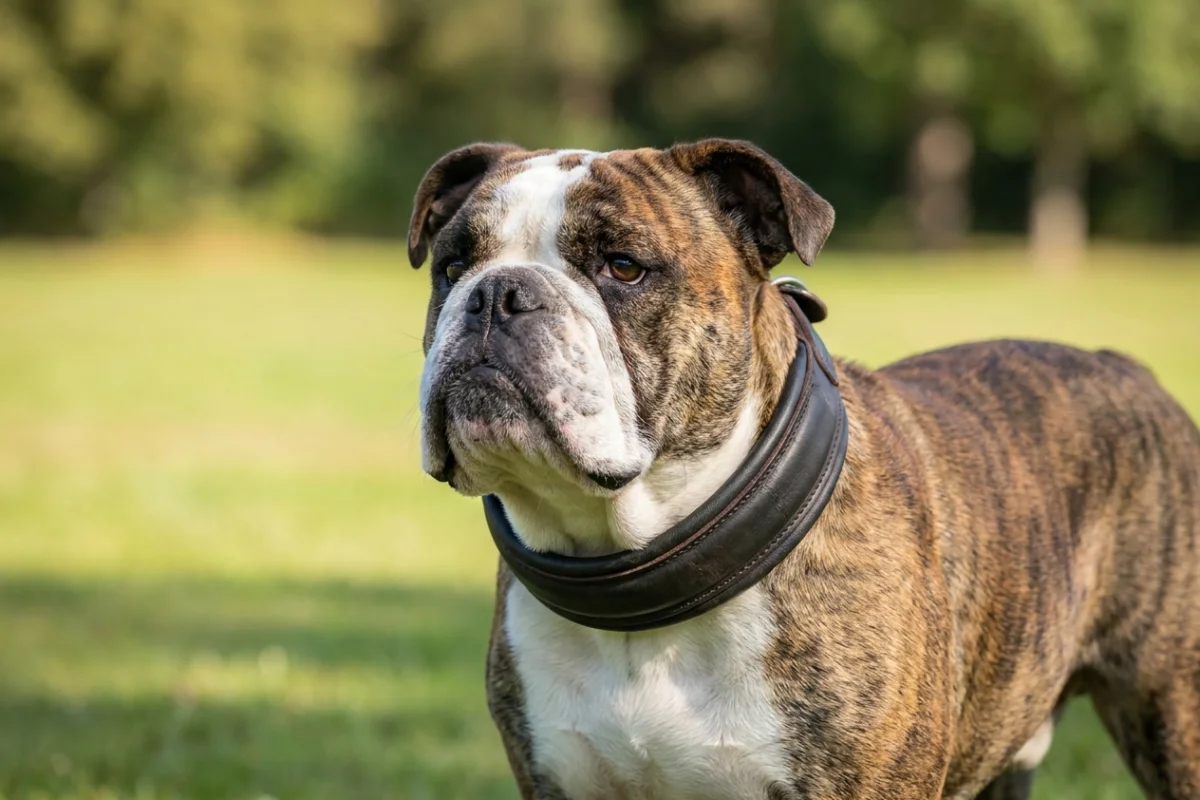
Brachycephalic dog breeds, such as the English Bulldog, French Bulldog, Pug, or Boxer, possess a unique facial and respiratory anatomy that requires special care. Due to their flat snout and narrower airways, the choice of walking accessories is not just a matter of aesthetics, but of health and medical prevention.
Many owners wonder if it is safe to use a collar on these dogs or if this could aggravate brachycephalic syndrome. In this guide, we will analyze how to choose a collar that minimizes pressure on the trachea, which materials favor ventilation, and in which specific situations the collar is a safe tool for these breeds.
If you have a flat-faced dog, understanding the relationship between collar fit and lung capacity is fundamental. Here you will learn to identify models that offer the necessary support without compromising your pet's well-being, guaranteeing calm walks free from excessive fatigue.
Why brachycephalic dogs need special care
Brachycephalic dogs, such as the English Bulldog, French Bulldog, Pug, or Boxer, are characterized by having a wide skull and a shortened snout. This particular anatomy leads to a series of respiratory challenges known as brachycephalic syndrome, which makes the choice of their walking accessories a critical decision for their health.
Unlike other breeds, any excessive pressure on the neck area can seriously compromise their ability to breathe, increase intraocular pressure, or even cause tracheal collapse. Therefore, the use of traditional collars must be evaluated with extreme caution, always prioritizing safety and unrestricted airflow.
The main goal when choosing an accessory for these breeds is to avoid respiratory stress. A dog that pants excessively or makes loud noises while breathing during a walk is sending warning signals. The key lies in finding products that do not exert force on the larynx and trachea.
Even if your dog walks perfectly by your side, external factors such as a scare or an unexpected encounter with another animal can cause a sudden pull. In a brachycephalic dog, that single pull can have immediate consequences for its well-being.
In conclusion: understanding your pet's physiognomy is the first step to ensuring a long and healthy life. Protecting their airways begins with choosing the right equipment for their daily outings.
The harness: The safest alternative
For the vast majority of veterinarians and canine behavior experts, the ergonomic harness is the preferred option for flat-faced dogs. Unlike the collar, the harness distributes the force of impact or tension across the chest and shoulders, leaving the neck completely free.
There are different types of harnesses, but for a brachycephalic dog, the most recommended are the 'Y' or 'H' shaped ones. These models ensure that the straps do not pass over the throat and allow for natural movement of the shoulder joints.
It is essential to avoid harnesses that cross the chest horizontally (Norwegian type), as they can limit mobility and, in some cases, press on the base of the neck if they are not perfectly adjusted.
A good harness not only protects breathing but also offers better control over the dog in traffic situations or crowds, allowing the animal to be guided from its center of gravity without causing pain or panic from lack of air.
In summary, if you are looking for maximum safety during exercise, the harness is the indispensable tool. It protects the trachea, reduces ocular stress, and improves the walking experience for both the owner and the dog.
Comparison: When to use each one?
The decision between collar and harness does not have to be mutually exclusive, but it must be strategic. For a brachycephalic dog, context is everything.
The collar should be relegated almost exclusively to an identification function. It is useful for carrying the tag with your contact details at home or on walks in controlled areas where the dog is off-leash. In these cases, it should be a very light, flat collar that does not tighten.
The harness, on the contrary, is the work equipment. It should always be used whenever the dog is attached to the leash. Whether it's a short walk around the neighborhood or a long excursion, the harness ensures that any sudden movement is absorbed by the chest.
In terms of long-term health, the continuous use of a collar on dogs that pull on the leash can lead to chronic problems that worsen with age. The harness prevents these pathologies from the animal's youth.
In conclusion, the golden rule for owners of Pugs or Bulldogs is: collar for the tag, harness for the leash. This combination offers the best of both worlds without risking your best friend's respiratory health.
Tips for your brachycephalic dog's safety
🩺
Always prioritize the harness over the collar to avoid tracheal collapse and respiratory fatigue.
📏
Adjust the harness so that two fingers fit between the strap and the skin to avoid chafing.
🌡️
Avoid walking during the hottest hours; brachycephalic dogs do not regulate temperature well and stress worsens their breathing.
💧
Always carry fresh water to hydrate them and help cool their airways during the walk.
🛑
If you hear excessive snoring or whistling, stop the walk immediately and let the dog rest in the shade.
🐕
Choose Y-shaped harnesses to completely free the movement of the shoulders and the base of the neck.
🏷️
If you use a collar for identification, make sure it is extra flat and light.
🚫
Never use prong, choke, or spike collars; they are extremely dangerous for these breeds.
🧼
Clean the folds of their face after the walk, as the harness and effort can increase salivation.
🚶
Encourage a calm walk without pulling through positive reinforcement and treats.
🔍
Periodically check that the harness does not cause hair loss or redness in the chest area.
⚖️
Keep your dog at its ideal weight; being overweight is the worst enemy of breathing in brachycephalic dogs.
🧶
Look for breathable materials like mesh to prevent the harness from accumulating too much body heat.
⚠️
If you have any doubts about their respiratory capacity, consult a veterinarian specializing in brachycephalic breeds.
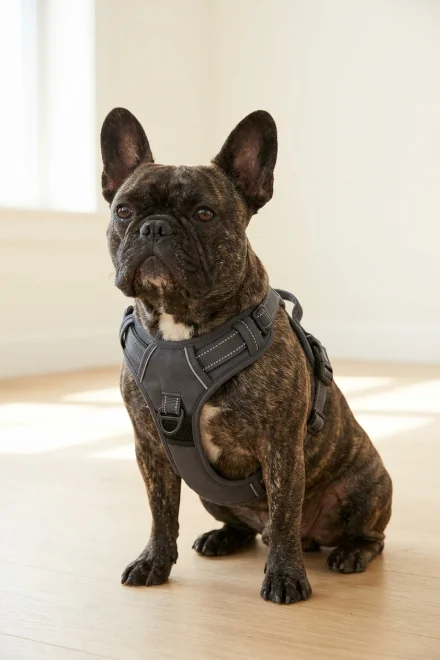
Choice according to lifestyle and breed
Not all brachycephalic dogs are the same. An English Bulldog has a much wider chest and a low center of gravity, while a Pug is smaller and prone to eye proptosis (eyes popping out) under strong neck pressure.
For heavier and stronger breeds, look for harnesses with reinforced stitching and multiple adjustment points. This will prevent the harness from shifting sideways, which is very common due to their 'rocking' way of walking.
If your dog is small, like a Boston Terrier, opt for very light and soft materials. Their skin tends to be more sensitive and a coarse harness could quickly cause friction dermatitis.
In humid or hot climates, the choice of material is vital. Thick fabric harnesses can act like a thermal vest, increasing the risk of heat stroke. Always choose breathable meshes that allow air circulation.
Ultimately, personalizing the choice according to your dog's specific morphology is the best way to ensure that the walk is a moment of pleasure and not a risk to their health.
Is it safe to use a collar just for the tag?
Many owners wonder if they should eliminate the collar completely. The answer is that the identification collar remains a valuable safety tool, as long as it is not used to attach the leash.
Carrying a tag with your name and phone number is vital in case of loss. For a brachycephalic dog, the ideal is a thin nylon or biothane collar, fitted loosely so that it does not exert any pressure while the dog rests or plays.
If you are worried that the collar might get caught on something, there are models with breakaway safety buckles that open automatically under strong pressure, avoiding accidental strangulation risks at home.
Remember: the moment you walk out the door and need to use the leash, the carabiner must go to the harness attachment, never to the collar's. Maintaining this routine will save your dog from many unnecessary discomforts.
In summary, the collar is a 'passive safety' accessory (identification), while the harness is the 'active safety' accessory (control and walking).
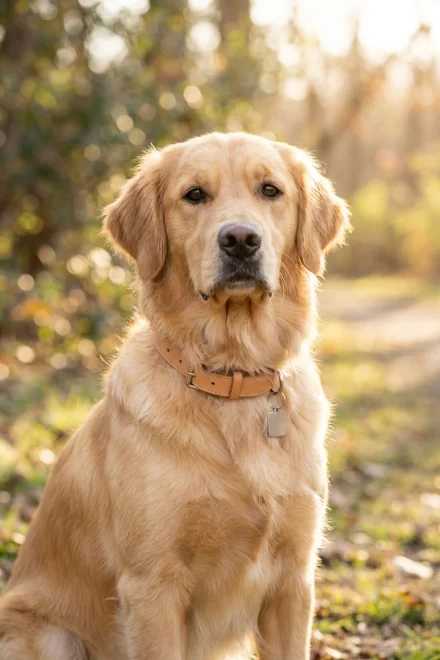
Warning signs during the walk
As the owner of a brachycephalic dog, you must become an expert observer of their body and respiratory language. The walk should be a relaxed activity, not a marathon.
If you notice your dog starting to extend their neck forward to try to breathe better, or if their tongue takes on a purple or bluish tone (cyanosis), you must stop immediately. These are signs of hypoxia or lack of oxygen.
Stridor (a high-pitched sound when inhaling) indicates that the upper airways are collapsed or very inflamed. In these cases, the use of any collar is prohibitive and the harness should be as light as possible.
Another factor to watch for is white foam vomiting or gagging after a small effort. This usually indicates that the respiratory effort is affecting the digestive system, something very common in these breeds.
In conclusion, your dog trusts you to set limits on their physical activity. Learning to read these signals and using the right equipment is the best way to show them how much you care about their well-being.
Conclusion: Respiratory health above all
The anatomy of brachycephalic dogs is fascinating but delicate. As we have seen, the choice between collar and harness is not a matter of aesthetics, but of health and prevention of serious pathologies.
The ergonomic harness is positioned as the gold standard for walking, protecting the trachea and allowing for optimal oxygenation. The collar, for its part, fulfills its function as a secure identification support.
At the end of the day, a dog that breathes well is a happy dog. Invest in quality accessories and adapt your routines to your pet's needs to enjoy many years of safe and healthy walks.
Frequently asked questions about collars for brachycephalic dog breeds
Why is it delicate to choose a collar for a brachycephalic dog?
Due to their bone structure, these dogs often have compromised airways. An unsuitable collar that exerts pressure on the trachea can cause tracheal collapse, breathing difficulties, or increase the risk of heat stroke.
Which breeds are considered brachycephalic and need this care?
The most common breeds include the French and English Bulldog, Pug (Carlino), Boston Terrier, Boxer, Shih Tzu and Pekingese. They all share a wide skull and a short snout that makes thermoregulation and breathing difficult.
Is a wide or narrow collar better for these breeds?
A wide collar is preferable. Wide collars distribute pressure more evenly across the entire surface of the neck, avoiding localized pressure points on the trachea that could cause coughing or choking.
Can I use a collar if my brachycephalic dog pulls a lot on the leash?
If the dog pulls excessively, using a collar can be risky for their respiratory health. In these cases, it is recommended to work on positive reinforcement training or use the collar only for carrying identification, delegating the walking restraint to a specific no-pull harness.
Which materials are most recommended to avoid overheating?
Brachycephalic dogs suffer a lot from the heat. Materials such as breathable nylon or neoprene are ideal, as they do not retain as much body heat and are soft in contact with the skin folds of the neck.
What should be the correct collar fit for a Bulldog or Pug?
The fit should be firm but never tight. The two-finger rule is vital: you should be able to slide them easily between the collar and the neck. A collar that is too loose can get caught, and one that is too tight will hinder their already limited breathing.
Can the collar cause eye problems in these dogs?
Yes, indirectly. Excessive pressure on the neck increases intraocular pressure, which is dangerous for breeds with prominent eyes (exophthalmos) like the Pug, potentially leading to serious eye problems.
When is it mandatory or recommended for them to wear a collar?
The collar is essential for permanent identification. In controlled environments or at home, a lightweight collar with an ID tag or QR code is the best way to ensure the dog can be returned if lost.
What signs indicate that the collar is hurting them?
If you notice your dog making choking noises, coughing frequently during the walk, having bluish gums or showing excessive fatigue after walking, you should remove the collar immediately and consult with a veterinarian.
Are there collars designed specifically for brachycephalic anatomy?
Yes, there are ergonomic models with an anatomical cut that sit lower at the base of the neck, away from the larynx, designed to minimize any impact on the animal's airflow.