Blog
Last updated: April 2, 2026
Tactical dog collars: Why military resistance is a trend in canine safety
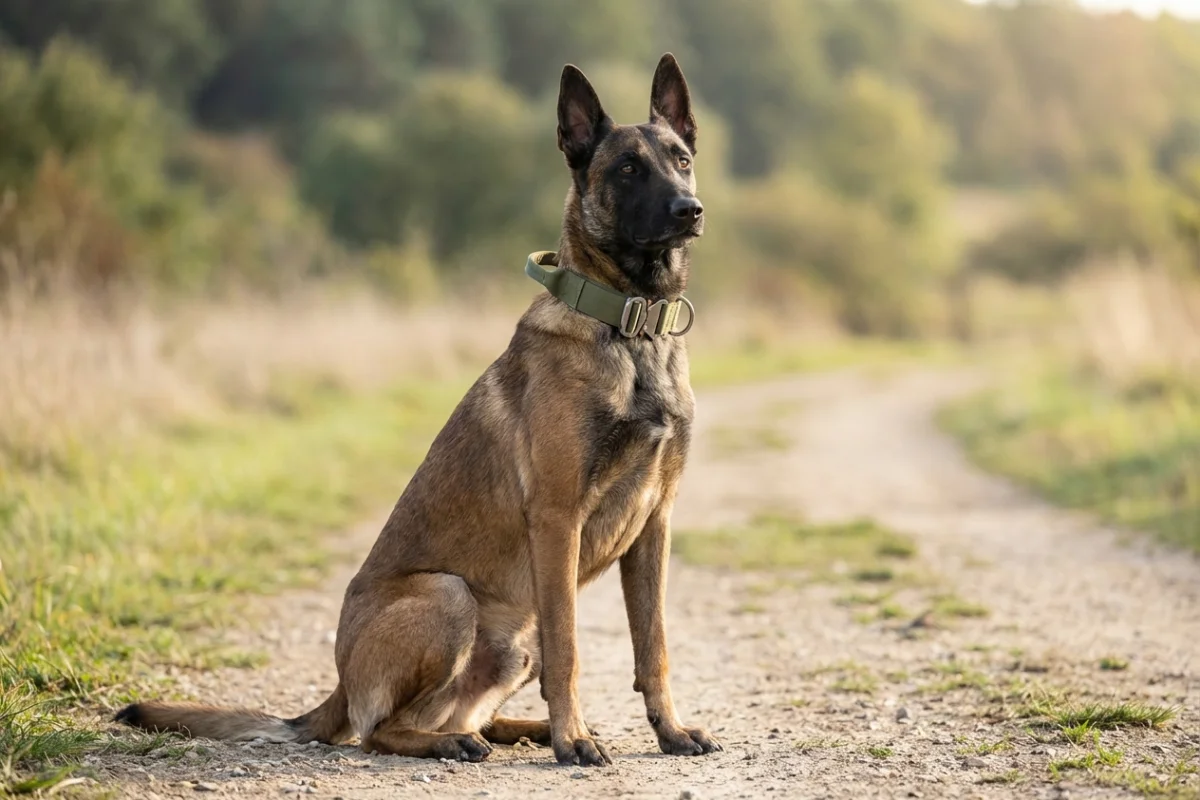
In the world of canine accessories, tactical collars have moved beyond being exclusive to K9 and working units to become a preferred choice for owners of large or very strong dogs. Their design, inspired by military equipment, prioritizes extreme durability and total control in critical situations.
Unlike conventional models, a tactical collar stands out for the use of materials such as double-layer nylon, high-security quick-release buckles, and frequently, an integrated control handle that allows for immediate restraint of the dog without the need for a leash. It is the ultimate tool for those seeking robustness without compromising the animal's comfort.
In this article, we will analyze what makes these collars so special, from their buckle technology to their customization capacity. If you have an active, powerful dog or are simply looking for gear that lasts a lifetime, you will discover why tactical aesthetics and functionality is the smartest choice for your pet's safety.
Tactical dog collars: Military-grade strength and safety
In recent years, tactical collars have gone from being an exclusive tool for K9 units and working dogs to becoming a rising trend among pet owners seeking maximum safety. Inspired by military equipment, these accessories stand out for their extreme robustness and their ability to offer superior control in demanding situations.
What sets a tactical collar apart from a conventional one is not just its robust aesthetics, but the quality of its materials and its functional design. They are designed to withstand great tension, resist inclement weather, and ensure that the dog is always under control, especially in large breeds or those with great physical strength.
Below, we analyze why these types of collars have become essential for those who prioritize durability and protection in every walk or training session.
The control handle: The key to tactical safety
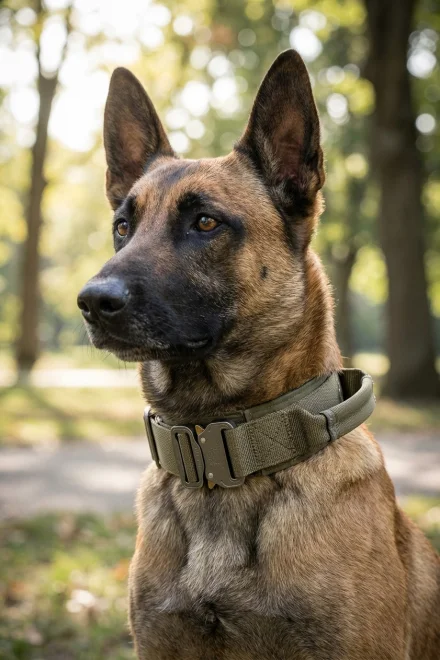
One of the most valued features of tactical collars is the incorporation of an integrated control handle. This element allows the dog to be held directly by the neck safely and quickly, without the need to pull on the leash, which is vital in traffic situations, encounters with other dogs, or during training.
The use of the handle offers immediate restraint. In moments where an instantaneous reaction is required, being able to firmly grasp the dog provides a sense of security that standard collars cannot match. It is especially useful for large dogs that can exert a lot of pulling force.
Additionally, these collars are usually made with 1000D nylon, an extremely abrasion and pull-resistant military-grade material. This ensures that the accessory does not break or fray, even after years of intensive use in rural or urban environments.
Comfort is not left behind, as most include soft interior padding. Despite their rigid appearance, they are designed to protect the trachea and prevent chafing, distributing pressure evenly around the entire neck contour.
High-resistance components: Buckles and anchors
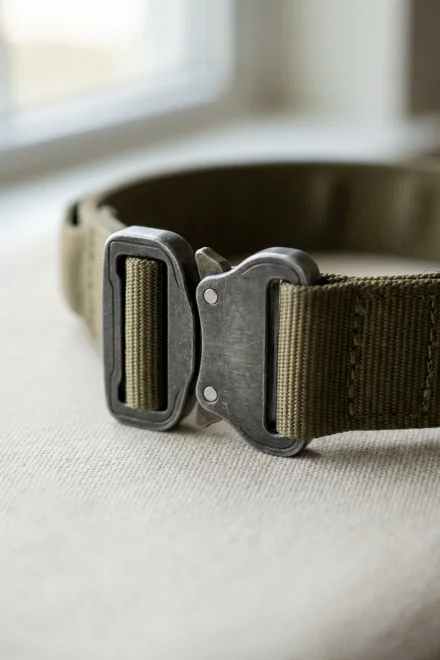
The safety of a tactical collar lies in its attachment points. Unlike common plastic closures, these models use quick-release metal buckles, often inspired by the Cobra system, which withstand hundreds of kilos of force without accidentally opening.
The leash anchor is usually a stainless steel D-ring or reinforced metal alloys. This connection point is critical to prevent escapes, ensuring that the leash carabiner always stays in place regardless of the dog's energy.
Another distinctive detail is the velcro panel. Originally designed for identification patches on service dogs, today it allows for personalizing the collar with the pet's name, reflective patches, or 'Do not pet' warnings, improving visual communication during the walk.
Finally, X-reinforced stitching ensures that each component is joined indestructibly. This level of manufacturing guarantees that, in the face of a sharp pull, the collar maintains its structural integrity, protecting both the dog and the handler.
When to choose a tactical collar according to the activity
Although its aesthetics are imposing, the choice of a tactical collar must respond to the real needs of the dog and its owner. Its design is optimized for situations where control and durability are non-negotiable.
🐕 Obedience training
The control handle allows for precise and safe corrections. It is the favorite tool of trainers for working on 'heel' and impulse management in young dogs.
⛰️ Hiking and mountains
Its resistance to water, mud, and snagging on branches makes them ideal for demanding routes. High-density nylon does not deteriorate with humidity or sun.
🏙️ Busy urban environments
In cities with heavy traffic or crowds, the close control offered by the integrated handle provides extra peace of mind when crossing streets or entering establishments.
💪 Dogs with great strength (Strong Pullers)
For breeds like the German Shepherd, Rottweiler, or Pitbull, the width of the tactical collar protects the neck and prevents the material from digging in or breaking under strong pulls.
🛡️ Working and security dogs
They meet the necessary standards for protection, search, and rescue work, allowing for the attachment of accessories and guaranteeing professional durability.
📸 Aesthetics and personalization
For those looking for a modern and 'military' style, velcro panels allow for changing patches and giving a unique and functional touch to their pet's gear.
Opting for a tactical collar is an investment in a long-lasting tool. If your dog is active, strong, or you simply want an accessory that withstands any adventure, the military trend offers the most robust solution on the market today.
Maintenance so your tactical collar lasts for years
🧼
Wash the collar by hand with neutral soap and lukewarm water; avoid the washing machine to prevent damage to the metal components.
⚙️
Clean the metal buckle with a dry cloth and apply a drop of lubricating oil if you notice the mechanism becoming stiff.
🧶
Remove accumulated hair from the velcro with a small brush to maintain its gripping capacity.
☀️
Always dry the collar in the shade; direct and prolonged exposure to the sun can weaken the nylon fibers over time.
🔍
Perform a monthly inspection of the stitching to detect any signs of wear before it becomes a risk.
Comparison of materials and closures in K9 collars
Quick Release Buckles
The heart of a tactical collar is its closure. Cobra-type buckles are the gold standard; made of high-strength aluminum, they are designed not to open under load. This means that the more the dog pulls, the more secure the closure is. They are ideal for high-power dogs that have broken plastic closures in the past.
On the other hand, there are double metal pin buckles, similar to a traditional belt but reinforced. Although they are extremely secure, they lack the release speed of modern tactical models, making them less practical for situations where the collar needs to be put on or taken off frequently.
1000D Nylon vs. Tactical Biothane
1000D Nylon is the most common material due to its balance between flexibility and resistance. It is breathable and allows for internal padding, making it very comfortable for daily use. However, it tends to absorb water and dirt if the dog bathes with it on.
Biothane in tactical versions is an emerging alternative. It is completely waterproof and does not absorb odors, although it is less padded than nylon. It is recommended for dogs working in aquatic environments or with a lot of mud, where hygiene is the absolute priority.
In conclusion, the choice between one type of closure or another will depend on whether you prioritize speed of use or static safety. Both far exceed standard commercial materials, raising your dog's safety to a professional level.
Key differences between types of tactical closures
| Closure type | Tensile strength | Ease of use | Safety | Recommended use | Estimated price |
|---|---|---|---|---|---|
| Cobra-type buckle | Extreme (200kg+) | Very high | Maximum | Large dogs / K9 | 45 € – 90 € |
| Metal QR Buckle | High (100kg+) | High | High | Daily urban use | 25 € – 45 € |
| Pin Buckle (Belt) | Very High | Low | Very High | Working dogs | 20 € – 40 € |
Frequently asked questions about tactical dog collars
What exactly is a tactical dog collar?
It is a collar designed with superior resistance standards, usually manufactured with military-grade nylon (1000D), reinforced stitching, and metal hardware. They are typically wider to better distribute pressure and feature functional elements such as handles and Velcro panels.
What is the integrated handle on these collars for?
The handle allows for direct and quick control over the dog in emergency situations, heavy traffic, or during work sessions. It makes it easier to hold the animal securely without having to look for the leash or pull directly on the neck.
What is a Cobra-style buckle and why is it important?
The Cobra-style buckle is a high-resistance metal buckle that prevents accidental openings. It is the safest system on the market, capable of withstanding extreme tensile loads without breaking, making it ideal for very strong dogs.
Are tactical collars suitable for small dogs?
They are generally not recommended for very small dogs due to their width and weight. They are primarily designed for medium, large, or giant breeds that require a larger contact surface to protect their trachea and provide resistance.
Is the tactical collar too heavy for daily use?
Although they are more robust than a standard nylon collar, modern models are designed to be ergonomic. If the correct size is chosen, the dog can wear it comfortably on daily walks without the weight being an issue.
Do these collars help prevent the dog from pulling on the leash?
They are not a specific 'anti-pull' training tool, but their width and robustness offer better control to the owner and are more comfortable for the dog than a thin collar if it exerts a lot of force.
What are the Velcro panels on the collar for?
They allow for functional customization. Identification patches with the dog's name, 'Do not pet' alerts, service patches, or even contact information can be added, improving visibility and communication in the environment.
How should I clean a tactical collar?
Due to its nylon and metal composition, it is ideal to hand wash it with warm water and neutral soap. It is important to dry the metal parts well to avoid long-term corrosion, although most tactical hardware is rust-proof.
Is a tactical collar better than a leather one for strong dogs?
The tactical collar usually offers more features (such as the handle and Velcro) and is more resistant to moisture and weather abuse than leather, although the final choice depends on aesthetic taste and the need for manual grip.
Can they cause chafing because they are so rigid?
Quality tactical collars include a padded lining on the inside to prevent friction. It is crucial to adjust the collar leaving a two-finger gap to ensure that the rigidity of the outer material does not bother the dog.