
Blog
Last updated: June 1, 2026
Collars for dogs with thyroid problems or collapsed trachea: Safety guide

When a dog suffers from specific medical conditions such as tracheal collapse or thyroid gland disorders, the choice of collar stops being an aesthetic matter and becomes a health priority. Excessive pressure in the ventral area of the neck can aggravate symptoms, cause chronic coughing episodes, or even interfere with hormonal function in dogs with hypothyroidism.
In this specialized guide, we will analyze how collar use affects dogs with these pathologies and what characteristics an accessory must have to avoid compromising their well-being. You will learn to identify critical pressure points and choose materials that minimize the impact on your pet's throat.
If your dog belongs to a breed prone to these ailments or has already been diagnosed, having the correct information about tracheal and thyroid safety is fundamental to ensuring pain-free walks and a better long-term quality of life.
What collar to use if my dog has thyroid problems or a collapsed trachea?
When a dog suffers from pathologies such as a collapsed trachea or thyroid gland problems, the choice of collar stops being an aesthetic issue and becomes a critical health decision. The neck houses vital structures that, in the face of excessive pressure or constant pulling, can suffer irreversible damage or aggravate existing clinical conditions.
The main objective in these cases is to eliminate any pressure point on the ventral area of the neck. An unsuitable accessory can cause coughing fits, breathing difficulties, or interfere with the hormonal regulation of the thyroid. Therefore, it is fundamental to know the alternatives designed to protect the physical integrity of our pet.
There are specific solutions ranging from high-end harnesses to anatomically designed collars that distribute force evenly. In this guide, we will explore how to identify the best equipment to guarantee safe and pain-free walks.
Safe alternatives: Harness or specialized collar?
For dogs with neck sensitivity, the golden rule is to avoid traditional narrow-band collars. Pressure concentrated in a small area is the main enemy. The choice should be based on the dog's morphology and the severity of their condition, always prioritizing the freedom of the airways.
Y-shaped or H-shaped harnesses
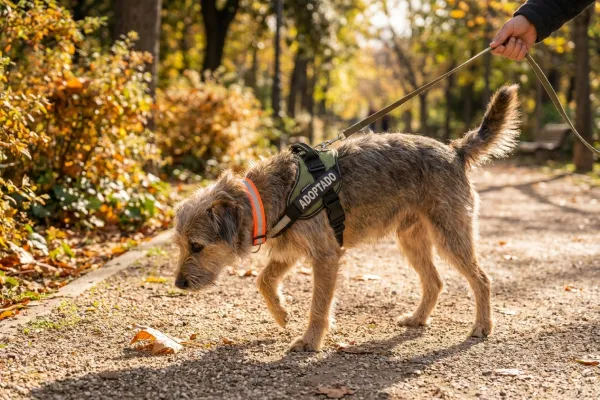
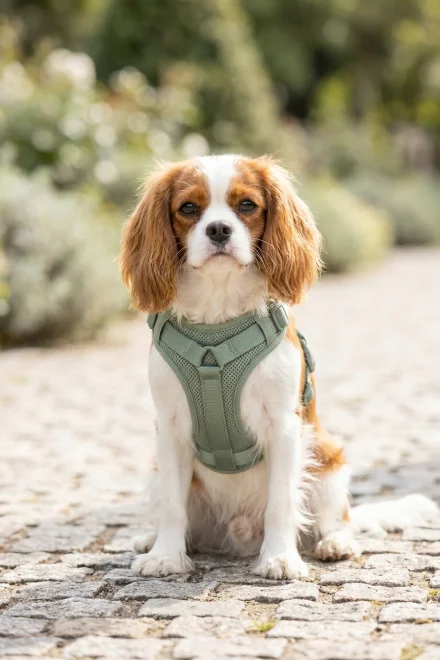
Harnesses with a 'Y' design are considered the safest option for dogs with a collapsed trachea. Their structure allows the force of impact or pulling to be distributed over the sternum and shoulders, leaving the neck completely free of tension. By not crossing the throat, the dog can breathe and pant without obstruction even if they try to pull on the leash.
It is vital that the harness is well-padded and that the straps do not interfere with the natural movement of the shoulder blades. These models are ideal for small breeds like the Yorkshire Terrier or Pomeranian, which are genetically prone to tracheal problems.
Wide and anatomical collars
If for any specific reason a collar is preferred, it must be of the extra wide or anatomical type. These collars distribute pressure over a much larger surface, reducing the impact per square centimeter on the trachea and thyroid gland. However, they are only recommended in very mild cases and under constant supervision.
Many of these models are made of soft materials like neoprene, which cushion sudden movements. Even so, for dogs that pull hard, the harness remains the standard medical recommendation.
Total support harnesses
In advanced cases of tracheal collapse or in elderly dogs with multiple pathologies, full-body or support harnesses offer maximum control. These devices wrap around the animal's torso, allowing the owner to assist the dog in its movements without applying any force near the head or neck.
Comparison of accessories according to cervical safety
The following table details the key differences between restraint systems and their impact on dogs with neck pathologies:
| Accessory type | Impact on trachea | Dog control | Safety level | Ideal for |
|---|---|---|---|---|
| Traditional collar | Very high (Risky) | Medium | Low | Healthy dogs that don't pull |
| Y / H Harness | None (Safe) | High | Very high | Collapsed trachea and thyroid |
| Extra wide collar | Moderate | High | Medium | Mild or preventive cases |
| Support harness | None (Safe) | Very high | Maximum | Elderly dogs or severe cases |
In conclusion, the transition to an ergonomic harness is the most effective preventive and corrective measure. It not only improves the dog's quality of life by avoiding pain and coughing, but also prevents long-term complications in the thyroid gland, which can become inflamed due to repetitive trauma from the use of unsuitable collars.
Tips before changing your dog's equipment
Switching from a collar to a harness requires an adaptation process to ensure the dog feels comfortable and that the new accessory fulfills its protective function without causing chafing or unnecessary stress.
Guidelines for a safe transition
- Consult with your veterinarian: Before choosing, confirm the degree of the injury to determine if you need an orthopedic harness or a standard sports one.
- Take precise measurements: A poorly fitted harness can be as harmful as a collar if it presses on sensitive areas or limits movement.
- Check contact points: Ensure that no buckle or seam sits directly over the throat area.
- Use lightweight leashes: The weight of the leash also matters; a heavy leash can exert downward tension even with a harness.
- Observe breathing: If the dog continues to cough with the harness, the design may not be suitable for their specific anatomy.
Patience is key. Some dogs may feel strange at first with a harness, but the benefits to their respiratory and hormonal health far outweigh the adaptation period.
Common mistakes when walking dogs with cervical sensitivity
Many owners, even knowing their dog has health problems, make mistakes due to lack of knowledge or by using tools that seem harmless but aggravate the clinical condition.
- Using martingale or prong collars: These are strictly forbidden, as they can collapse the trachea instantly.
- Adjusting the harness too tightly: If it is too tight, it can hinder the chest expansion necessary for good breathing.
- Ignoring coughing fits: Coughing during a walk is a clear sign that something is pressing on the airways.
- Leaving the collar on at home: For dogs with thyroid problems, it is better to leave the neck free of any pressure for as long as possible.
- Allowing sudden pulls: Even with a harness, violent pulls should be avoided through loose-leash walking training.
Avoiding these mistakes is essential to not worsen an already weakened trachea. Gentle canine education, combined with the right equipment, is the best medicine.
Pros and cons of using ergonomic harnesses
The use of specialized harnesses is the number one recommendation from veterinarians and canine physiotherapists for treating trachea and thyroid problems. However, like any tool, it has nuances that must be considered.
The main advantage is the preservation of the dog's vital health, eliminating the risk of mechanical asphyxiation. On the other hand, some owners find they have less control over the dog's direction if they are not trained. It is important to understand that the harness is a physical safety measure, but it must be accompanied by a good foundation of obedience.
Frequently asked questions about collars for dogs with tracheal and thyroid sensitivity
Why is a conventional collar dangerous for a dog with tracheal collapse?
Tracheal collapse involves a weakening of the cartilaginous rings of the trachea. A conventional collar exerts direct pressure on this structure when pulling on the leash, which can cause respiratory distress, paroxysmal coughing ('honking' sound), and fainting due to lack of oxygen.
How does collar pressure affect the thyroid gland?
The thyroid gland is located at the base of the neck. Constant mechanical pressure or sudden jerks can cause inflammation in the area or, according to some veterinary studies, contribute to the development of endocrine problems by traumatizing the sensitive glandular tissue.
What type of collar is safest if my dog has throat sensitivity?
The ideal options are extra-wide and padded collars that distribute pressure over a larger surface, or collars designed in a 'V' shape that clear the central area of the trachea. However, for walking, the medical recommendation is usually the use of a harness instead of a collar.
Can I use a collar just to carry the ID tag?
Yes, it is safe to use a lightweight and loose collar exclusively for carrying the ID tag. The important thing is to never attach the leash to this collar if the dog has trachea or thyroid problems, to avoid any accidental tension.
What materials are most recommended for these cases?
Materials with shape memory or padded neoprene are recommended. These materials cushion impacts and are much softer in contact with the skin and internal tissues of the neck than rigid nylon or hard leather.
How do I know if the collar is pressing on the thyroid area?
If you notice that your dog swallows saliva with difficulty, has a slightly swollen area, or shows resistance when you try to fasten the collar, it is likely exerting too much pressure on the thyroid gland or the larynx.
Are there collars that do not touch the trachea?
There are specific models called 'resting collars' or anatomically designed collars that sit lower at the base of the neck or have a rigid structure that prevents the circle from collapsing onto the trachea when there is tension.
Which breeds should take special care with neck pressure?
Small breeds such as the Yorkshire Terrier, Pomeranian, Toy Poodle, and Chihuahua are highly prone to tracheal collapse. In these breeds, avoiding collar pressure from puppyhood is an essential preventive measure.
Is a biothane or fabric collar better for a dog with hypothyroidism?
Padded fabric is usually more flexible and adaptable. Biothane is excellent for its hygiene, but if chosen for a dog with thyroid problems, you must ensure it has a soft inner lining to avoid chafing on skin that is often weakened by the disease.
What should I do if my dog coughs while using the collar?
You should remove the collar immediately and consult with a veterinarian. Coughing is a clear sign that the airway is being compromised. The specialist will likely recommend a permanent transition to a chest harness that does not touch the neck.