
Blog
Last updated: April 2, 2026
QR and NFC Technology Collars: The New Era of Canine Identification
Technology has reached the world of canine accessories to offer solutions that go beyond simple aesthetics. QR and NFC technology collars represent an evolutionary leap in the safety of our pets, allowing for a much more complete and dynamic identification than traditional engraved tags.
Unlike conventional systems, these collars allow for the storage of digital profiles with medical information, contact details updateable in real-time, and, in some cases, the geographic location at the time of scanning. In this article, we will analyze how these smart identification tools work and why they are becoming the safety standard for the most tech-savvy owners.
If you are concerned about your dog's safety and are looking for a modern alternative to ensure they can always return home, you will discover why QR and NFC systems are the perfect complement to the mandatory microchip, offering an immediate and simple way of contact for anyone who finds your pet.
What are QR and NFC technology collars
QR and NFC technology collars represent the digital evolution of traditional identification tags. Unlike engraved tags, these devices allow for an unlimited amount of information to be stored in the cloud, accessible by a simple scan with a smartphone. They are tools designed to maximize the chances of recovering a pet in case of loss.
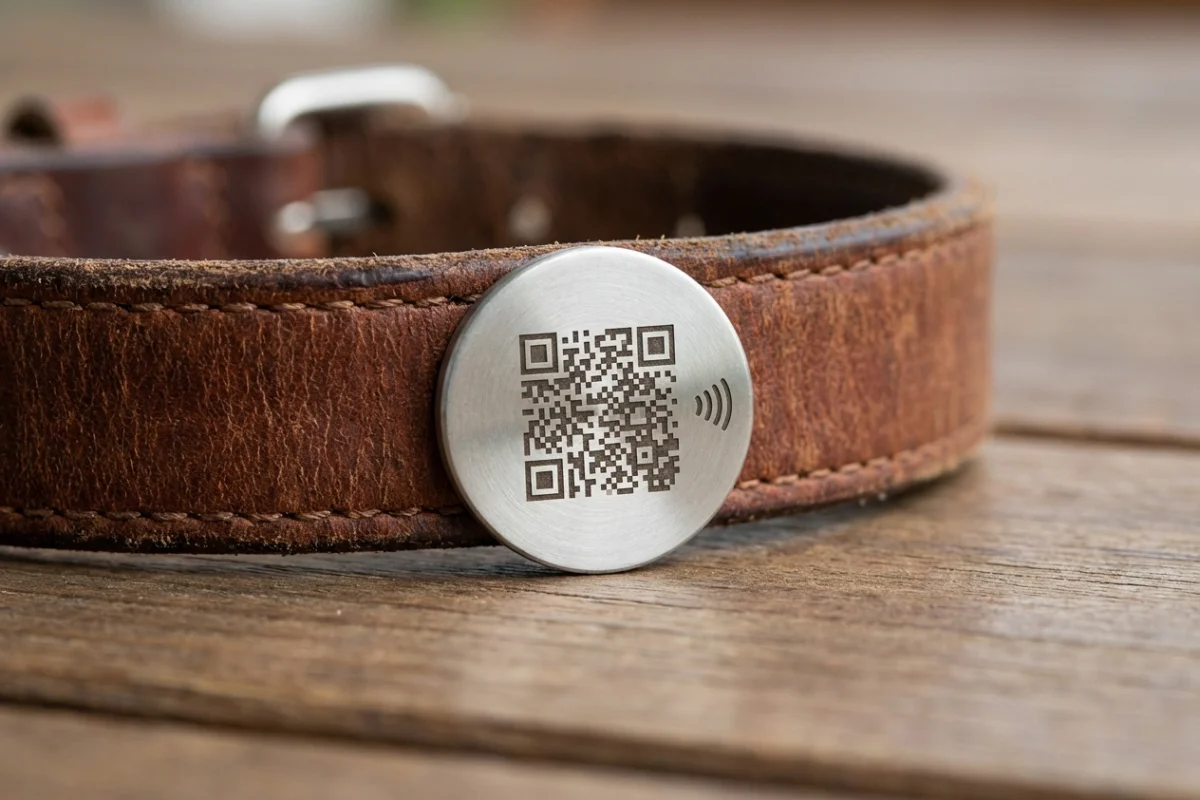
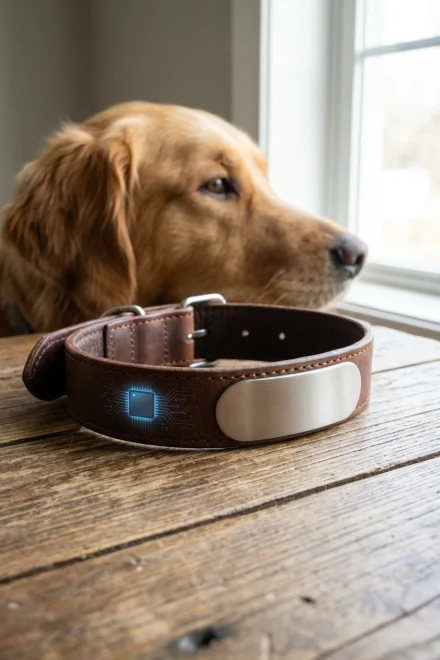
These collars integrate a printed QR code or an NFC (Near Field Communication) chip into their structure. When someone finds the dog, they only need to bring their phone close or scan the code to access a digital profile with contact details, medical history, allergies, and special needs of the animal.
In addition to identification, many of these systems offer passive geolocation. This means that the moment someone scans the collar, the owner receives an immediate notification with the exact GPS location where the reading was performed, facilitating a quick and safe rescue.
Unlike traditional microchips, which require a special reader available only in veterinary clinics or police stations, smart collars can be read by anyone with a mobile phone, drastically reducing the time the dog spends lost.
In conclusion: QR and NFC technology applied to canine identification not only modernizes the accessory but also adds a layer of interactive security that conventional tags cannot offer.
How the scanning system works
The operation of these collars is extremely intuitive and is divided into two main technologies: the QR code and the NFC chip. Both aim to connect the physical world with a digital profile hosted on a secure server.
The QR code works through optical recognition. By focusing the mobile camera on the code, the software interprets the link and automatically opens the web browser. It is the most compatible option, as it works on practically all devices with a camera.
On the other hand, NFC technology works by proximity, similar to card payments. Simply bring the back of the phone close to the collar for the information to appear on the screen. It is faster and does not require ambient light, although some older phones might not have this function activated.
Once the link is activated, the person who has found the dog sees a file with direct call or WhatsApp message buttons to the owner. At the same time, the system uses the mobile's location services to send an email to the owner with the location map.
In summary, it is a two-way system: it provides vital information to the rescuer and immediate peace of mind to the owner through real-time alerts.
Comparison: Engraved tags vs. QR/NFC collars
The choice between a traditional tag and a smart collar depends on how much value you place on data updates and speed of location. Both systems have their place in canine security, but they offer very different experiences.
Regarding information capacity, engraved tags are limited by physical space (usually a name and a phone number). QR collars allow for the inclusion of multiple numbers, photos, identifying marks, and even the contact of the trusted veterinarian.
Flexibility is another key point. If you go on vacation or change your number, an engraved tag becomes obsolete and must be replaced. With the digital system, you simply log into the website and modify the data in seconds, at no cost.
However, the simplicity of the engraved tag is unbeatable: it needs no battery, coverage, or technological knowledge. For this reason, many experts recommend a hybrid approach: a collar that includes the engraved name and a QR code for detailed information.
In terms of cost, although the initial investment of a smart collar is slightly higher, its informational durability makes it more cost-effective in the long run, as a single device serves for the animal's entire life.
In short, while the traditional tag is a basic identifier, the QR/NFC collar is a complete security management tool for the modern dog.
Tips for setting up your smart collar
📱
Perform a test scan as soon as you receive the collar to verify that the link works correctly.
🌐
Keep the profile always updated, especially if you travel or change your residence temporarily.
📸
Upload a recent and clear photo of your dog to the digital profile to facilitate visual identification.
📞
Add at least two different contact numbers in case one is not available at the time of discovery.
🔒
Configure privacy: some systems allow you to hide certain data until the collar is marked as 'lost'.
🏥
Don't forget to include food allergies; this will prevent whoever finds it from giving it food that might make it sick.
🧼
Clean the QR code regularly with a damp cloth to prevent dirt or mud from hindering the reading.
📧
Verify that the platform's notification emails do not end up in your spam folder.
🐕
If your dog has a mandatory chip, mention it in the digital profile so the rescuer knows they can go to the vet.
🔋
Although the collar does not use a battery, make sure the NFC chip material is not bent or damaged.
📝
Write a friendly message on the profile, such as 'Hi, I'm lost, please call my family', to generate empathy.
🌍
If you travel abroad, put the contact details with the corresponding international prefix.
🛡️
Choose collars with UV protection so that the sun does not degrade the QR code printing over the months.
⚠️
Remember that this technology is a complement to the microchip, never a legal substitute for it.

The ideal collar for traveling and adventurous dogs
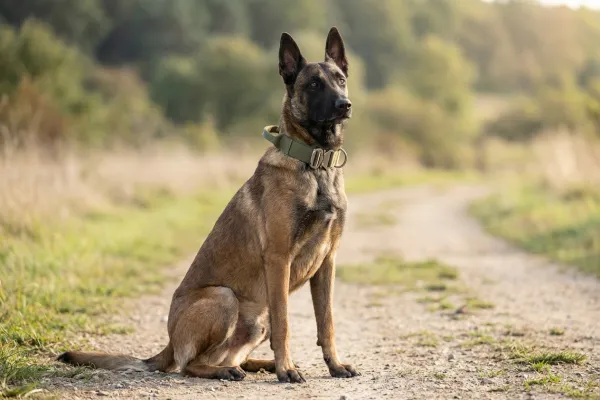
For dogs that accompany their owners on hiking trails, trips, or nature getaways, a QR technology collar is an indispensable accessory. In unknown environments, the risk of disorientation increases, and having a fast localization tool makes the difference.
Hunting or rescue dogs, which tend to stray further from their handlers, benefit from passive geolocation. If the dog reaches an inhabited area and someone scans it, the owner will know exactly where on the map it is, even if it is miles away.
Furthermore, these collars are usually made of high-resistance materials such as biothane or reinforced nylon, prepared to withstand water, mud, and constant friction without the internal technology being affected.
In summary, if your lifestyle includes outdoor adventures, digital identification offers you an extra layer of peace of mind that allows you to enjoy the environment knowing that your pet is protected by the most advanced technology.
Is my data privacy secure?
A common concern when using smart collars is the exposure of personal data. However, most leading manufacturers have designed their platforms with user security and privacy in mind.
Unlike an engraved tag where your phone is visible to anyone passing by, many QR systems allow you to manage what information is shown. You can configure the profile so that it is only visible when you activate 'Lost Mode' from your own account.
Additionally, platforms usually use encrypted servers and comply with data protection regulations. The rescuer only accesses the information necessary to return the dog to you, and you maintain total control over what you share at all times.
It is recommended to choose recognized brands that offer technical support and constant security updates. This way, you protect your dog and also your own digital identity.
In conclusion, digital technology is, in many ways, more private than analog, as it allows for dynamic and selective control of the information we show to the world.
Maintenance and durability of the technology
Although QR and NFC collars do not have mechanical components or batteries that run out, they require basic maintenance to ensure they function correctly for years.
The main threat to a QR code is physical abrasion. If the dog tends to scratch its neck a lot or plays roughly with other dogs, the printed code can deteriorate. Opt for models where the QR is laser-engraved or protected by a layer of transparent resin.
In the case of NFC, the chip is very resistant, but it can be damaged if the collar is repeatedly bent at extreme angles. It is important to check that the material covering the chip does not show cracks or breaks that allow moisture to enter.
If the collar is submersible, make sure to rinse it with fresh water after a swim in the sea. Saltwater can corrode the finishes and dull the surface of the code, making it difficult for the mobile camera to focus.
In short, a visual check every few months and basic cleaning are enough for your dog's digital identification to be always ready for an emergency.
Conclusion: Is the switch to a digital collar worth it?
The transition to QR and NFC technology collars is a logical decision in an increasingly connected world. The ability to offer detailed information and receive the dog's location in real time far exceeds the performance of traditional methods.
While they do not replace the legal microchip, they act as the first line of defense, allowing any citizen to help a lost animal immediately and efficiently.
Investing in a smart collar is investing in peace of mind. It is ensuring that, in the event of an unforeseen event, your dog carries with it all the necessary tools to return home safe and sound in the shortest possible time.
Frequently asked questions about QR and NFC technology collars
What is a QR technology collar for dogs?
It is a collar that includes a tag or plate with a unique QR code. When scanned with a smartphone, it redirects to a web page with the dog's profile, including photos, owner data, medical history, and handling tips.
What is the difference between a QR collar and one with NFC?
QR requires scanning a visual code with the camera, while NFC (Near Field Communication) allows access to information simply by bringing the phone close to the tag, similar to how mobile payments are made.
Do these collars replace the mandatory microchip?
No, they are a security complement. The microchip is mandatory and requires a special reader at veterinarians or police, while QR/NFC allows any citizen with a mobile phone to identify and contact you instantly.
Do QR or NFC collars need a battery or charging?
No, this is one of their great advantages. They are passive systems that do not require batteries, cables, or electrical maintenance, so they are always operational to be read.
What happens if I change my phone number?
Unlike engraved tags, you don't need to buy a new collar. You just have to enter the manufacturer's digital platform and update your contact details; the change will be reflected instantly when the collar is scanned.
Are they resistant to water and rough play?
Yes, most technological collars are designed with resin coatings or synthetic materials that protect the NFC chip and the QR code from water, mud, and scratches, ensuring their long-term legibility.
Is my data privacy secure?
Most platforms allow you to configure what information is public. You can choose to show only an emergency phone number or activate read notifications, which send you an email when someone scans the code.
Do these collars work in areas without coverage?
To access the digital profile, an internet connection is required on the mobile phone of the person who finds the dog. However, some models allow basic text information to be recorded directly on the NFC chip that can be read offline.
Can I see my dog's location with a QR collar?
It is not a real-time GPS, but many systems record the GPS location of the smartphone that performs the scan and send you a notification with the exact coordinates of where your pet was found.
Are they compatible with all mobile phones?
Almost all modern smartphones have a camera for QR and NFC technology. In the case of NFC, it is standard on Android and iPhone devices from recent years, which guarantees high universal compatibility.