


In an increasingly environmentally conscious world, the choice of accessories for our pets has also evolved. Eco-friendly dog collars are not only a statement of principles in favor of sustainability, but they also offer unique benefits in terms of durability and dermatological health.
Materials such as hemp, cork, and recycled fibers are gaining ground against traditional synthetic plastics. These natural components are biodegradable, resistant, and, most importantly, extremely respectful of canine skin, avoiding common irritations caused by chemical dyes or aggressive industrial processes.
In this article, we will explore why switching to sustainable canine fashion is a smart decision. We will analyze the properties of each eco-friendly material and how these collars can offer the same safety and resistance as conventional models, but with a much lower carbon footprint for the planet.
Eco-friendly dog collars: Sustainability and comfort in every walk
Environmental concern has reached the world of pets. Choosing an eco-friendly collar is not just a matter of fashion, but a conscious decision that seeks to reduce the carbon footprint while offering maximum quality to the animal. These accessories are designed with natural or recycled materials that respect the environment without sacrificing strength.
Unlike conventional synthetic models, sustainable collars usually avoid aggressive chemical processes in their manufacturing. This translates into products that are more respectful of the dog's skin, ideal for those prone to allergies or irritations. Furthermore, the durability of materials such as hemp or cork surprises many owners.
Below, we will explore why biodegradable and recycled materials are transforming daily walks and how to choose the best option for your four-legged companion.

Benefits of natural materials for dog skin
Opting for organic materials brings direct benefits to the dermatological health of your pet. The use of natural fibers such as hemp or organic cotton drastically reduces the likelihood of allergic reactions, which is very common in nylon collars dyed with industrial chemicals.
Breathability is another fundamental advantage. Eco-friendly materials allow the skin to breathe better, avoiding excessive heat and moisture buildup under the collar. This is especially important in hot climates or for dogs that enjoy long walks in the sun.
In addition, many of these collars possess natural antibacterial properties. Hemp, for example, is intrinsically resistant to mold and bad odors, which keeps the accessory fresh for longer without the need for constant washing with strong detergents.
Finally, the softness to the touch is usually superior. With use, materials like cork or vegetable fibers become more flexible and adaptable to the dog's neck, eliminating the rigid edges that can cause annoying chafing during movement.
Environmental impact and durability of sustainable accessories
The main reason to choose an eco-friendly collar is the reduction of environmental impact. By using recycled plastics or biodegradable fibers, tons of waste are prevented from ending up in oceans or landfills.
Durability is not compromised. There is a myth that natural is more fragile, but materials like cork are incredibly resistant to traction and inclement weather, while also being naturally waterproof.
The use of vegetable dyes and toxin-free processes ensures that, at the end of its useful life, the collar does not release microplastics or harmful substances into the soil. It is a cycle of responsible consumption that protects the planet.
Recommendation: look for organic material certifications to ensure that the manufacturing process has been clean from the source until it reaches your hands.
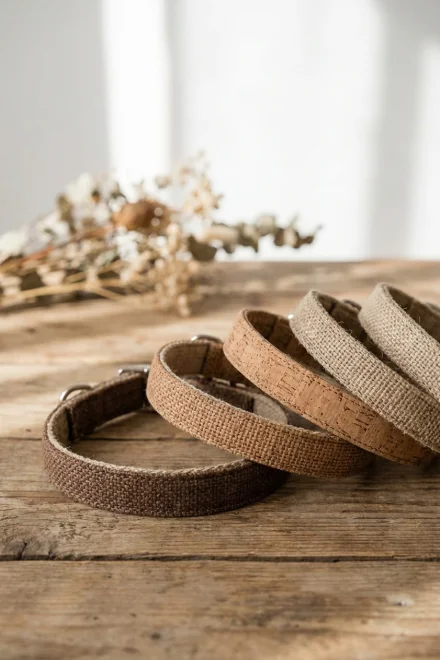
Comparison of eco-friendly materials for collars
Not all sustainable materials are equal. Depending on your dog's energy and the environment where you live, one material may be more advantageous than another. Here we analyze the most popular options on the current market.
🌿 Organic hemp
Extremely resistant and durable. It is ideal for large dogs or those with a lot of strength. In addition, it is biodegradable and improves its softness with every wash.
🌳 Natural cork
A vegan alternative to leather. It is lightweight, waterproof, and very soft. Perfect for dogs with sensitive skin and for those looking for an elegant style.
♻️ Recycled plastic (RPET)
Made from recovered bottles. It is very resistant, easy to clean, and allows for designs with vibrant colors without using virgin plastics.
🌾 Pineapple fiber
An innovative and very flexible material. It is surprisingly strong and offers a texture similar to leather, being completely cruelty-free.
🧵 Organic cotton
The softest option for puppies or indoor dogs. Although it is less resistant to moisture, its comfort is unmatched for delicate skin.
🎋 Bamboo fiber
Naturally hypoallergenic and very absorbent. It is an excellent choice for humid climates thanks to its natural antifungal properties.
Selecting the material according to your dog's needs ensures that the investment in sustainability is also an investment in their well-being. There is a green option for every type of pet.
Maintenance of your sustainable accessories
🧼
Wash natural fiber collars by hand with neutral soap and warm water to preserve the integrity of the fibers.
☀️
Always air dry the collar but avoid direct exposure to intense sun so that the colors do not fade.
💧
If the collar is made of cork, simply wipe it with a damp cloth to remove surface dirt thanks to its waterproof nature.
🔍
Periodically inspect the fibers; being natural, they may show visual wear that does not always affect their safety.
🧴
Do not use strong chemicals, as they damage the biodegradable properties and the softness of the material.
Detailed analysis of the star materials
Hemp: The strength of nature
Hemp is considered one of the most sustainable materials on the planet. Its cultivation requires very little water and does not need pesticides. In dog collars, it translates into exceptional resistance, comparable to nylon but with a negative carbon footprint. It is ideal for dogs that pull on the leash, as its fibers do not stretch or deform easily.
Cork: The quintessential vegan leather
Extracted from the bark of the cork oak without harming the tree, cork is a fascinating material. It is naturally water-repellent and very lightweight, making it perfect for small dogs or those who spend a lot of time outdoors. Its soft texture prevents hair from tangling and it is extremely easy to clean with a simple cloth.
Recycled polyester: Second life for plastic
Recycled polyester (RPET) offers the same technical advantages as traditional nylon (strength, variety of colors, quick drying) but with an ethical origin. By reusing plastic bottles, oil consumption is reduced. It is the preferred choice for sporty or aquatic dogs that need gear that dries in record time.
In conclusion, the choice between hemp, cork, or recycled materials will depend on the use you give it. While hemp stands out in strength, cork does so in lightness and recycled polyester in technical versatility. All of them share a common goal: taking care of your dog while protecting their environment.
Technical comparison of sustainable materials
| Material | Resistance | Waterproofing | Softness | Ideal for | Biodegradable |
|---|---|---|---|---|---|
| Hemp | Very High | Low | Medium | Large / Strong dogs | Yes |
| Cork | Medium-High | High | Very High | Sensitive skin / Luxury | Yes |
| Recycled Plastic | High | Very High | Medium | Sport / Beach | No (but recyclable) |
Frequently asked questions about eco-friendly and sustainable dog collars
What materials are considered truly eco-friendly in dog collars?
The most common materials are hemp (due to its low water consumption), cork (sustainably harvested), organic cotton, and RPET, which is polyester made from recycled plastic bottles.
Is hemp strong enough for a dog that pulls?
Yes, hemp is one of the strongest natural fibers in the world. It has a superior tensile strength compared to cotton and does not stretch, making it ideal for dogs of all sizes, even the most active ones.
Are eco-friendly collars better for dogs with allergies?
Absolutely. Being natural materials and often processed without toxic chemicals or synthetic dyes, they are hypoallergenic and antimicrobial, which drastically reduces the risk of contact dermatitis.
How should a hemp or cork collar be cleaned?
We recommend hand washing with warm water and mild soap. Hemp becomes softer with each wash, while cork is naturally waterproof and easily cleaned by wiping with a damp cloth.
Are these collars fully biodegradable?
100% natural hemp or cork collars are biodegradable and compostable, provided that metal parts or plastic buckles are removed before disposal.
Is cork durable for a daily-use collar?
Although it may seem fragile, cork is a very resistant, lightweight, and water-repellent material. It does not rot and maintains its shape, making it an excellent vegan alternative to traditional leather.
What are the benefits of recycled plastic (RPET) in collars?
The use of RPET helps reduce plastic waste in oceans and landfills. It offers the same durability and variety of colors as virgin nylon, but with a much cleaner manufacturing process.
Do they have the same safety as conventional collars?
Yes. Sustainability focuses on the fabric, but the hardware is usually made of stainless steel or brass, ensuring that the closure and the attachment ring are as secure as those of any high-end collar.
Why choose hemp instead of cotton?
Hemp requires much less water to grow, needs no pesticides, and produces more fiber per hectare. Additionally, it is mold and UV resistant, which extends the life of the collar outdoors.
Where can I find certified sustainable collars?
Look for brands that have certifications such as OEKO-TEX, GOTS, or fair trade seals, which guarantee that both the material and the manufacturing respect ecological and social standards.