
Last updated: May 11, 2026
Hunting and tracking dog collars: Safety and visibility guide in the wild
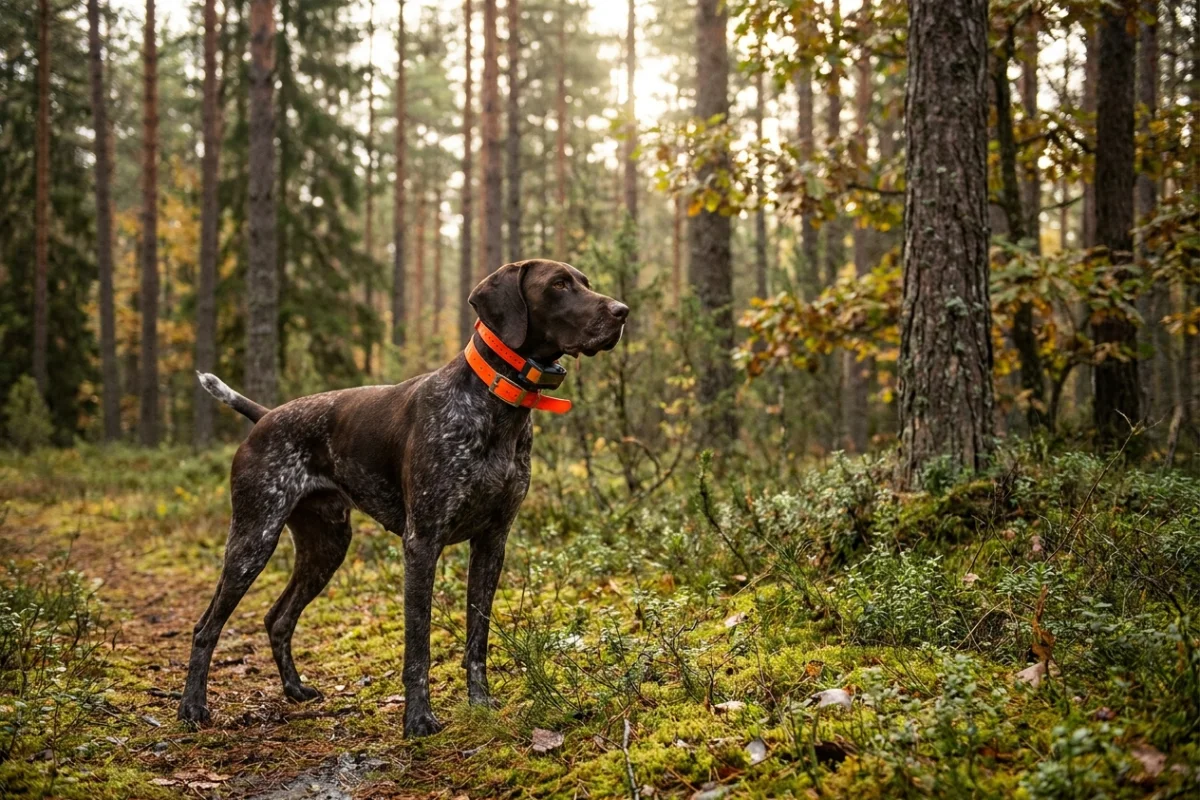
Hunting and tracking dogs face demanding environments where durability and visibility are fundamental for their safety. Unlike an urban walk, a day in the wild involves exposure to brambles, humidity, mud, and potential risks of accidents due to lack of visibility.
In this guide, we will analyze what characteristics the ideal hunting dog collar should have, from the most durable materials like polyurethane to the importance of neon colors. You will learn how to choose equipment that not only identifies your companion but also protects them from the dangers of the terrain and undergrowth.
If you are looking to maximize your dog's safety during tracking or hunting activities, here you will find the keys to selecting a collar that withstands intensive use and ensures your dog is always locatable and protected in any weather condition.
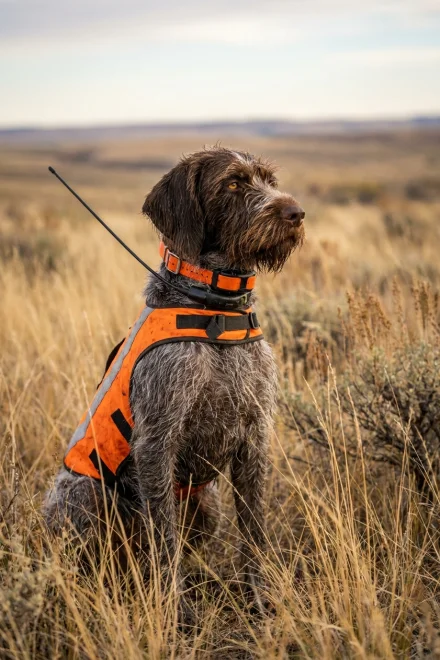
Hunting dog collars: Safety and visibility in the mountains
Hunting and tracking dog collars are fundamental tools for ensuring the animal's safety in complex natural environments. Unlike conventional walking collars, these devices are designed to withstand extreme conditions, improve visibility in the brush, and allow for the localization of the dog at all times.
Their main function is twofold: on one hand, they act as a protective element that prevents the dog from getting lost in difficult terrain; on the other, they facilitate coordination between the handler and the animal without the need for constant visual contact. A good tracking kit can make the difference in emergency situations or when encountering wildlife.
There are various specialized models, from collars with high-precision GPS technology to high-visibility reflective options. Choosing the right one depends on the type of terrain, the type of activity, and the specific needs of each tracking breed.
Types of hunting dog collars: Which one to choose?
In the world of hunting and tracking, not all collars serve the same function. The choice should be based on the environment where the activity will take place and the level of control required over the animal. Safety should always be the number one priority when equipping our companion.
Collars with GPS localization
GPS collars are the cutting edge of hunting tracking technology. They allow you to know the exact location of the dog in real time through a handheld receiver or a mobile application. They are indispensable in areas of dense vegetation or mountainous terrain where the dog can move several kilometers away following a scent.
These devices often offer additional features such as safety perimeters, route history, and movement alerts. Their use drastically reduces the risk of loss and allows for a quick recovery of the animal at the end of the day.
High-visibility and reflective collars
For those who carry out activities in low-light areas or thick brush, neon-colored collars (orange or yellow) with reflective bands are essential. Their goal is for the dog to be easily identifiable by both the handler and other people in the mountains, avoiding accidents due to confusion.
They are made of water-repellent and very resistant materials, such as biothane, which does not absorb odors or moisture and is easily cleaned after a day of mud and mountains.
Beeper or acoustic collars
Very common in woodcock hunting or in terrain where the dog is hidden by vegetation. These collars emit a sound or beep when the dog stops (points) or at regular intervals. They allow the handler to know where the dog is and what it is doing without needing to see it directly.
Comparison of the main tracking systems
The following table summarizes the characteristics of the equipment most used in the field, its advantages, and the ideal usage profile:
| Collar type | Main advantage | Range | Security level | Ideal for |
|---|---|---|---|---|
| High-end GPS | Exact location on map | Several kilometers | Maximum | Tracking over long distances |
| Reflective / Neon | Immediate visibility | Visual | High (prevention) | Brushy or low-light areas |
| Beeper (Acoustic) | Location by sound | Up to 500 meters | Medium-High | Pointing dogs in the forest |
| Standard Biothane | Resistance and cleanliness | N/A | Basic | Training and safe areas |
Ultimately, the choice of collar should prioritize the dog's well-being and the effectiveness of its localization. There is no single model for everyone; each dog and each terrain require a tool that adapts to its work pace and the potential risks of the environment.
Safety recommendations before heading out to the mountains
Before equipping your dog with any tracking collar, it is vital to perform a preventive check. Poorly configured equipment or a dead battery can fail at the most critical moment, compromising the animal's safety in the middle of nature.
Key preparation tips
- Full battery charge: Make sure both the collar and the receiver are at 100% before starting the day.
- Ergonomic fit: The collar should be firm enough not to get caught on branches, but allow for normal breathing.
- Prior synchronization: Verify that the device links correctly with the remote or mobile before releasing the dog.
- Physical identification: Even if you use GPS technology, the collar should always have a tag with your phone number.
- Knowledge of the terrain: Check if the area has coverage dead zones that could affect the signal.
Following these guidelines not only protects the dog but also provides peace of mind to the handler. Prevention is the best tool to enjoy a day of tracking without unpleasant incidents.
Common mistakes when using tracking collars
Even the most experienced handlers can make mistakes when using a hunting dog collar. These failures usually stem from excessive trust in technology or poor maintenance of the physical equipment.
- Not testing the equipment before the day: Using a GPS system for the first time without knowing its interface can cause confusion at critical moments.
- Leaving the collar too loose: Makes it easier for the dog to get caught in brambles or for the device to lose contact and precision.
- Ignoring low battery alerts: Continuing the activity when the device warns of low energy usually ends in signal loss.
- Not cleaning the equipment after use: Mud and moisture can corrode charging contacts and reduce the collar's lifespan.
- Relying only on technology: Not being attentive to the dog's behavior or the natural acoustic signals of the environment.
Avoiding these mistakes ensures more effective and safer tracking. The key is to understand that the collar is a support within a process where the handler's attention remains fundamental.
Pros and cons of technological collars in the mountains
Modern tracking collars offer undeniable advantages, but they also present certain challenges that the owner must evaluate. Their effectiveness depends directly on the quality of the device and the responsible use made of it.
The main advantage is the mental peace of mind that comes from knowing where the dog is at all times, especially with breeds that tend to follow scents obsessively. Conversely, the economic cost and dependence on batteries are factors that require planning and constant maintenance.
Before deciding on a system, it is essential to weigh whether the technological functions align with the type of activity you usually perform with your dog.
Frequently asked questions about hunting and tracking dog collars
What material is most recommended for hunting dogs?
Polyurethane or Biothane are the star materials. They are extremely resistant to traction, do not absorb water or odors, and are easily cleaned after a day of mud or rain, preventing the proliferation of bacteria.
Why is it vital for the collar to be high visibility?
In the wild, a fluorescent orange or yellow color allows the dog to be distinguished among dense vegetation. This is crucial to avoid accidents with other hunters and to visually locate the animal quickly from a long distance.
Is a traditional buckle or a click closure better for the wild?
For hunting dogs, the traditional metal buckle is recommended. It is much more resistant to strong pulls and is less likely to open accidentally if it gets caught on a branch or thick undergrowth.
How should the collar be adjusted to avoid snagging?
It should be tight enough so that it doesn't slip off if the dog backs up, but allowing two fingers to pass through. A collar that is too loose increases the risk of the dog getting trapped in branches or bushes.
Are collars with a cowbell or bell useful?
Yes, in small game hunting or tracking in very closed areas, the cowbell helps the guide know the dog's sound location when vegetation prevents direct vision.
What collar width is ideal for a tracking dog?
Widths between 2.5 and 4 centimeters are recommended. A wider collar distributes pressure better over the neck if the dog pulls hard while following a trail, protecting its trachea.
How are these collars cleaned after a day of hunting?
Since they are synthetic materials, lukewarm water and a soft brush are enough. If there is blood or embedded dirt, a bit of neutral soap will suffice. They dry instantly and do not lose flexibility.
Are there collars with protection against thorns?
Some models have reinforced layers or special coatings that prevent bramble thorns from penetrating the material, extending the life of the equipment and protecting the animal's neck.
What is the difference between a hunting collar and a tactical one?
The hunting one prioritizes waterproofing and chromatic visibility, while the tactical one usually focuses on military resistance, control via handles, and often has camouflage or discreet colors.
Is it recommended for the collar to include an identification tag?
It is essential. In the wild, the risk of loss is higher. Ideally, the information should be engraved directly on the collar or on a riveted plate to prevent it from being lost if it gets snagged.